Monitor Lizard of Africa
November 5, 2026
Poison Arrow Frog & Other Rare African Amphibians on Safari
November 5, 2026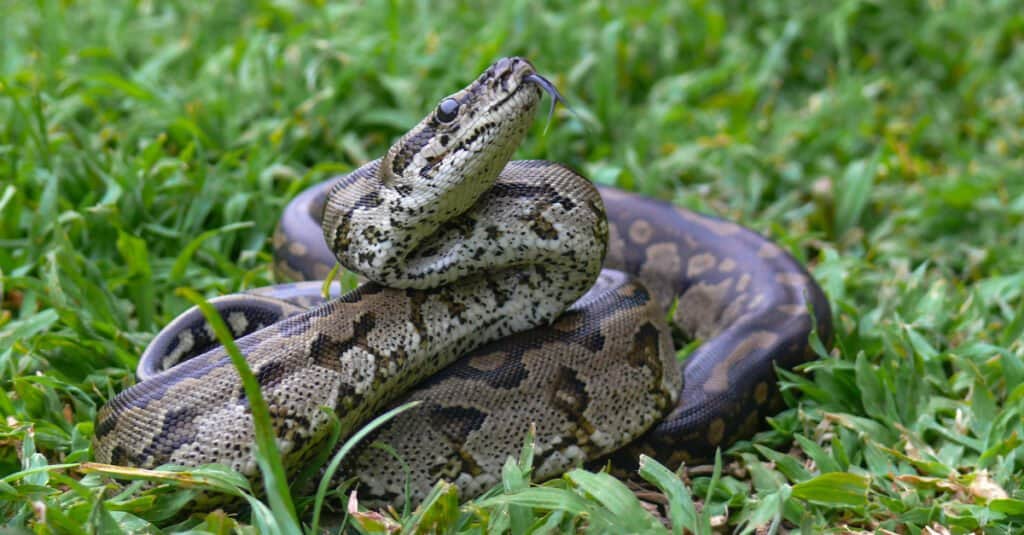
The African Python: Facts & Where to Safely Encounter It
The African python is one of the continent’s most impressive reptiles, recognised for its powerful body, distinctive markings, and remarkable ability to capture prey without venom. These large snakes occupy habitats ranging from tropical forests and wetlands to savannahs and rocky landscapes, where they contribute to ecological balance by feeding on a variety of animals. Understanding African python facts safari guide information helps travellers appreciate these often misunderstood reptiles while learning how to observe them safely.
Pythons attract considerable attention because of their size and strength, but they generally avoid unnecessary encounters with people. Their survival depends on camouflage, patience, and the ability to exploit suitable hunting opportunities. Rather than actively seeking confrontation, they usually rely on concealment or retreat when disturbed.
For safari travellers, encountering a python can provide a memorable alternative to conventional large-mammal sightings. However, responsible observation requires appropriate distance, professional guidance, and respect for the animal’s natural behaviour. Learning about python ecology helps replace fear and misinformation with a more accurate understanding of these remarkable snakes.
Understanding African Python Species
Africa supports several python species, including the African rock python, which ranks among the continent’s largest snakes. Different python species occupy different habitats and vary in size, appearance, and geographical distribution. Accurate identification requires attention to markings, body proportions, and the location of the sighting.
The African rock python is particularly well known because of its substantial size and broad distribution across suitable sub-Saharan habitats. It possesses a muscular body with irregular dark markings that provide camouflage among vegetation and rocky surfaces. Its powerful build allows it to capture prey through constriction.
Pythons belong to a group of nonvenomous snakes that rely on physical strength rather than injected toxins. Their feeding strategies differ from those of cobras, mambas, and other venomous African snakes. Understanding this distinction helps visitors interpret python behaviour accurately.
How Large Can an African Rock Python Grow?
African rock pythons can reach impressive lengths, although exceptionally large individuals are uncommon. Adult size varies according to sex, age, food availability, and environmental conditions. Females often grow larger than males, reflecting differences in reproductive biology.
Many mature individuals measure several metres in length, but reports of extraordinary sizes require careful verification. Historical claims sometimes exaggerate measurements or rely on unreliable estimates. Scientific records provide a more dependable basis for understanding python growth.
A python’s substantial body mass contributes to its ability to capture and restrain prey. However, large size does not mean that the animal moves constantly or hunts every day. Pythons can remain inactive for extended periods while digesting meals or waiting for suitable opportunities.
Where African Pythons Live
African pythons occupy a variety of habitats that provide suitable shelter, prey, and environmental conditions. Wetlands, riverbanks, woodland, savannah, and rocky areas can all support different populations. Access to water and concealed resting locations often influences their distribution.
Some pythons spend considerable time near water because aquatic environments provide opportunities to hunt and regulate body temperature. Others use vegetation, abandoned burrows, or rocky shelters for concealment. Their adaptability allows them to survive across contrasting landscapes.
Habitat conditions also influence how frequently travellers encounter these snakes. Dense vegetation may conceal pythons even when they occur locally. Observations often depend on chance, seasonal activity, and the experience of safari guides.
How African Pythons Hunt Their Prey
African pythons are ambush predators that often remain concealed while waiting for suitable prey. Their camouflage helps them blend into vegetation, soil, and rocky surroundings. When an animal approaches within striking distance, the python can respond with a rapid attack.
After seizing prey, the snake uses its muscular body to constrict the animal. Constriction interferes with circulation and can rapidly incapacitate prey. This mechanism differs from the popular misconception that pythons simply crush animals until their bones break.
Pythons feed on a variety of mammals, birds, and other vertebrates depending on their size and habitat. Younger snakes generally capture smaller prey, while larger individuals can take more substantial animals. Their flexible feeding strategy contributes to their ecological success.
Can African Pythons Swallow Large Animals?
Pythons possess specialised skull and jaw structures that allow them to swallow prey wider than their own heads. Flexible connective tissues and movable bones permit considerable expansion during feeding. This adaptation allows them to consume animals that would be impossible for many other predators to swallow whole.
However, pythons cannot swallow animals of unlimited size. Their physical dimensions and the shape of prey impose practical restrictions. Claims that ordinary pythons routinely consume extremely large mammals often exaggerate their feeding abilities.
After swallowing a substantial meal, a python may spend considerable time digesting. Digestion requires energy and depends partly on environmental temperature. During this period, the snake may remain concealed and relatively inactive.
Are African Pythons Venomous?
African pythons are nonvenomous snakes and do not possess the venom-delivery system found in species such as cobras and mambas. They capture prey through biting and constriction rather than injecting toxins. This distinction is important for understanding their hunting behaviour.
Nonvenomous does not mean harmless, particularly when dealing with a large wild python. A defensive bite can cause serious injury, and powerful constriction presents substantial risks during inappropriate handling. Travellers should never attempt to touch or restrain a wild python.
Professional guides maintain appropriate distances and avoid provoking snakes. Responsible observation allows visitors to appreciate the animal without creating unnecessary danger. Safety depends on respecting wildlife rather than assuming that nonvenomous species cannot cause harm.
How Pythons Detect Their Prey
Pythons use several sensory abilities to locate prey and navigate their environments. Their tongues collect chemical information that specialised sensory organs help interpret. This process allows snakes to investigate scents and follow environmental cues.
Many pythons also possess heat-sensitive structures that assist with detecting warm-blooded prey. These sensory adaptations can be useful when hunting in low-light conditions. Vision and physical contact provide additional information during movement and feeding.
The combination of sensory abilities helps pythons function in habitats where prey may remain concealed. Their hunting success depends on careful positioning and appropriate timing. Observing these adaptations reveals the sophistication of reptile biology.
Python Reproduction and Parental Care
Female pythons reproduce by laying eggs, often selecting sheltered locations that provide suitable conditions for development. Depending on the species, females may remain close to their eggs and coil around them. This behaviour provides protection and can help regulate the conditions surrounding the clutch.
Reproductive activity depends on environmental conditions, food availability, and the physical condition of the female. Producing eggs requires substantial energy, making successful feeding important before reproduction. Young pythons emerge as independent animals capable of hunting suitable small prey.
Parental behaviour among pythons demonstrates that reptiles can exhibit more complex reproductive strategies than commonly assumed. Although young snakes do not receive prolonged care comparable to that of many mammals, egg attendance can contribute to reproductive success. These behaviours are important subjects of herpetological research.
African Pythons and Their Role in Ecosystems
Pythons contribute to ecological balance by feeding on rodents, birds, and other animals. Their predation influences prey populations and forms part of broader food-web relationships. They also serve as prey for certain large predators, particularly when young.
The presence of pythons indicates that suitable habitats support a range of interconnected species. Wetlands and woodland environments provide feeding opportunities and shelter for reptiles alongside mammals and birds. Protecting these habitats benefits entire wildlife communities.
Removing snakes indiscriminately can disrupt ecological relationships and reduce biodiversity. Education helps communities and travellers understand the value of reptiles. Conservation efforts increasingly recognise their importance within functioning ecosystems.
African Pythons Around Rivers and Wetlands
Riverbanks and wetlands provide favourable conditions for many python populations because they support prey and offer concealed resting locations. Pythons may enter water to move between habitats or hunt suitable animals. Their swimming ability allows them to exploit aquatic environments effectively.
Travellers exploring waterways may occasionally observe pythons resting near vegetation or moving along banks. Such encounters require caution because approaching too closely can disturb the snake. Guides should allow animals to continue their natural behaviour without interference.
Wetland conservation supports python populations alongside fish, birds, amphibians, and mammals. Changes in water quality or habitat structure can affect the availability of suitable prey. Protecting freshwater ecosystems therefore contributes to reptile conservation.
Where to See African Pythons on Safari
South Africa’s Kruger National Park supports African rock pythons within suitable habitats, although sightings remain relatively uncommon. Visitors may encounter snakes near watercourses, rocky areas, or woodland environments. Experienced guides can identify appropriate habitats but cannot guarantee sightings.
Botswana’s Okavango Delta and Chobe region also contain environments suitable for large snakes. Zambia’s South Luangwa and Lower Zambezi landscapes provide further opportunities for reptile observation. The presence of pythons depends on local ecological conditions and species distribution.
East African destinations, including parts of Kenya and Tanzania, also support African rock pythons. Travellers interested in reptiles may benefit from guided nature walks or specialist wildlife excursions where permitted. However, safety and conservation rules must always guide the experience.
What to Do If You Encounter a Python
The safest response to a wild python encounter is to remain calm and maintain distance. Travellers should avoid sudden attempts to catch, touch, or move the animal. Most snakes prefer to avoid unnecessary contact when given an opportunity to retreat.
During a guided safari, visitors should follow the instructions of the guide and remain within authorised areas. Guides can assess the situation and determine whether observation can continue safely. Approaching a large python for a close photograph creates unnecessary risks.
If a snake appears near accommodation, guests should notify staff rather than attempting to remove it themselves. Trained personnel can respond according to local wildlife management procedures. Respectful handling of such situations protects both people and reptiles.
Photographing African Pythons Responsibly
Python photography requires patience because snakes often remain concealed or move through difficult terrain. A telephoto lens allows photographers to capture details without approaching too closely. Natural light and careful composition can reveal the patterns and textures of the animal’s scales.
Photographers should avoid blocking escape routes or surrounding a snake with multiple people. Repeated disturbance may cause defensive behaviour and unnecessary stress. Ethical wildlife photography prioritises the animal’s welfare over obtaining a particular image.
Guides can help identify safe viewing positions while explaining the snake’s behaviour. Visitors should never manipulate vegetation or reposition the animal for photography. Natural encounters provide the most meaningful records of reptile behaviour.
Threats Facing African Python Populations
Python populations face pressures associated with habitat loss, persecution, and exploitation in some regions. People sometimes kill snakes because of fear or misconceptions about their behaviour. Education can help reduce unnecessary conflict and improve coexistence.
Wetland drainage, agricultural expansion, and infrastructure development can reduce suitable habitats. These changes may also affect prey populations and movement routes. Conservation strategies should therefore consider the broader ecosystems on which pythons depend.
Responsible tourism can contribute to public understanding by presenting reptiles as important wildlife rather than dangerous curiosities. Guides play a valuable role in correcting misinformation. Protecting pythons supports biodiversity across African landscapes.
Why Reptile Safaris Deserve More Attention
Traditional African safaris often focus on large mammals, but reptiles reveal another important dimension of biodiversity. Snakes, lizards, crocodiles, and tortoises possess adaptations that differ considerably from those of mammals. Observing them encourages a more complete understanding of wildlife ecology.
Reptile-focused experiences may include guided walks, wetland excursions, and educational interpretation. These activities can reveal species that ordinary game drives overlook. They also provide opportunities to discuss conservation challenges affecting smaller and less familiar animals.
Travellers who appreciate reptiles often discover that patience and careful observation produce rewarding encounters. A python resting beside a river or moving through vegetation can be as fascinating as a large predator sighting. The experience highlights the diversity of life within African protected areas.
Plan Your Safari
The African python is a remarkable example of reptile adaptation, combining powerful constriction, specialised senses, and the ability to occupy diverse habitats. Understanding its behaviour helps travellers replace common misconceptions with informed appreciation. Responsible observation also demonstrates why snakes deserve protection within African ecosystems.
Southern Africa Tours can arrange wildlife itineraries in South Africa, Botswana, Zambia, and other destinations where reptiles form part of the natural environment. Our guided experiences emphasise safe observation, ecological interpretation, and responsible wildlife viewing. Contact Southern Africa Tours to plan a safari that explores Africa’s fascinating reptiles alongside its larger wildlife.