How Hippos Survive the African Dry Season Without Water.
November 5, 2026
Black Rhino vs White Rhino
November 5, 2026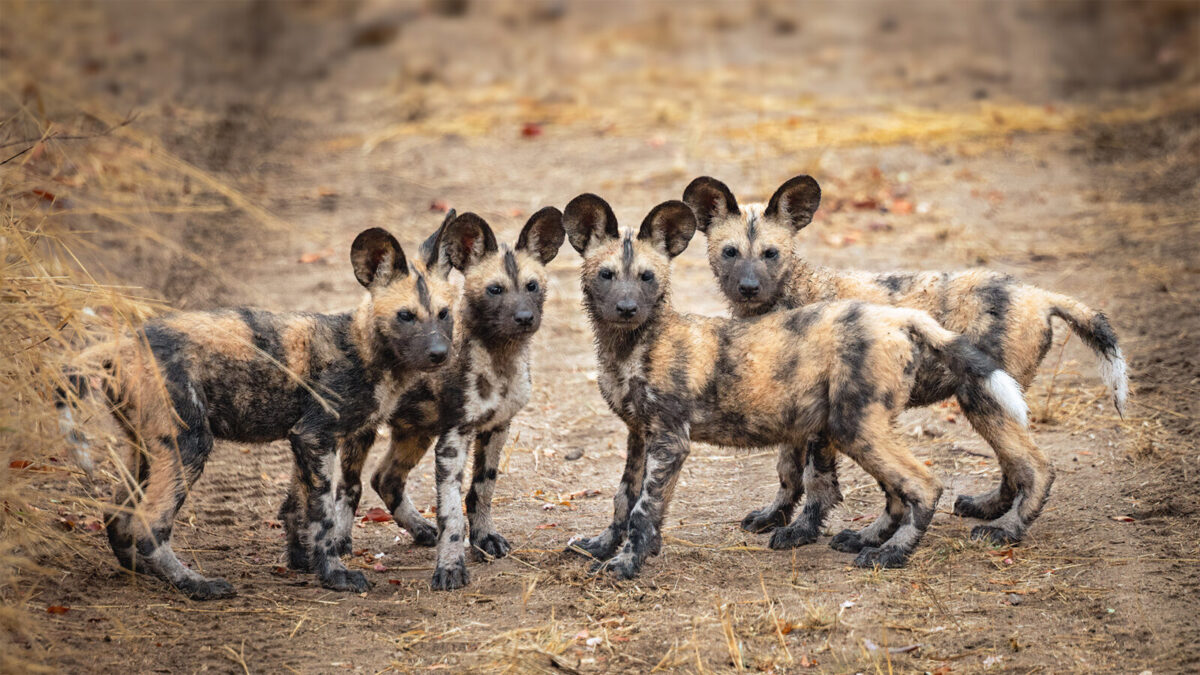
African Wild Dog vs Hyena: The Battle for Pack Supremacy
African wild dogs and spotted hyenas rank among the most successful social predators in Africa. Both species depend on cooperation, communication, and remarkable physical adaptations to survive in competitive savannah ecosystems. Although they sometimes occupy the same habitats and pursue similar prey, their hunting strategies and social relationships differ considerably. Understanding African wild dog vs hyena Africa interactions reveals how these predators compete for food, defend their groups, and maintain important ecological roles.
Safari travellers often associate African wild dogs with coordinated hunting and spotted hyenas with scavenging. However, these simplified descriptions overlook the sophistication of both animals. Wild dogs are highly effective pursuit hunters, while spotted hyenas regularly capture their own prey through coordinated hunting. Both species can also exploit carcasses when suitable opportunities arise.
Encounters between wild dogs and hyenas provide some of Africa’s most fascinating wildlife observations. Their interactions may involve competition around kills, defensive displays, or attempts to displace one another from feeding areas. The outcome depends on group size, individual behaviour, environmental conditions, and the availability of food.
Understanding African Wild Dogs
The African wild dog, also known as the painted dog, is a highly social carnivore recognised for its irregular coat patterns, large rounded ears, and slender athletic body. Each animal possesses distinctive markings that help researchers identify individuals. Wild dogs occupy suitable savannah, woodland, and grassland habitats across parts of sub-Saharan Africa.
Wild dogs live in cooperative packs that typically include a breeding pair and related individuals. Pack members maintain strong social relationships through vocalisations, greetings, and coordinated activities. Their cooperation extends beyond hunting to the care of pups and injured companions.
Unlike many other large predators, wild dogs rely heavily on endurance and teamwork when pursuing prey. Their lean bodies and long legs support sustained movement across open terrain. Successful hunting depends on coordinated effort rather than overwhelming physical strength.
Understanding Spotted Hyenas
Spotted hyenas are powerful carnivores with robust jaws, strong neck muscles, and highly developed social systems. They occupy a wide variety of African habitats, including savannahs, woodlands, and semi-arid landscapes. Their adaptability allows them to exploit different prey species and environmental conditions.
Spotted hyenas live in social groups called clans. These groups can contain numerous individuals and possess complex dominance relationships. Female spotted hyenas generally occupy higher social ranks than males, creating a social structure that differs from those of many other carnivores.
Hyenas are effective hunters that can pursue prey over considerable distances. Their powerful jaws also allow them to consume bones and other carcass components that many predators leave behind. This feeding ability contributes to their ecological importance.
African Wild Dog vs Hyena: Physical Differences
African wild dogs have slender bodies, long legs, and relatively light builds compared with spotted hyenas. Their large ears help with hearing and heat regulation, while their distinctive coats provide individual identification patterns. Their anatomy supports efficient movement during extended pursuits.
Spotted hyenas possess heavier bodies, powerful forequarters, and exceptionally strong jaws. Their muscular structure allows them to capture substantial prey and process difficult carcass material. Their appearance reflects a different combination of hunting and feeding adaptations.
These physical differences influence direct encounters between the species. A single spotted hyena may possess a considerable strength advantage over an individual wild dog. However, a coordinated pack of wild dogs can sometimes challenge or drive away an isolated hyena.
How African Wild Dogs Hunt
African wild dogs rely on coordinated pursuit hunting. Pack members identify suitable prey and may chase it across open or lightly wooded terrain. Their endurance allows them to maintain pressure until an opportunity develops.
Impala and other medium-sized antelope frequently form important parts of wild dog diets. However, prey selection varies according to habitat, pack size, and local wildlife populations. Packs may also capture larger animals under favourable circumstances.
Wild dogs often achieve impressive hunting success, but success rates vary between ecosystems and research studies. Weather, terrain, prey behaviour, and competition influence outcomes. Their reputation as effective hunters reflects teamwork and specialised movement rather than guaranteed success.
How Spotted Hyenas Hunt
Spotted hyenas combine endurance, physical strength, and social cooperation when hunting. Individuals may capture smaller prey alone, while groups can pursue larger animals. Their ability to adapt hunting strategies contributes to their success across different habitats.
Hyenas often target wildebeest, zebra, antelope, and other available prey. Their powerful jaws help them maintain a grip during difficult encounters. They can also exploit injured or weakened animals when opportunities arise.
Contrary to popular belief, spotted hyenas do not depend exclusively on stealing food. In many ecosystems, they obtain substantial portions of their diet through hunting. Their reputation as scavengers reflects only one aspect of their feeding behaviour.
Competition Between Wild Dogs and Hyenas
African wild dogs and spotted hyenas sometimes compete because their diets overlap. Both species may pursue similar antelope and occupy the same hunting areas. Competition becomes especially visible when hyenas approach wild dogs feeding on a recent kill.
A hyena may attempt to steal food from a pack, particularly when the dogs have already captured prey. Wild dogs may respond through barking, charging, or coordinated defensive behaviour. These encounters can become intense without necessarily developing into prolonged fights.
The outcome depends on the number of animals involved and the circumstances. A single hyena may retreat when confronted by numerous dogs, while several hyenas can create substantial pressure on a smaller pack. Neither species wins every encounter.
Can a Hyena Defeat an African Wild Dog?
A spotted hyena generally possesses greater physical strength than an individual African wild dog. Its powerful jaws and heavier build provide advantages during direct confrontation. A wild dog usually benefits more from avoiding unnecessary physical conflict.
However, wild dogs rarely operate as completely isolated individuals. Pack members may cooperate to challenge a hyena that approaches their food or threatens another dog. Their collective response can alter the balance of an encounter.
Direct fights are dangerous for both species because injuries can reduce hunting ability and survival. Many confrontations involve displays and movement rather than sustained physical combat. Safari visitors should understand these interactions as competition over resources rather than organised battles for dominance.
Why Hyenas Steal Wild Dog Kills
Hyenas sometimes approach wild dog kills because freshly captured prey provides a valuable feeding opportunity. Obtaining meat without completing a separate hunt can conserve energy. This behaviour forms part of the broader scavenging strategies used by many carnivores.
Wild dogs often feed rapidly after capturing prey. Quick consumption may reduce the time available for competing predators to interfere. However, larger carcasses can attract hyenas before the pack finishes feeding.
The relationship between the species therefore involves both hunting and opportunistic feeding. Hyenas may steal food, but they also hunt independently. Wild dogs may defend kills, yet they sometimes abandon food when competition becomes too costly.
Pack Structure and Social Cooperation
African wild dog packs depend on close cooperation for hunting, pup care, and movement. Members often participate in enthusiastic greeting ceremonies before travelling or hunting. These interactions reinforce social relationships and help coordinate activity.
Spotted hyena clans possess more complex dominance hierarchies, with individuals maintaining different social positions. Their relationships influence feeding access, reproduction, and interactions with other clans. Clan members may cooperate when confronting competitors.
Both systems demonstrate the importance of social behaviour in predator survival. However, wild dog packs and hyena clans organise themselves differently. Comparing their societies reveals the diversity of cooperative strategies among African carnivores.
Communication Between Pack Members
Wild dogs use vocalisations, body movements, and physical contact to maintain relationships. Their calls help coordinate movements and locate separated individuals. Social greetings often involve energetic interactions that strengthen group cohesion.
Spotted hyenas possess an extensive vocal repertoire that includes whoops, giggles, growls, and other sounds. These signals can communicate information about identity, social circumstances, and group activity. Their vocal behaviour becomes particularly noticeable after dark.
Communication helps both predators respond to danger and competition. During encounters around kills, vocalisations and body language can influence whether animals advance or retreat. Experienced guides interpret these signals alongside the surrounding behaviour.
African Wild Dog Pup Care
Wild dogs demonstrate remarkable cooperative care for their young. Breeding females generally give birth in dens, where pups remain during their earliest development. Other pack members help provide food and protection.
Adults may return from successful hunts and regurgitate food for pups or companions that remained near the den. This cooperation supports young animals that cannot yet participate in hunting. The behaviour contributes to pack survival.
Denning periods can make wild dogs particularly sensitive to disturbance. Safari operators must maintain appropriate distances and avoid interfering with adults travelling between hunting areas and dens. Responsible viewing protects vulnerable young animals.
Spotted Hyena Cubs and Clan Life
Spotted hyena females give birth to cubs that depend on maternal care during early development. Cubs gradually learn the social relationships that shape clan life. Their position within the social hierarchy can influence future interactions.
Hyena cubs may spend time around communal dens, where several females raise their offspring within the same general area. However, mothers retain important responsibilities for nursing and protection. Social learning begins early.
The complexity of hyena societies makes them valuable subjects for long-term behavioural research. Scientists investigate dominance, recognition, cooperation, and reproductive strategies. These findings challenge outdated stereotypes about hyenas.
How Lions Influence Wild Dogs and Hyenas
Lions represent important competitors and potential threats to both African wild dogs and spotted hyenas. Lions may kill wild dogs during encounters and can displace hyenas from carcasses. Their presence influences how smaller predators use habitats.
Wild dogs often avoid areas or situations where lions create substantial danger. This avoidance can affect hunting routes and denning locations. Hyenas may respond differently depending on clan size and the number of lions present.
Competition among large carnivores contributes to the ecological complexity of African savannahs. The relationships are not fixed because local conditions influence every encounter. Understanding these interactions helps travellers appreciate predator behaviour beyond individual hunting scenes.
Which Predator Is More Successful?
Comparing hunting success between wild dogs and hyenas requires caution because success rates depend on the ecosystem, prey species, and research methods. Wild dogs often demonstrate highly effective cooperative hunting, particularly when pursuing medium-sized antelope. Hyenas also achieve substantial success through individual and group hunting.
Hunting success alone does not determine overall survival. Predators must also protect their young, avoid injuries, maintain territories, and respond to environmental changes. Competition with lions and human disturbance can influence population stability.
Both species occupy important ecological roles and possess adaptations suited to their lifestyles. Declaring one universally superior overlooks the complexity of predator ecology. Their different strategies demonstrate how evolution produces multiple successful approaches.
Conservation Status of African Wild Dogs
African wild dogs face serious conservation threats and the IUCN classifies them as Endangered. Habitat fragmentation, conflict with people, infectious diseases, and accidental mortality threaten remaining populations. Their need for extensive connected landscapes makes conservation particularly challenging.
Wild dogs often travel beyond protected-area boundaries, increasing the likelihood of encounters with livestock, roads, and settlements. Conservation programmes work with communities to reduce conflict and protect movement corridors. Disease monitoring also plays an important role.
Protecting wild dogs benefits broader ecosystems because connected habitats support numerous wildlife species. Responsible safari tourism can contribute to conservation funding and public awareness. Their rarity makes ethical viewing especially important.
Conservation Challenges Facing Spotted Hyenas
Spotted hyenas remain relatively widespread compared with African wild dogs, but they still face threats in some regions. Habitat loss, persecution, and conflict with livestock owners can affect local populations. Their ecological adaptability does not eliminate conservation concerns.
Negative perceptions sometimes lead people to kill hyenas unnecessarily. Education helps explain their roles as predators and scavengers. Their feeding behaviour contributes to nutrient cycling and the removal of animal remains.
Conservation strategies should protect healthy predator communities rather than focusing exclusively on popular species. Hyenas contribute significantly to African ecosystems. Maintaining their populations supports ecological balance.
Where to See Wild Dogs and Hyenas Together
Botswana’s Okavango Delta and Moremi Game Reserve provide excellent opportunities to observe African wild dogs and spotted hyenas in overlapping habitats. The region supports diverse prey populations and complex predator communities. Experienced guides can explain interactions between the species.
South Africa’s Kruger National Park and adjoining private reserves also support both predators. Wild dog sightings remain less predictable than hyena encounters because their populations are smaller and their movements cover extensive areas. Zambia’s South Luangwa and selected other protected landscapes offer further possibilities.
Travellers interested in predator behaviour may benefit from spending several nights in suitable wildlife areas. Repeated game drives improve opportunities to observe different interactions. However, no operator can guarantee a confrontation between wild dogs and hyenas.
Photographing Predator Interactions Responsibly
Wild dogs and hyenas provide compelling photographic subjects because of their expressive behaviour and social interactions. Photographers may capture pack greetings, coordinated movement, feeding activity, or encounters around carcasses. Patience helps reveal natural behaviour.
Vehicles should never block hunting routes or interfere with predator movements. Approaching den sites too closely can disturb young animals and adults. Ethical photography requires respecting the guidance of experienced safari professionals.
Natural interactions provide the most meaningful images. Travellers should avoid expecting dramatic fights because many encounters end without physical confrontation. Understanding behaviour often proves more rewarding than pursuing sensational scenes.
Plan Your Safari
African wild dogs and spotted hyenas demonstrate two remarkable approaches to social hunting and survival. Wild dogs rely heavily on pack cooperation and endurance, while spotted hyenas combine physical strength, sophisticated clan relationships, and flexible feeding strategies. Their interactions reveal the complexity of competition within African ecosystems.
Southern Africa Tours can arrange predator-focused safaris in Botswana, South Africa, Zambia, and other destinations where these species occur. Our itineraries combine knowledgeable guides, carefully selected accommodation, and responsible wildlife-viewing experiences. Contact Southern Africa Tours to plan a safari that explores the fascinating relationships between Africa’s social predators.