
African Wild Dog vs Hyena
November 5, 2026
What Is a Pangolin?
November 5, 2026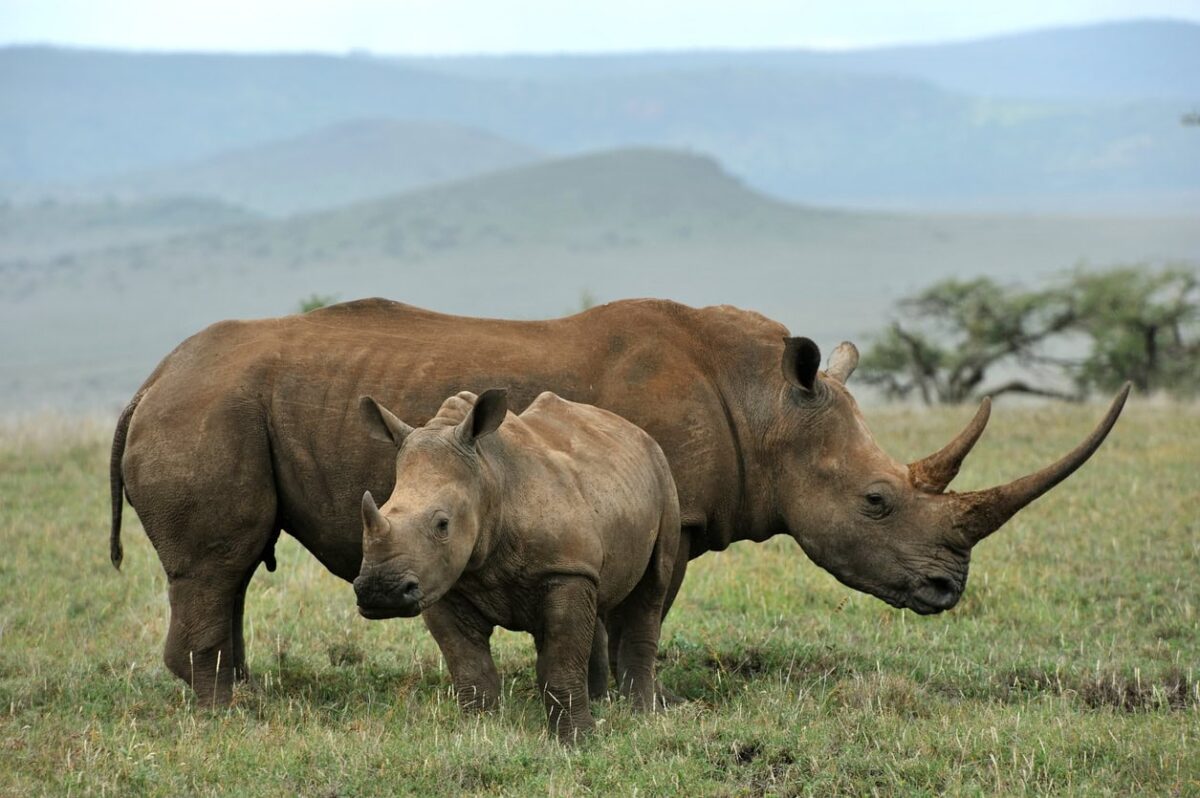
Black Rhino vs White Rhino: What’s the Real Difference?
Black rhinos and white rhinos are among Africa’s most remarkable large mammals. Both species possess powerful bodies, distinctive horns, and an important ecological role in the landscapes they inhabit. However, their names often create confusion because neither species is consistently black or white in appearance. Understanding the black rhino vs white rhino difference requires examining their mouths, feeding behaviour, habitats, body structures, social relationships, and conservation challenges.
These two rhinoceros species evolved different adaptations that allow them to exploit separate food resources. Black rhinos generally browse on leaves, shoots, and woody vegetation, while white rhinos primarily graze on grasses. Their distinctive lip shapes reflect these dietary differences and provide one of the most reliable ways to identify them.
For safari travellers, recognising the differences between black and white rhinos transforms an ordinary sighting into a meaningful wildlife encounter. Experienced guides can explain how the animals use their environments, why their behaviour differs, and how conservation programmes work to protect them from poaching and habitat loss.
Understanding Africa’s Two Rhinoceros Species
Africa supports two living rhinoceros species: the black rhinoceros and the white rhinoceros. Both belong to the rhinoceros family, but they represent separate evolutionary lineages with distinctive anatomical and behavioural characteristics. Their populations occupy different combinations of savannah, grassland, woodland, and shrubland habitats.
The black rhino belongs to the species Diceros bicornis, while the white rhino belongs to Ceratotherium simum. Each species also contains recognised subspecies or regional populations with different conservation histories. These distinctions matter because population conditions vary considerably across Africa.
Despite their physical differences, both rhino species face serious threats associated with poaching and habitat disturbance. Their survival depends on sustained conservation management and effective protection. Safari tourism can contribute to conservation awareness when visitors understand these challenges.
Why Are They Called Black and White Rhinos?
The names black rhino and white rhino do not accurately describe their skin colours. Both species generally possess greyish skin, although mud, dust, and environmental conditions can change their appearance. A black rhino covered in pale dust may look lighter than a white rhino resting in dark mud.
One popular explanation suggests that the term white rhino developed from a misunderstanding of a word describing its wide mouth. However, the precise historical origin of the name remains debated. Travellers should therefore avoid presenting the familiar linguistic explanation as an established fact.
The most reliable identification features involve body shape, mouth structure, head position, and feeding behaviour. These characteristics provide more useful information than skin colour. Learning to recognise them improves wildlife identification during game drives.
The Biggest Difference: Mouth Shape
The most obvious anatomical distinction between the two species is the shape of their upper lips. White rhinos possess broad, relatively square mouths adapted to grazing. Their lips allow them to crop grasses efficiently across open landscapes.
Black rhinos possess pointed, flexible upper lips that help them grasp leaves, shoots, and branches. This prehensile lip functions as a specialised feeding tool, allowing the animal to select vegetation from shrubs and small trees. Its shape reflects the demands of browsing rather than grazing.
Safari guides often identify rhinos by observing the mouth while the animal feeds. However, distance and vegetation can sometimes obscure this feature. Head posture and surrounding habitat provide additional identification clues.
Black Rhino vs White Rhino: Body Size
White rhinos generally grow larger and heavier than black rhinos. Adult white rhinos possess substantial bodies with broad chests and prominent shoulder structures. Their size makes them among the heaviest living land mammals.
Black rhinos are usually smaller and more compact, although they remain exceptionally powerful animals. Their body proportions suit movement through shrubland and woodland environments. Individual size varies according to sex, age, and nutritional conditions.
The difference becomes especially noticeable when observers compare mature adults under similar conditions. However, young white rhinos may be smaller than mature black rhinos. Guides therefore combine body size with other characteristics before identifying a species.
Differences in Head Position and Posture
White rhinos commonly carry their heads relatively low because they spend substantial time grazing on grasses. Their powerful neck and shoulder muscles support this feeding posture. A pronounced shoulder hump contributes to their distinctive silhouette.
Black rhinos often carry their heads higher while investigating shrubs and browsing vegetation. Their posture allows them to reach leaves and shoots above ground level. Their neck and shoulder structure differs from that of white rhinos.
These differences are useful during distant sightings when mouth shape remains difficult to see. Observing feeding posture can help travellers distinguish the species. However, both animals can raise or lower their heads according to circumstances.
What Do Black Rhinos Eat?
Black rhinos primarily browse on woody plants, leaves, shoots, and other suitable vegetation. Their flexible upper lips allow them to select food from shrubs and small trees. The exact plant species they consume depend on local habitat conditions.
Browsing influences vegetation structure and plant growth within their environments. Rhinos may break branches, remove shoots, and create pathways through dense vegetation. Their feeding therefore contributes to ecological processes beyond individual nutrition.
Food availability changes with rainfall and seasonal conditions. Black rhinos may move between feeding areas to locate suitable plants. Protecting diverse shrubland habitats remains important for their survival.
What Do White Rhinos Eat?
White rhinos are primarily grazers that consume grasses across suitable savannah and grassland habitats. Their broad mouths allow them to crop vegetation efficiently. They may spend extended periods feeding to meet their substantial nutritional requirements.
Their grazing can influence grass height and vegetation structure. Areas used regularly by white rhinos may develop shorter grass patches that other herbivores also exploit. These interactions contribute to the ecological diversity of African grasslands.
White rhinos require suitable grazing resources and access to water. Drought and habitat degradation can affect food quality. Conservation management must therefore consider grassland health and seasonal resource availability.
Habitat Differences Between Black and White Rhinos
Black rhinos commonly occupy habitats containing shrubs, woodland, and suitable browsing vegetation. Dense cover can provide feeding opportunities and shelter. Their distribution depends on the availability of preferred plant resources and adequate protection.
White rhinos generally favour grasslands and savannahs where grazing opportunities remain accessible. Open habitats often make them easier for safari visitors to observe. However, they may also use woodland edges and other suitable environments.
Both species can occur within the same protected area when habitats support their different feeding requirements. Their ecological separation reduces direct competition for identical food resources. This relationship demonstrates the importance of habitat diversity.
Which Rhino Is More Aggressive?
Black rhinos have a reputation for being more reactive during close encounters, particularly when surprised in dense vegetation. Their responses may include defensive displays or charges when they perceive danger. However, behaviour varies between individuals and circumstances.
White rhinos often appear calmer while grazing in open areas, but they remain powerful wild animals capable of dangerous defensive behaviour. Females with calves may respond strongly to perceived threats. No rhino should be considered safe to approach closely.
Safari guides assess body language, distance, terrain, and escape routes before approaching rhinos. Visitors should remain inside vehicles unless an authorised guide directs otherwise. Responsible viewing avoids provoking either species.
Social Behaviour of Black Rhinos
Black rhinos are often relatively solitary, although their social relationships are more complex than the word solitary suggests. Adults maintain overlapping home ranges and communicate through scent marking and other signals. Mothers remain with calves during important developmental periods.
Males may defend territories or compete for access to females. Their interactions can involve displays, vocalisations, and physical confrontation. The intensity of these encounters depends on local population conditions.
Researchers use long-term monitoring to understand black rhino movement and social relationships. Individual identification helps conservation teams track animals and assess population health. These studies contribute to effective management.
Social Behaviour of White Rhinos
White rhinos often display more visible social associations than black rhinos. Females and young animals may form small groups, while adult males can establish territories. Their interactions involve scent marking, vocalisations, and behavioural displays.
Grazing habitats sometimes allow several white rhinos to occupy the same general area. This proximity can create opportunities for safari visitors to observe social behaviour. However, group composition changes according to age, sex, and reproductive circumstances.
White rhino social organisation demonstrates that large herbivores maintain complex relationships. Understanding these interactions helps guides interpret behaviour without oversimplifying it. Respectful observation remains essential.
Rhino Horns and Their Function
Both black and white rhinos generally possess two horns made primarily from keratin, the same structural protein found in human hair and nails. Horn size and shape vary between individuals. Rhinos use their horns during defence, social interactions, and other activities.
Rhino horn has become the target of illegal wildlife trade because of demand in certain markets. This demand has driven severe poaching pressure across parts of Africa. Scientific evidence does not support claims that rhino horn possesses extraordinary medicinal properties.
Conservation programmes use law enforcement, monitoring, and demand-reduction initiatives to address poaching. Protecting rhinos requires coordinated action across countries. Responsible tourism can help raise awareness of these challenges.
Conservation Status of Black Rhinos
The IUCN classifies the black rhinoceros as Critically Endangered. Historical hunting and poaching caused catastrophic population declines, leaving fragmented populations across parts of Africa. Conservation programmes have supported recovery in some areas, but the species remains at serious risk.
Black rhino protection often involves intensive monitoring, anti-poaching measures, and carefully managed population transfers. Conservation teams work to maintain genetic diversity and suitable habitats. Community participation can also contribute to long-term protection.
The recovery of certain populations demonstrates that sustained conservation can produce meaningful results. However, progress remains vulnerable to renewed poaching and habitat pressures. Continued investment is essential.
Conservation Status of White Rhinos
The conservation situation of white rhinos differs between their northern and southern forms. Southern white rhinos experienced a remarkable recovery following historical population declines, although poaching continues to threaten them. The IUCN classifies the white rhinoceros species as Near Threatened.
The northern white rhino faces an exceptionally severe conservation crisis. Only two known surviving females remain, and the subspecies is functionally extinct in the wild. Advanced reproductive research seeks to preserve its genetic legacy, but successful recovery remains uncertain.
These contrasting histories demonstrate both the potential and limitations of conservation intervention. Strong protection can support population recovery, but delayed action may leave very few options. Rhinos require sustained conservation commitment.
Where to See Black Rhinos in Africa
Namibia’s Etosha National Park provides opportunities to observe black rhinos, particularly around suitable water sources. Some private conservation areas also support important populations. Sightings depend on season, habitat, and individual movement.
South Africa’s protected areas, including selected reserves in the Greater Kruger region and KwaZulu-Natal, support black rhinos. Zimbabwe also contains important populations in carefully managed conservation landscapes. Experienced guides improve opportunities for observation while respecting protection requirements.
Black rhinos often remain concealed in vegetation, making sightings less predictable than those of grazing white rhinos. Travellers should maintain realistic expectations. A brief encounter can still become a memorable safari experience.
Where to See White Rhinos in Africa
South Africa provides some of the best opportunities to observe southern white rhinos. Hluhluwe-iMfolozi Park holds particular historical significance because conservation efforts there contributed to the species’ recovery. Other protected areas and private reserves also support populations.
Selected reserves in neighbouring countries contain white rhinos through conservation and reintroduction programmes. Their distribution changes according to management decisions and security considerations. Travellers should confirm current viewing opportunities with knowledgeable operators.
Open grassland habitats can make white rhinos relatively visible during game drives. However, sightings remain subject to wildlife movement and local conditions. Responsible operators avoid promising guaranteed encounters.
How to Identify Rhinos During a Safari
The most useful identification method involves observing feeding behaviour and mouth shape. A rhino grazing with its head low and broad mouth close to the grass is likely a white rhino. An animal browsing shrubs with a pointed upper lip is more likely a black rhino.
Body proportions and habitat provide supporting evidence. White rhinos generally appear larger and possess prominent shoulder humps, while black rhinos have more compact builds. Their different feeding preferences also influence where guides search.
Visitors should avoid relying on skin colour because dust and mud can create misleading appearances. A knowledgeable guide can explain identification features during sightings. This approach makes wildlife observation both educational and enjoyable.
Why Rhino Conservation Matters
Rhinos influence vegetation and habitat structure through grazing, browsing, and movement. Their presence contributes to ecological processes that support other wildlife species. Protecting them therefore benefits more than a single iconic animal.
Rhino conservation also supports employment, scientific research, and protected-area management. Responsible tourism can generate economic incentives for wildlife protection. Community partnerships remain essential where people share landscapes with rhinos.
The continued survival of black and white rhinos depends on effective anti-poaching measures and habitat conservation. Their contrasting histories demonstrate why long-term commitment matters. Every responsible safari can contribute to greater awareness.
Plan Your Safari
Black and white rhinos differ most clearly in their mouths, feeding strategies, body structures, and habitat preferences. Black rhinos are primarily browsers with pointed upper lips, while white rhinos are larger grazers with broad mouths. Both species face conservation challenges that require sustained protection.
Southern Africa Tours can arrange rhino-focused safaris in South Africa, Namibia, Zimbabwe, and other suitable destinations. Our itineraries combine knowledgeable guides, carefully selected accommodation, and responsible wildlife-viewing experiences. Contact Southern Africa Tours to plan a safari that explores Africa’s remarkable rhinoceroses.