How Elephants Communicate
November 5, 2026
The African Python
November 5, 2026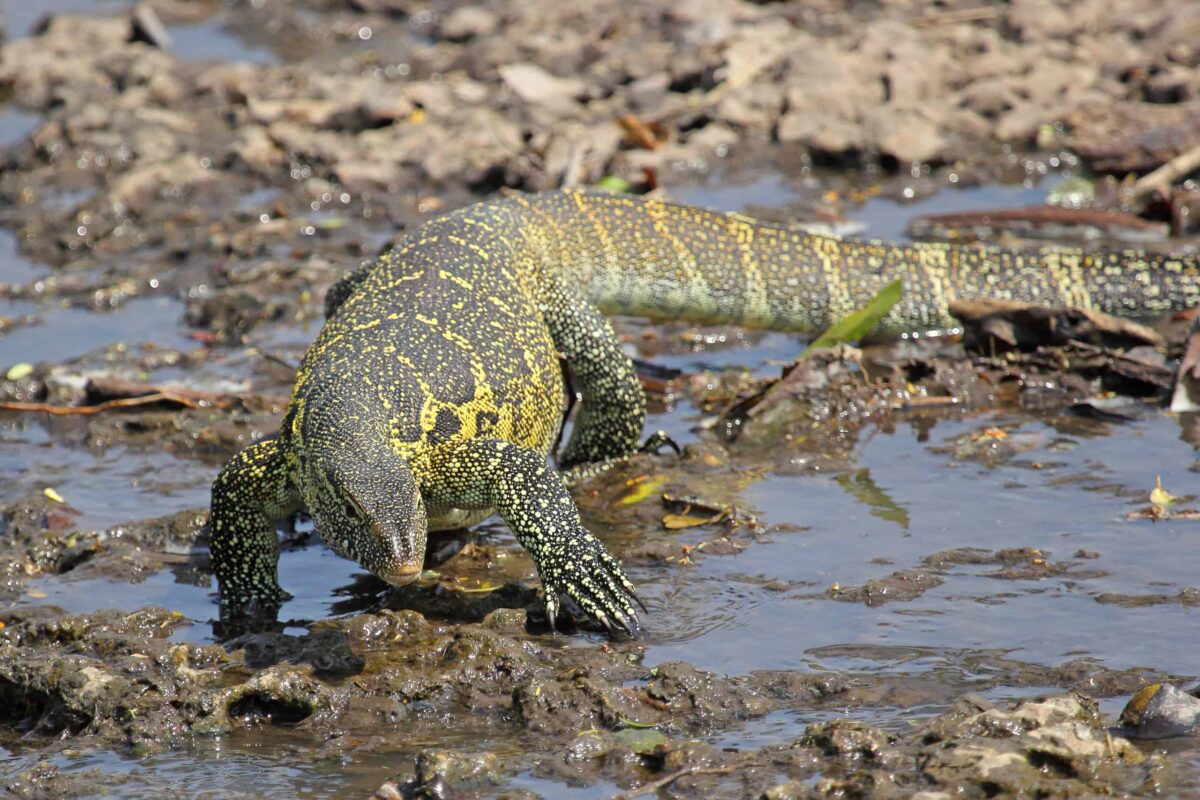
Monitor Lizard of Africa: Giant Reptiles on Safari
Monitor lizards are among Africa’s most impressive reptiles, recognised for their muscular bodies, long tails, powerful claws, and active hunting behaviour. These large lizards occupy a variety of habitats, including rivers, wetlands, savannahs, and rocky landscapes, where they feed on insects, eggs, small vertebrates, and other available resources. Understanding monitor lizard Africa safari facts reveals how these remarkable reptiles contribute to African ecosystems and why they deserve greater attention during wildlife excursions.
Unlike many reptiles that remain inactive for extended periods, monitor lizards often move actively through their environments while searching for food. Their strong limbs and specialised senses allow them to investigate burrows, climb obstacles, and explore different habitats. Some species also swim effectively, making them familiar inhabitants of riverbanks and wetlands.
For travellers exploring Africa’s national parks and private reserves, monitor lizards provide fascinating opportunities to observe reptile behaviour. Their appearance may seem intimidating, but they generally avoid unnecessary confrontation with people. Responsible viewing allows visitors to appreciate their adaptations without disturbing them.
Understanding African Monitor Lizards
Monitor lizards belong to the genus Varanus, a group of reptiles found across parts of Africa, Asia, and Australasia. African species differ in size, habitat preferences, and feeding behaviour, although they share several recognisable physical characteristics. Their elongated bodies, strong tails, and forked tongues distinguish them from many smaller lizards.
Monitors use their tongues to collect chemical information from the environment. A specialised sensory system helps them interpret these signals while searching for food or investigating unfamiliar surroundings. Their active exploration makes them interesting subjects for wildlife observation.
African monitor lizards also possess strong jaws and sharp claws that assist with feeding, climbing, and defence. These adaptations contribute to their success across different habitats. However, their physical strength means that travellers should never attempt to handle wild individuals.
The Nile Monitor: Africa’s Famous Water-Loving Lizard
The Nile monitor is among Africa’s best-known large lizards and commonly occurs near rivers, lakes, and wetlands. Its powerful body, long tail, and strong swimming ability allow it to exploit aquatic and terrestrial environments. Travellers may observe Nile monitors basking on riverbanks or moving through vegetation beside water.
Nile monitors possess varied diets that include fish, crustaceans, eggs, small mammals, and other suitable prey. Their feeding behaviour depends on local food availability and individual size. They may investigate nests or search along shorelines for opportunities.
The species occurs across a broad range of suitable African habitats. Its adaptability contributes to its success, although local populations still depend on healthy ecosystems. Observing Nile monitors provides an introduction to the ecological importance of large reptiles.
The Savannah Monitor: A Powerful Ground-Dwelling Reptile
The savannah monitor occupies suitable grassland and savannah environments, particularly in parts of West and Central Africa. Its robust body and strong limbs allow it to move across terrestrial habitats while searching for food. Compared with the Nile monitor, it generally depends less on aquatic environments.
Savannah monitors feed extensively on invertebrates and other suitable prey. Their diet may include insects, snails, and small animals according to availability. Their strong jaws help them process different food items.
These lizards often use burrows and sheltered locations to regulate body temperature and avoid predators. Their activity changes with seasonal conditions and temperature. Understanding these patterns helps explain why sightings vary throughout the year.
How Large Can African Monitor Lizards Grow?
African monitor lizards vary considerably in size according to species, sex, age, and environmental conditions. Nile monitors can reach substantial lengths, with their tails accounting for a significant proportion of total body length. Exceptionally large individuals attract attention, but typical adults are smaller than some widely circulated claims suggest.
Body size influences feeding opportunities and defensive abilities. Larger monitors may capture prey that smaller individuals cannot manage. However, growth depends on suitable food resources and environmental conditions.
Travellers should avoid judging a monitor’s size solely from brief sightings because perspective can exaggerate measurements. Guides can provide context based on species identification and local experience. Accurate observation is more valuable than dramatic estimates.
How Monitor Lizards Hunt Their Prey
Monitor lizards use active searching strategies to locate food. Their tongues collect chemical information, helping them investigate potential feeding opportunities across different surfaces. Strong limbs and claws allow them to explore vegetation, burrows, and other concealed locations.
Their diets are generally varied, although individual species may specialise in particular food types. Nile monitors often exploit aquatic resources and nests, while savannah monitors consume substantial quantities of invertebrates. This dietary flexibility contributes to their ecological adaptability.
Monitors may also scavenge when suitable opportunities arise. Their ability to exploit different food sources helps them survive changing environmental conditions. These feeding strategies make them important participants in African food webs.
Monitor Lizards and Their Forked Tongues
One of the most distinctive features of monitor lizards is their long, forked tongue. The tongue collects chemical particles from the environment and transfers them to sensory structures within the mouth. This process helps the lizard investigate food, other animals, and surrounding conditions.
The forked shape can provide information about the direction of chemical signals. Repeated tongue movements allow monitors to explore their environments while moving. These abilities are especially useful when prey remains concealed.
Although the tongue may appear unusual to visitors, it performs an essential sensory function. Guides can explain how chemical detection complements vision and other senses. Observing tongue movements provides insight into reptile behaviour.
Why Monitor Lizards Bask in the Sun
Monitor lizards depend on external heat sources to regulate their body temperatures. Basking allows them to absorb warmth that supports movement, digestion, and other physiological processes. Their activity therefore changes according to sunlight and environmental conditions.
Travellers may observe monitors resting on rocks, fallen trees, or exposed riverbanks during suitable weather. These locations provide access to sunlight while allowing the animals to remain near shelter. Once sufficiently warm, a monitor may become more active.
Excessive heat can also create challenges, causing lizards to seek shade or cooler environments. Their movements reflect the need to maintain suitable body temperatures. Understanding thermoregulation helps explain why reptiles appear at particular times of day.
Swimming and Climbing Abilities of Nile Monitors
Nile monitors are strong swimmers that use their muscular tails to move through water. Their ability to exploit aquatic habitats provides access to food and escape routes. They may remain submerged for periods when avoiding disturbance or moving between locations.
These lizards can also climb trees and other structures using their powerful claws. Climbing may provide access to food, resting locations, or opportunities to avoid threats. Their combination of swimming and climbing abilities makes them highly versatile.
Safari visitors may observe monitors moving between riverbanks, vegetation, and water. Such encounters demonstrate how reptiles use multiple parts of their environment. Guides should maintain appropriate distances and avoid interfering with movement.
Monitor Lizard Reproduction and Nesting
Monitor lizards reproduce by laying eggs, although nesting strategies vary between species. Females select locations that provide suitable conditions for incubation and protection. Some species use burrows or other sheltered environments.
Egg development depends on temperature and other environmental factors. Young monitors emerge as independent reptiles and must locate food while avoiding predators. Their early survival can be influenced by habitat quality and seasonal conditions.
Reproductive behaviour remains an important subject of reptile research. Understanding nesting requirements helps conservationists identify vulnerable habitats. Protecting suitable breeding areas supports population stability.
Are African Monitor Lizards Dangerous?
Monitor lizards generally avoid unnecessary contact with people, but large individuals can defend themselves when threatened. Their sharp teeth, strong jaws, claws, and muscular tails can cause injuries. Travellers should therefore maintain distance and never attempt to capture or handle them.
Monitors may display defensive behaviour when cornered or disturbed. These responses are natural attempts to avoid danger rather than evidence of deliberate aggression towards people. Providing an escape route usually reduces unnecessary confrontation.
Safari guides can help visitors observe monitors safely. Following their instructions protects both guests and reptiles. Responsible viewing does not require close physical contact.
Monitor Lizards Around African Waterways
Rivers and wetlands provide important habitats for Nile monitors because they support abundant food resources. Fish, aquatic invertebrates, birds, and other animals contribute to the surrounding food web. Vegetation and exposed banks provide shelter and basking locations.
Travellers may encounter monitors during boat safaris or guided walks near suitable waterways. Their movements can be particularly noticeable when they travel between water and land. Such sightings add variety to wildlife experiences focused primarily on mammals.
Healthy freshwater systems support monitors alongside crocodiles, fish, amphibians, and birds. Pollution and habitat disturbance can affect these relationships. Wetland conservation therefore benefits a wide range of species.
Where to See Monitor Lizards in Africa
South Africa’s Kruger National Park supports Nile monitors in suitable riverine and wetland habitats. Visitors may encounter them during game drives or guided activities near water. Sightings depend on temperature, season, and local conditions.
Botswana’s Okavango Delta and Chobe region also provide opportunities to observe monitor lizards. Their extensive waterways support varied reptile populations and associated wildlife. Zambia’s South Luangwa and Lower Zambezi regions offer further possibilities.
East African destinations such as Tanzania and Kenya contain suitable habitats for monitor lizards. Travellers interested in reptiles may benefit from guided nature excursions that focus on smaller wildlife. However, sightings remain unpredictable and should never be guaranteed.
Photographing Monitor Lizards on Safari
Monitor lizards provide attractive photographic subjects because of their textured scales, distinctive body shapes, and active behaviour. Photographers may capture them basking, swimming, or exploring riverbanks. A telephoto lens allows observation without approaching too closely.
Lighting conditions influence the appearance of scales and patterns. Morning and afternoon sunlight can reveal details while avoiding harsh overhead shadows. Patience helps photographers document natural movement.
Visitors should avoid blocking a monitor’s route or attempting to provoke defensive behaviour. Such actions create unnecessary stress and may present safety risks. Ethical photography focuses on genuine wildlife encounters.
The Ecological Importance of Monitor Lizards
Monitor lizards contribute to ecosystem balance by consuming a variety of prey and scavenging available food. Their feeding activities connect different parts of food webs, particularly around freshwater habitats. They may also influence populations of insects and other small animals.
Monitors themselves provide food for larger predators, especially when young. Birds of prey, large snakes, and carnivorous mammals may capture vulnerable individuals. These relationships demonstrate that reptiles occupy important positions within African ecosystems.
Protecting monitor lizards helps maintain biodiversity beyond the familiar large mammals. Their ecological roles deserve recognition within conservation planning. Education can reduce unnecessary persecution caused by fear or misunderstanding.
Threats Facing African Monitor Lizards
Monitor lizards face threats from habitat destruction, persecution, and exploitation in some regions. Wetland drainage and pollution can reduce suitable habitats for aquatic species. Expanding development may also interrupt movement between feeding and shelter areas.
Some monitor populations experience pressure from hunting or trade. Conservation responses depend on the species and local circumstances. Effective management requires reliable population information and appropriate habitat protection.
Responsible tourism can help improve public understanding of these reptiles. Guides who explain their behaviour and ecological importance encourage visitors to appreciate rather than fear them. Conservation awareness supports broader efforts to protect African biodiversity.
Combining Reptile Watching with a Wildlife Safari
A reptile-focused excursion can complement conventional game drives by introducing travellers to different ecological relationships. Monitor lizards, crocodiles, tortoises, and snakes demonstrate adaptations that differ considerably from those of mammals. Observing them provides a more complete understanding of wildlife diversity.
Wetland destinations are particularly rewarding because they support both aquatic and terrestrial species. Boat safaris and guided walks may reveal reptiles alongside birds, elephants, and other wildlife. The experience encourages visitors to pay attention to smaller details.
A carefully planned itinerary can combine reptile observation with broader safari activities. Experienced guides help identify suitable habitats and explain seasonal patterns. This approach creates a richer wildlife experience without requiring unrealistic expectations.
Plan Your Safari
African monitor lizards demonstrate remarkable adaptations through their powerful bodies, specialised senses, swimming abilities, and varied feeding behaviour. Their presence contributes to ecological balance across rivers, wetlands, savannahs, and woodland habitats. Observing these reptiles provides an opportunity to appreciate an important but often overlooked part of African wildlife.
Southern Africa Tours can arrange guided wildlife experiences in South Africa, Botswana, Zambia, and other destinations where monitor lizards inhabit suitable environments. Our safari itineraries combine knowledgeable guides, responsible wildlife viewing, and carefully selected accommodation. Contact Southern Africa Tours to explore Africa’s remarkable reptiles and wider biodiversity.