Waterberg Plateau Park Namibia
November 3, 2026Cape Cross Seal Colony Namibia
November 3, 2026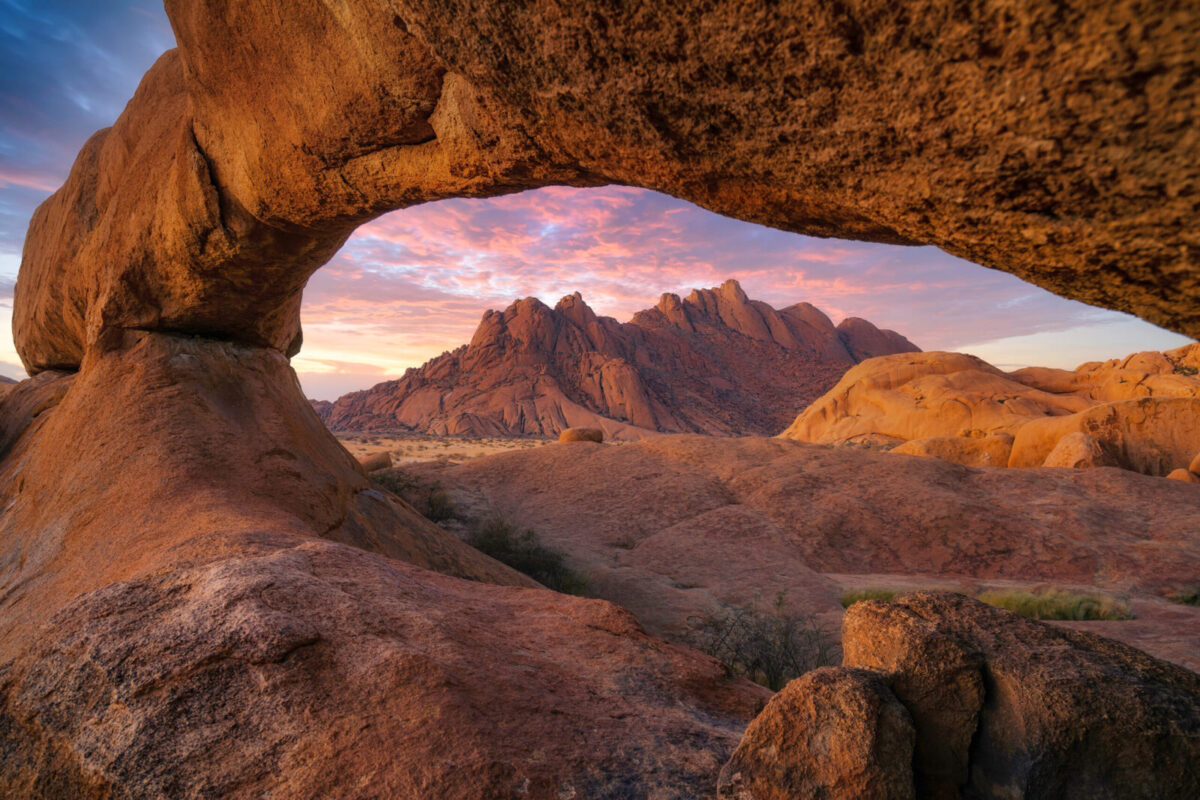
Spitzkoppe Namibia: Camping Under Ancient Rock Formations
Spitzkoppe is one of Namibia’s most spectacular granite landscapes, rising dramatically above the surrounding desert plains. Its enormous rock formations, natural arches, and open horizons create an unforgettable setting for camping, hiking, photography, and stargazing. Travellers who visit Spitzkoppe experience a quieter side of Namibia, where geological scenery and wide-open wilderness take centre stage.
Often described as the Matterhorn of Namibia, Spitzkoppe consists of ancient granite peaks surrounded by smaller rock formations and sandy terrain. The highest summit rises to approximately 1,728 metres above sea level, although the surrounding plains lie considerably lower. Its distinctive shape makes it one of the country’s most recognisable natural landmarks.
Where Is Spitzkoppe Located?
Spitzkoppe lies in western Namibia, between Usakos and the Atlantic coastal region around Swakopmund. The formation rises above a landscape of open plains, scattered vegetation, and weathered rock. Its relatively accessible location makes it a popular stop on road itineraries through central and western Namibia.
The surrounding environment belongs to the broader Namibian desert and semi-desert landscape. Rainfall remains limited, while strong sunlight and changing temperatures influence daily conditions. Visitors can enjoy expansive views across the plains, particularly during sunrise and sunset.
Travellers usually reach Spitzkoppe by road from Swakopmund, Windhoek, or other regional destinations. Some access roads contain gravel or uneven surfaces, so vehicle suitability and driving conditions should be checked before departure. A carefully planned visit allows enough time to explore the formations without rushing.
The Geological History of Spitzkoppe
Spitzkoppe’s granite formations developed through geological processes that began hundreds of millions of years ago. Molten rock cooled beneath the Earth’s surface, forming large bodies of granite that later became exposed through erosion. Over immense periods, weathering removed surrounding material and revealed the dramatic peaks visible today.
The rock formations display rounded surfaces, steep slopes, cracks, and unusual shapes. These features developed as temperature changes, water, and other natural processes gradually altered the granite. The result is a landscape that appears sculpted despite its entirely natural origins.
Understanding this geological history adds depth to a visit. Travellers can appreciate how the formations record changes that occurred long before human settlement. The surrounding plains also provide an excellent perspective on the scale and isolation of the granite peaks.
Camping at Spitzkoppe
Camping is one of the most rewarding ways to experience Spitzkoppe. The landscape offers designated camping areas surrounded by granite formations and expansive desert views. Spending the night allows visitors to enjoy the changing colours of the rocks as daylight fades and the stars appear.
Camping facilities vary according to the site and current management arrangements. Travellers should confirm the availability of toilets, water, and other services before arriving. Because the surrounding environment is remote, carrying sufficient drinking water and essential supplies remains important.
The experience appeals particularly to travellers who enjoy simple outdoor accommodation. Rather than relying on extensive facilities, visitors can appreciate the quiet atmosphere and dramatic natural surroundings. Responsible camping practices help protect the landscape and preserve its appeal for future travellers.
Discover the Natural Rock Arch
Spitzkoppe’s natural rock arch is among its most photographed features. The curved granite formation creates a striking frame for the surrounding desert landscape. Its appearance changes throughout the day as sunlight moves across the rock.
Visitors can explore the arch through suitable designated routes, depending on access conditions. The surrounding terrain contains uneven rock surfaces that require careful walking. Comfortable footwear improves safety and makes the experience more enjoyable.
The arch also provides an opportunity to appreciate the effects of weathering on granite. Natural forces gradually shaped the formation over immense periods. Photographers often use the opening to frame distant peaks, open skies, and the surrounding landscape.
Hiking Around Spitzkoppe
Spitzkoppe offers walking and hiking opportunities for travellers with different levels of experience. Shorter routes allow visitors to explore the lower rock formations, while more demanding activities may involve steep terrain and specialised guidance. The difficulty depends on the route and prevailing weather conditions.
Guided excursions can introduce visitors to the area’s geology, vegetation, and cultural heritage. Local guides may also explain the significance of particular formations and the challenges of living in a dry environment. These insights make the experience more meaningful than simply walking between viewpoints.
Travellers should avoid attempting difficult climbs without appropriate expertise and authorisation. Granite surfaces can become slippery, and exposed sections may present serious risks. Choosing a suitable route helps visitors enjoy the scenery safely.
Ancient Rock Art at Spitzkoppe
The Spitzkoppe region contains rock art associated with earlier human communities. These paintings provide evidence of historical relationships between people, animals, and the surrounding landscape. Their preservation makes them important cultural resources.
Visitors should explore rock-art sites through authorised arrangements and respect all conservation restrictions. Touching paintings or applying water to improve their visibility can cause damage. Responsible behaviour helps protect fragile heritage that has survived for generations.
Guides can explain the historical and cultural context of selected sites. However, interpretations should recognise that the meanings of individual images may remain uncertain. The artwork provides a valuable opportunity to consider the region’s human history alongside its geological significance.
Stargazing at Spitzkoppe
Spitzkoppe’s relatively remote setting makes it an appealing destination for stargazing. Limited artificial lighting in suitable areas allows visitors to appreciate the night sky under favourable conditions. The granite peaks create dramatic silhouettes against stars and the Milky Way.
Visibility depends on cloud cover, moonlight, atmospheric conditions, and the time of year. Travellers interested in astrophotography may prefer nights with limited moonlight. A tripod and suitable camera settings can help capture the landscape after dark.
Stargazing also provides a quieter way to experience the desert. Visitors can listen to the surrounding environment while observing the sky above the rock formations. Respecting campsite lighting and noise levels helps maintain this atmosphere.
Wildlife and Vegetation Around Spitzkoppe
Although Spitzkoppe is primarily known for its geology, the surrounding environment supports plants and animals adapted to dry conditions. Small mammals, reptiles, birds, and insects occupy suitable habitats among the rocks and plains. Wildlife sightings depend on season, weather, and the time of day.
Desert vegetation often grows slowly and depends on limited moisture. Some plants survive through specialised root systems, water storage, or reduced leaf surfaces. These adaptations demonstrate the resilience of life in arid environments.
Visitors should avoid disturbing animals or removing plants and rocks. Even small changes can affect fragile desert habitats. Responsible exploration allows travellers to appreciate the ecosystem without damaging it.
Photography at Spitzkoppe
Spitzkoppe provides exceptional opportunities for landscape photography. The granite peaks create strong shapes against open skies, while changing light highlights their textures and colours. Sunrise and sunset often produce particularly attractive scenes.
Photographers can explore compositions featuring natural arches, isolated boulders, and wide desert horizons. The surrounding landscape also offers opportunities to capture shadows and patterns across the rock surfaces. Different weather conditions create varied photographic moods.
Visitors should remain on suitable routes and avoid climbing unstable formations for photographs. Protecting camera equipment from dust and sand is also important. A patient approach often produces better results than moving quickly between locations.
Best Time to Visit Spitzkoppe
Spitzkoppe experiences hot conditions during parts of the year, especially in the warmer months. The cooler dry-season period generally provides more comfortable conditions for walking and camping. However, nighttime temperatures can become cold, particularly during winter.
Travellers planning hikes should avoid prolonged exposure to strong midday heat. Early mornings and late afternoons often provide more pleasant conditions for outdoor activities. Carrying sufficient water remains essential regardless of the season.
Rainfall is limited but can occasionally affect access routes and rock surfaces. Visitors should check weather forecasts and local guidance before undertaking longer excursions. Flexible planning improves both comfort and safety.
Where to Stay Near Spitzkoppe
Camping provides the most direct way to experience Spitzkoppe’s natural surroundings. Visitors who prefer conventional accommodation can consider properties in nearby towns or lodges within the wider region. The best choice depends on the desired level of comfort and travel arrangements.
Staying close to the formations allows more time for sunrise photography and evening stargazing. Travellers based farther away may need to account for additional driving, especially when planning early activities. Accommodation location therefore influences the overall experience.
Visitors should confirm facilities and booking requirements before arrival. Remote accommodation may offer fewer services than established urban hotels. Preparing carefully helps avoid unnecessary inconvenience.
Combining Spitzkoppe with a Namibia Safari
Spitzkoppe fits naturally into itineraries that include Swakopmund, Damaraland, and Etosha National Park. Swakopmund provides coastal activities and historic architecture, while Damaraland introduces visitors to rugged landscapes and desert-adapted wildlife. Etosha adds extensive game-viewing opportunities.
The combination creates a journey through several contrasting Namibian environments. Travellers can move from granite mountains to Atlantic beaches before continuing towards wildlife-rich savannah landscapes. Each destination offers different photographic and outdoor experiences.
Because Namibia covers large distances, visitors should plan realistic driving schedules. Spending at least one night near Spitzkoppe allows time to appreciate the landscape after daytime visitors leave. A slower itinerary generally creates a more rewarding experience.
Plan Your Safari
Spitzkoppe offers an extraordinary combination of ancient granite formations, desert camping, cultural heritage, and remarkable night skies. Its dramatic landscape makes it one of Namibia’s most memorable destinations for photographers and outdoor enthusiasts. Travellers who spend time exploring the area can appreciate both its geological history and peaceful atmosphere.