
Gonarezhou National Park
June 29, 2026
When to See the Great Wildebeest Migration in 2026–2027
June 29, 2026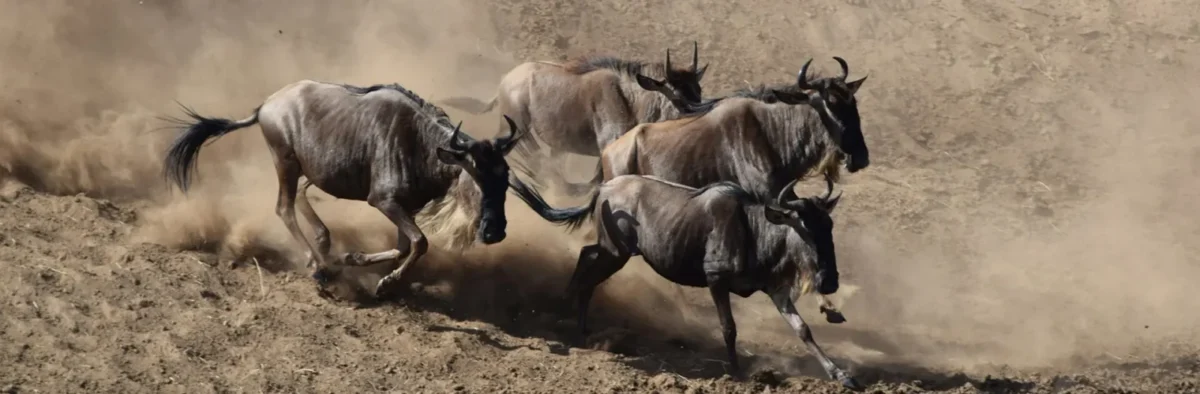
Where to See the Great Wildebeest Migration in 2026–2027
The Great Wildebeest Migration remains one of Africa’s most powerful wildlife spectacles, moving across the Serengeti–Maasai Mara ecosystem in a continuous circular route. Over 1.5 million wildebeest, alongside zebras and gazelles, follow seasonal rainfall patterns in search of fresh grazing. A Great Wildebeest Migration guide helps travelers understand exactly where to position themselves in 2026–2027 to witness calving, river crossings, and large herd movements.
Unlike fixed attractions, the migration shifts constantly. Timing and location depend on rainfall, grass growth, and herd pressure. This makes planning essential if you want to experience specific moments such as the Mara River crossings or the calving season in southern Serengeti.
This guide explains the key locations across Tanzania and Kenya where you can see the migration in 2026–2027, broken down by season and wildlife behavior.
Southern Serengeti and Ndutu: Calving Season Hotspot (December to March)
The southern Serengeti and Ndutu region host the most dramatic start of the migration cycle. During this period, short-grass plains attract massive herds that gather for calving.
A Great Wildebeest Migration guide identifies Ndutu as the most reliable place to witness newborn calves and intense predator activity.
More than 400,000 calves are born within a few weeks. Lions, cheetahs, and hyenas follow closely, creating constant predator-prey interactions across open plains. The flat terrain also improves visibility, making wildlife photography easier and more rewarding.
Central Serengeti: The Year-Round Migration Corridor (April to June)
As rains end in the south, herds begin moving north through the central Serengeti. This region acts as a key transit corridor, especially around the Seronera Valley.
A Great Wildebeest Migration guide highlights central Serengeti as one of the most dependable safari regions in Tanzania.
Even when the migration spreads out, resident wildlife remains strong. Lions, leopards, elephants, and giraffes stay active throughout the year, ensuring consistent game viewing.
The movement through this area often feels gradual, with large herds spreading across multiple valleys and plains.
Western Serengeti: Grumeti River Crossings (May to July)
The western Serengeti becomes critical as herds approach the Grumeti River. This is one of the first major river obstacles in the migration route.
A Great Wildebeest Migration guide highlights Grumeti crossings as unpredictable but highly dramatic events.
Large crocodiles inhabit the river, creating high-stakes crossings when herds gather at the banks. Unlike the Mara River, crossings here are less crowded, offering a more exclusive safari experience.
Wildlife disperses across open woodland and river corridors, creating a mix of movement and tension as herds prepare for the northern journey.
Northern Serengeti: Mara River Crossings (July to October)
The northern Serengeti delivers the most iconic migration experience in Africa. Between July and October, herds gather along the Mara River before attempting dangerous crossings into Kenya.
A Great Wildebeest Migration guide identifies this region as the peak highlight of the entire migration cycle.
Thousands of wildebeest gather at steep riverbanks, waiting for the right moment to cross. Strong currents, steep drops, and crocodile presence create intense survival pressure.
This area offers multiple crossing points, and timing determines success. Some days show dramatic crossings, while others involve long waiting periods.
Maasai Mara: Kenya’s Migration Frontier (July to October)
Once herds cross into Kenya, they spread across the Maasai Mara’s open plains. This marks the northern extension of the migration.
A Great Wildebeest Migration guide highlights the Maasai Mara as the best place in Kenya to witness river crossings and predator activity.
Lions, cheetahs, and hyenas follow closely behind the herds, creating frequent hunting scenes across grasslands. The concentration of wildlife makes the Mara one of the most intense safari destinations in Africa during this period.
The experience here feels more compact compared to the Serengeti, but wildlife density remains extremely high.
Return Journey to Serengeti (October to December)
After months in Kenya and northern Serengeti, the herds begin moving south again as rainfall patterns shift.
A Great Wildebeest Migration guide notes that this phase is less predictable but still offers strong wildlife viewing opportunities.
Large groups move steadily through central Serengeti, gradually returning to the southern plains where calving will begin again.
This movement completes the migration cycle, maintaining a continuous loop driven by seasonal rainfall.
Best Places to See the Migration in 2026–2027
Choosing the right location depends on the experience you want:
Ndutu (Southern Serengeti): Best for calving and predator action
Central Serengeti: Reliable year-round wildlife viewing
Western Serengeti: Early river crossings at Grumeti
Northern Serengeti: Peak Mara River crossings
Maasai Mara: High-density predator and crossing action in Kenya
A Great Wildebeest Migration guide recommends flexibility, as exact herd movements shift slightly each year depending on rainfall.
Tanzania vs Kenya: Where Should You Focus?
Both countries offer strong migration experiences, but each delivers a different perspective.
Tanzania provides a longer viewing window across multiple phases of the migration, from calving to river crossings. Kenya offers more concentrated wildlife viewing during the peak crossing season.
A combined itinerary across both countries offers the most complete migration experience for 2026–2027.
Conclusion
The Great Wildebeest Migration in 2026–2027 will continue its natural cycle across Tanzania and Kenya, offering multiple viewing opportunities depending on season and location. From calving in the southern Serengeti to river crossings in the north and predator action in the Maasai Mara, each region delivers a distinct experience within the same movement.
A Great Wildebeest Migration guide shows that success depends on timing and positioning. Understanding where the herds are likely to be at each stage ensures a safari experience that captures one of the greatest wildlife events on Earth.