
Where to See the Great Wildebeest Migration in 2026–2027
June 29, 2026
Great Migration Calendar.
June 29, 2026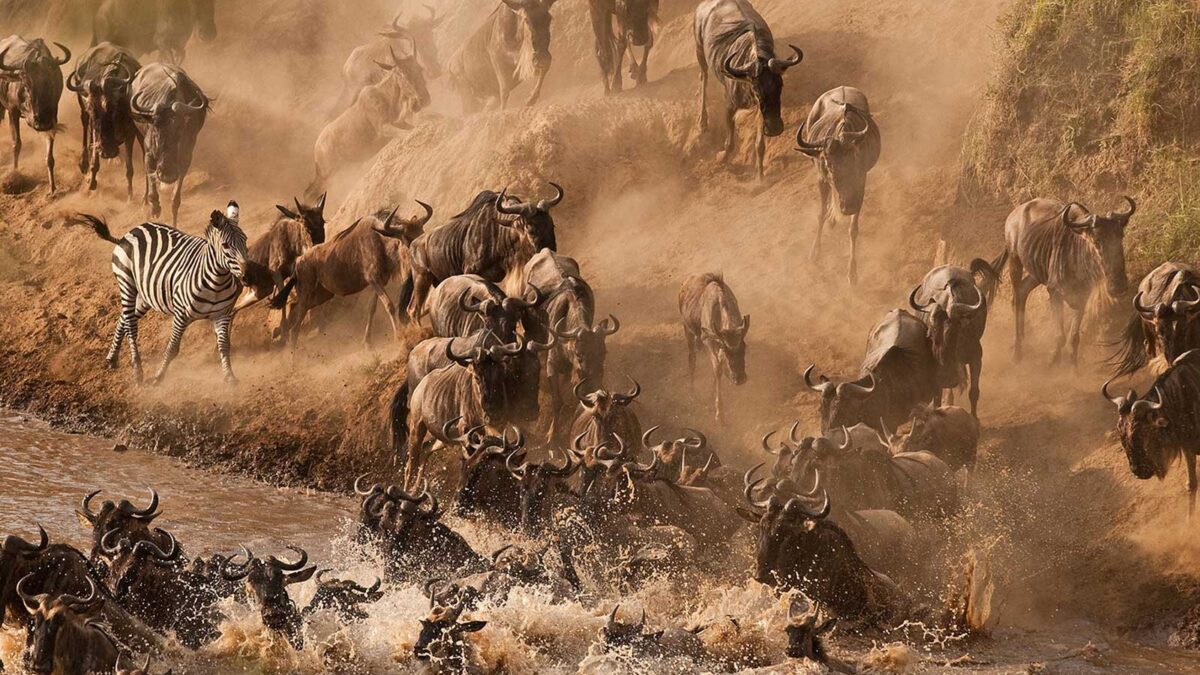
When to See the Great Wildebeest Migration in 2026–2027
The Great Wildebeest Migration in 2026–2027 follows a natural cycle driven by rainfall patterns across the Serengeti–Maasai Mara ecosystem. More than 1.5 million wildebeest, alongside zebras and gazelles, move continuously throughout the year, meaning the timing of your safari determines the exact experience you will witness. A great wildebeest migration guide helps travelers understand not only where to go but also when to travel to catch specific highlights such as calving season, river crossings, and herd movement phases.
Unlike fixed wildlife events, the migration changes location throughout the year. Each season offers a different safari experience, and understanding this cycle is the key to planning a successful 2026–2027 migration safari.
December to March: Calving Season in Southern Serengeti and Ndutu
The migration year begins in the southern Serengeti and Ndutu region, where vast herds gather on nutrient-rich short grass plains. This period marks the calving season, one of the most dramatic wildlife events in Africa.
A great wildebeest migration guide highlights this as the most important breeding phase of the entire cycle, when hundreds of thousands of calves are born within a short window. The open plains make it easy to spot large herds spread across the landscape, while predators such as lions, cheetahs, and hyenas remain highly active due to the abundance of vulnerable newborns. This period delivers intense wildlife interactions and some of the best photographic conditions of the entire migration year.
April to June: Movement Through Central Serengeti
As the rains begin to shift northward, the herds gradually leave the southern plains and move into the central Serengeti. This transition period spreads wildlife across wider areas, especially around the Seronera Valley, which becomes a key movement corridor.
A Great Wildebeest Migration guide identifies this phase as one of the most reliable times for general safari viewing in Tanzania. While the herds may not remain in one fixed location for long, the central Serengeti supports strong resident populations of lions, leopards, elephants, and giraffes, ensuring consistent wildlife encounters even as the migration spreads out across the plains.
May to July: Western Serengeti and Grumeti River Phase
During this period, the migration reaches the western corridor of the Serengeti, where herds approach the Grumeti River. This marks one of the first major river challenges in the annual cycle.
A great wildebeest migration guide highlights this stage for its unpredictable but dramatic river crossings. Large crocodiles inhabit the Grumeti River, and when crossings occur, they create high-intensity wildlife moments. Although not as famous as the Mara River crossings, this phase offers a quieter and more exclusive safari experience with fewer tourists and wide-open wilderness.
July to October: Northern Serengeti and Maasai Mara River Crossings
From July onwards, the migration reaches its peak in the northern Serengeti and extends into Kenya’s Maasai Mara. This is the most sought-after period for witnessing the famous Mara River crossings.
A great wildebeest migration guide identifies this as the most dramatic stage of the entire migration cycle. Herds gather along steep riverbanks, waiting to cross dangerous waters filled with strong currents and crocodiles. The timing of crossings is unpredictable, but when they occur, they create some of the most iconic wildlife scenes in Africa. Predator activity also increases significantly in both the Serengeti and Maasai Mara during this period.
October to December: Return Journey to Southern Serengeti
As the short rains begin, the herds start moving south again from the Maasai Mara and northern Serengeti. This return phase completes the circular migration cycle.
A great wildebeest migration guide explains that this period is less concentrated than the river crossing season, but it still offers strong wildlife viewing as large groups travel across the central Serengeti toward the southern plains. The movement is steady and gradual, setting the stage for the next calving season in Ndutu.
Conclusion
The best time to see the Great Wildebeest Migration in 2026–2027 depends entirely on the experience you want, since each phase of the year delivers a different wildlife highlight. From the calving season in the southern Serengeti between December and March, to river crossings in the north between July and October, and the return journey from October to December, the migration offers a continuous cycle of movement across Tanzania and Kenya.
A great wildebeest migration guide shows that there is no single best month, only different opportunities throughout the year. Choosing the right timing allows travelers to witness one of the most extraordinary wildlife events on Earth at its most dramatic moments.