
Kafue National Park
June 25, 2026
Amboseli National Park Guide
June 25, 2026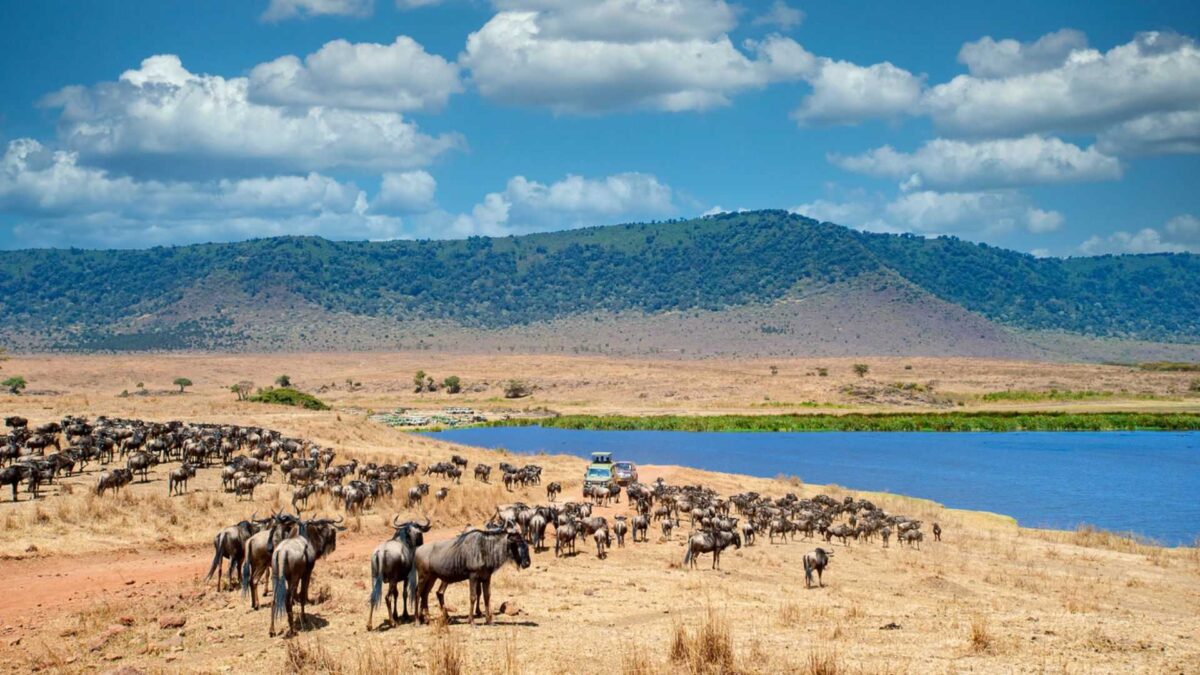
Ngorongoro Crater: Everything You Need to Know Before You Go
The Ngorongoro Crater stands as one of Africa’s most extraordinary natural wonders, formed by a collapsed volcano that created a self-contained ecosystem teeming with wildlife. A Ngorongoro Crater guide introduces travelers to a UNESCO World Heritage Site where steep crater walls enclose vast grasslands, lakes, forests, and wetlands, all supporting one of the highest densities of large mammals in Africa.
Unlike open safari landscapes such as the Serengeti, the crater creates a natural enclosure that concentrates wildlife within a relatively small area. This makes game viewing highly reliable, with chances to see lions, elephants, buffalo, rhinos, hippos, and countless other species in a single day.
This Ngorongoro Crater guide explores wildlife, geology, safari experience, best time to visit, accommodation, and essential travel insights for planning a Tanzania safari.
Why the Ngorongoro Crater Is So Unique
The Ngorongoro Crater is the world’s largest intact volcanic caldera, measuring about 19 kilometers in diameter. Its steep walls rise over 600 meters, creating a natural enclosure that protects a complete ecosystem inside.
A Ngorongoro Crater guide highlights how this geological formation supports year-round wildlife density, unlike migratory ecosystems where animals move seasonally.
The crater floor combines grasslands, swamps, forests, and soda lakes, each supporting different species and ecological interactions.
Wildlife in the Ngorongoro Crater
Ngorongoro supports one of the densest populations of large mammals in Africa, making it one of the best places for short safari experiences.
A Ngorongoro Crater guide highlights lions, elephants, buffalo, rhinos, hippos, zebras, wildebeest, and various antelope species as key sightings.
Big Five Encounters
The crater is one of the few places in East Africa where visitors can realistically see all members of the Big Five in a single day, including the endangered black rhino.
Predator Population
Lions are commonly seen across the crater floor, while hyenas play a major role as both predators and scavengers. Leopards are more elusive and often stay in forested crater rim areas.
Herbivores and Plains Game
Large herds of zebras, wildebeest, gazelles, and buffalo dominate the open plains, especially near water sources and grazing areas.
The Crater Landscape and Ecosystem
The Ngorongoro Crater offers a unique mix of habitats within a confined space. Grasslands dominate the center, while swamps and lakes support aquatic life and bird species.
A Ngorongoro Crater guide emphasizes the importance of Lerai Forest, Lake Magadi, and the central plains as key ecological zones.
The steep crater walls create natural boundaries that limit animal movement, contributing to the high concentration of wildlife.
Safari Experience in Ngorongoro Crater
Game drives in the Ngorongoro Crater follow a single descent road into the crater floor, where wildlife viewing begins almost immediately.
A Ngorongoro Crater guide highlights early morning descents as the best time for wildlife activity and photography.
The compact size of the crater allows travelers to explore multiple habitats in a single game drive, increasing the chances of diverse sightings.
Birdlife in Ngorongoro Crater
Ngorongoro is home to over 500 bird species, supported by its varied ecosystems and water bodies.
A Ngorongoro Crater guide highlights flamingos on Lake Magadi, raptors in open skies, and forest species along crater walls.
Birdwatching remains strong year-round, especially during the wet season when migratory species arrive.
Maasai Presence Around Ngorongoro
The Ngorongoro Conservation Area is unique because it allows Maasai communities to live alongside wildlife.
A Ngorongoro Crater guide highlights the coexistence of pastoralism and conservation as a defining feature of the region.
Maasai villages around the crater offer cultural experiences that provide insight into traditional lifestyles and land use practices.
Best Time to Visit Ngorongoro Crater
Ngorongoro Crater offers excellent wildlife viewing year-round due to its enclosed ecosystem.
The dry season from June to October provides clearer visibility and easier wildlife spotting.
The wet season from November to May brings lush green landscapes, fewer tourists, and strong birdwatching opportunities.
A Ngorongoro Crater guide recommends both seasons depending on whether travelers prioritize photography or crowd-free experiences.
Accommodation Near Ngorongoro Crater
Accommodation options are located along the crater rim and nearby highlands, offering dramatic views and cool mountain air.
A Ngorongoro Crater guide highlights lodges on the crater rim for panoramic sunrise and sunset views over the caldera.
Lodges near Karatu town offer more accessible and comfortable stays with short driving distances to the crater entrance.
Many properties combine luxury comfort with proximity to one of Africa’s most famous wildlife destinations.
Conservation and Protected Status
Ngorongoro is part of a UNESCO World Heritage Site that integrates wildlife conservation with human habitation.
A Ngorongoro Crater guide highlights conservation efforts focused on balancing tourism, wildlife protection, and Maasai pastoralism.
Strict regulations help preserve the crater’s ecological integrity while supporting local communities.
Conclusion
Ngorongoro Crater delivers one of the most concentrated and rewarding safari experiences in Africa, where diverse wildlife, dramatic landscapes, and cultural presence come together inside a natural volcanic amphitheater. From Big Five sightings on the crater floor to flamingos on soda lakes and Maasai communities along the rim, every element contributes to a unique ecosystem.
A Ngorongoro Crater guide reveals a destination where nature operates within a perfectly enclosed world, offering reliable wildlife encounters and unforgettable scenery in a single safari experience.