
Serengeti vs Maasai Mara
June 29, 2026
Liuwa Plain Migration
June 29, 2026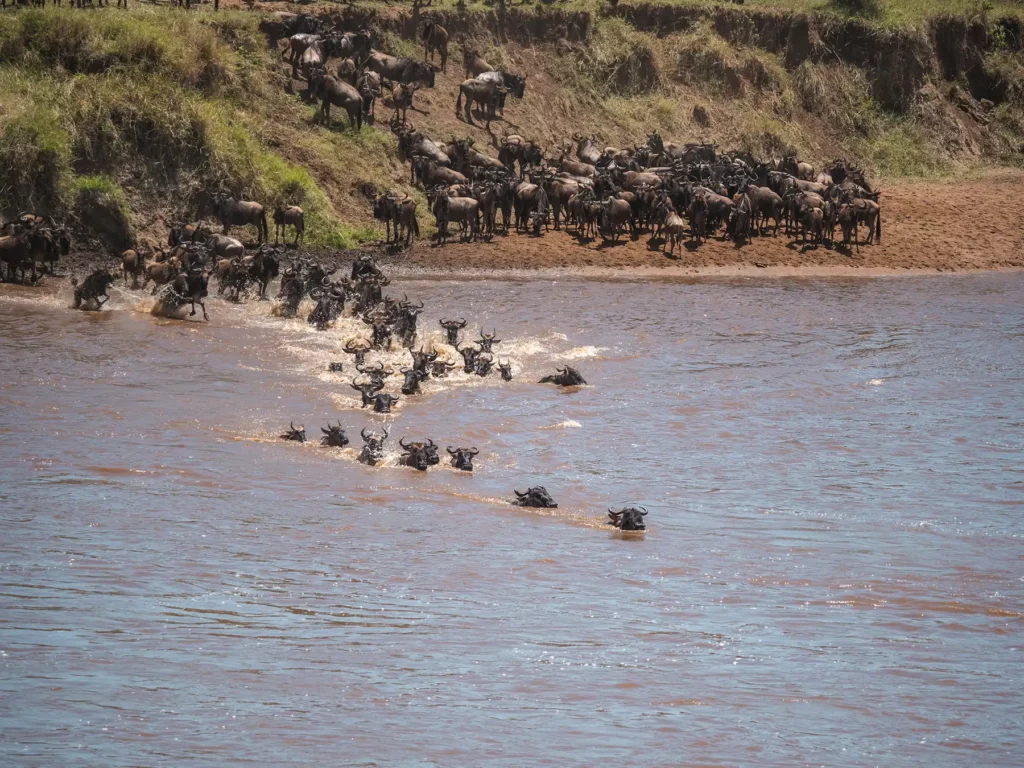
Mara River Crossings: The Best Time to Witness the Drama
The Mara River crossings represent the most dramatic moment of the Great Wildebeest Migration, where thousands of wildebeest and zebras gather at steep riverbanks before plunging into fast-flowing waters filled with crocodiles. A Mara River crossing guide helps travelers understand not only when to visit, but also how the timing, location, and weather patterns influence one of Africa’s most intense wildlife spectacles.
This event takes place between the northern Serengeti in Tanzania and the Maasai Mara in Kenya, usually between July and October. However, exact crossing moments remain unpredictable because they depend on herd pressure, predator presence, and river conditions rather than fixed schedules.
This guide explains the best time to witness Mara River crossings in 2026–2027 and how to plan a safari around this extraordinary natural event.
Why the Mara River Crossings Are So Dramatic
The Mara River is one of the final natural barriers in the migration cycle. Wildebeest must cross it to reach fresh grazing in Kenya’s Maasai Mara, but the river presents multiple dangers, including strong currents, steep banks, and large Nile crocodiles waiting below the surface.
A Mara River crossing guide highlights that the drama comes from uncertainty, as herds often gather for hours or even days before committing to cross.
When the movement finally begins, chaos unfolds quickly as animals rush into the water, creating intense survival scenes that define the entire migration experience.
Best Time for Mara River Crossings in 2026–2027
The most reliable period to witness Mara River crossings falls between late July and early October, when the migration reaches the northern Serengeti and Maasai Mara. During this window, large herds gather along multiple crossing points, increasing the chances of witnessing action.
A Mara River crossing guide emphasizes that August and September offer the highest probability of dramatic crossings due to peak herd concentration in both Tanzania and Kenya.
July often marks the beginning of the crossings, while October sometimes offers late movements as herds begin returning south.
Northern Serengeti: Tanzania’s Best Viewing Zone
The northern Serengeti provides some of the most strategic viewing points for Mara River crossings on the Tanzanian side. Key areas such as Kogatende and Lamai offer direct access to multiple crossing points.
A Mara River crossing guide highlights this region for its lower crowd levels compared to Kenya and its wide network of potential crossing sites.
Visitors often experience longer waiting periods, but the reward comes in the form of more natural and less congested wildlife encounters.
Maasai Mara: Kenya’s Classic Crossing Experience
On the Kenyan side, the Maasai Mara delivers some of the most famous river crossing scenes in Africa. The riverbanks here are more accessible, and wildlife density remains extremely high during peak migration months.
A Mara River crossing guide identifies the Mara Triangle and surrounding conservancies as prime locations for crossing activity.
Once herds enter Kenya, predator interactions intensify, with lions, crocodiles, and hyenas closely following the movement of the herds across the plains.
What Influences the Timing of Crossings
Mara River crossings do not follow a strict timetable, which makes them unpredictable even during peak season. Several natural factors influence when and where crossings occur.
A Mara River crossing guide explains that herd pressure builds when large groups gather along riverbanks waiting for grazing conditions to improve on the opposite side.
Predator presence, especially crocodiles in the river and lions near exit points, also affects crossing behavior. Weather conditions such as rainfall upstream can change water levels and flow strength, further influencing timing.
How Long You Should Stay for a Crossing Safari
Because crossings are unpredictable, short stays often miss the action. Longer stays significantly improve the chances of witnessing at least one major crossing event.
A Mara River crossing guide recommends spending several days in either the northern Serengeti or Maasai Mara during peak months to maximize success.
Morning and late afternoon game drives increase chances, as herds tend to be more active during cooler hours.
Photography Opportunities at the Mara River
The Mara River crossings offer some of the most powerful wildlife photography moments in Africa. Dust, water spray, and dramatic movement create dynamic scenes that capture raw survival energy.
A Mara River crossing guide highlights wide-angle compositions of herds entering the river and close-up shots of predator interactions as key photographic opportunities.
Lighting conditions during early morning and late afternoon enhance depth, contrast, and motion in images.
Conclusion
The Mara River crossings remain the most iconic and unpredictable moment of the Great Wildebeest Migration, offering intense wildlife drama between July and October each year. While August and September provide the highest probability of sightings, no exact schedule guarantees a crossing, which is what makes the experience so powerful.
A Mara River crossing guide shows that success depends on timing, patience, and location choice between the northern Serengeti and Maasai Mara. When all conditions align, the result is one of the most unforgettable wildlife spectacles on Earth.