
Cape Malay Culture in Cape Town
July 29, 2026
African Food On Safari
July 29, 2026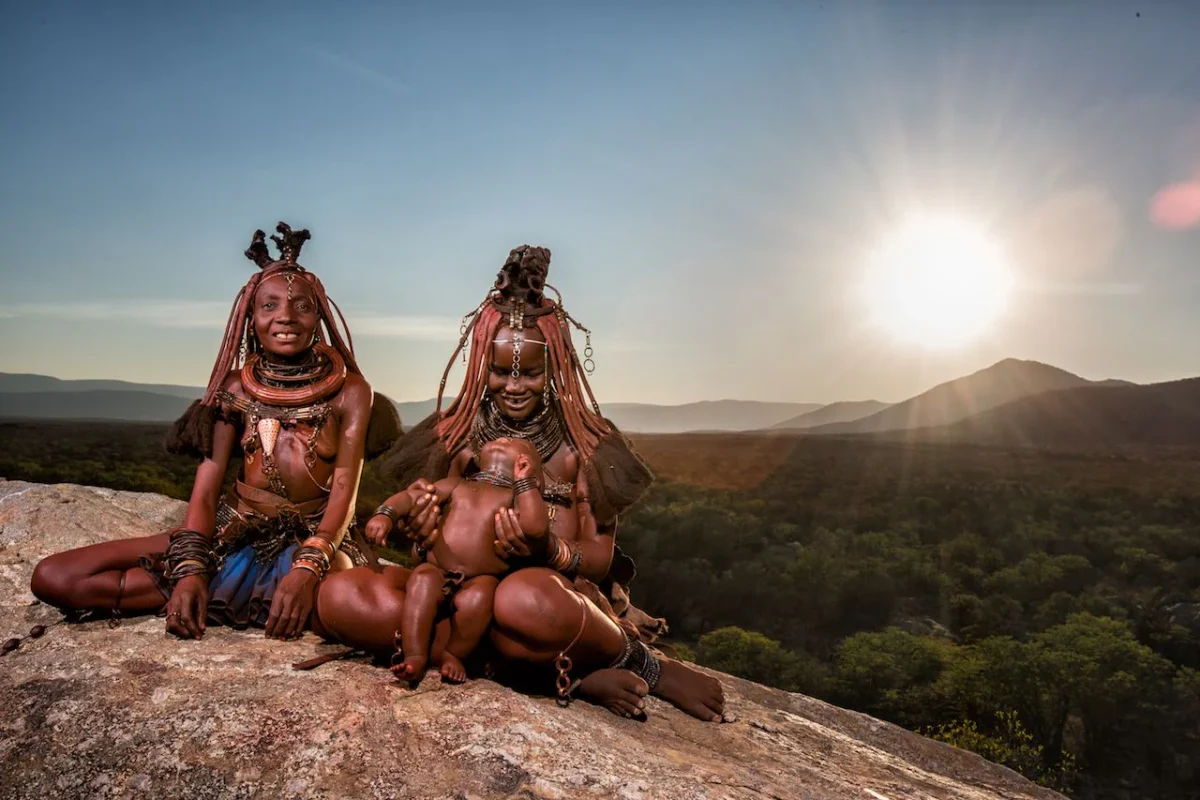
Himba People of Namibia: A Cultural Encounter Guide
The Himba people are one of Namibia’s most distinctive Indigenous communities. Known for their traditional lifestyle, striking appearance, and deep connection to the land, the Himba have attracted interest from travelers seeking meaningful cultural experiences.
A visit to a Himba community offers more than a chance to see traditional clothing and homes. It provides an opportunity to learn about family life, cattle keeping, beauty traditions, spirituality, and the challenges of preserving culture in a changing world.
Who Are the Himba People?
The Himba are a semi-nomadic pastoralist community living mainly in northwestern Namibia. Many Himba communities live in the Kunene Region, an area known for its rugged landscapes, remote settlements, and limited rainfall.
The Himba are closely related to the Herero people and share historical and linguistic connections with them. Their language belongs to the Bantu language family and forms an important part of their cultural identity.
Traditionally, Himba communities depend heavily on livestock, especially cattle and goats. Animals provide food, social status, and wealth, while also playing an important role in family relationships and traditional ceremonies.
Where Do the Himba Live?
The Kunene Region provides one of the best places to learn about Himba culture. This remote part of Namibia includes dramatic mountains, dry riverbeds, desert landscapes, and scattered settlements.
Opuwo is often used as a base for cultural visits in the region. The town provides access to surrounding Himba communities and also shows how traditional lifestyles interact with modern Namibian society.
Some Himba families continue to move with their livestock in search of grazing and water. Others live closer to permanent settlements and have greater access to schools, healthcare, shops, and other modern services.
This diversity is important to understand when planning a cultural experience. Not every Himba family lives in exactly the same way, and traditions can vary between communities.
Traditional Himba Homes
Traditional Himba homesteads are designed to suit the dry environment of northwestern Namibia. Many homes use locally available materials such as branches, mud, and other natural resources.
A traditional homestead may contain several small structures arranged around a central area. The layout reflects the importance of family, livestock, and social relationships within the community.
Cattle often remain close to the homestead and hold considerable cultural importance. Their presence also reflects the pastoral lifestyle that has shaped Himba society for generations.
Visiting a homestead with a local guide can help travelers understand how these spaces function. It also creates an opportunity to learn about daily routines rather than simply observing traditional buildings.
Himba Traditional Clothing
Traditional Himba clothing reflects both cultural identity and the environment. Women are particularly recognizable for their distinctive hairstyles, jewelry, leather clothing, and use of otjize.
Otjize is a mixture of red ochre and animal fat that Himba women traditionally apply to their skin and hair. The reddish appearance has become one of the most recognizable visual features associated with Himba culture.
The practice also has practical and cultural significance. The mixture can help protect the skin from the dry environment and insects while forming part of traditional beauty and identity.
Himba clothing and adornment should not be viewed simply as costumes. These traditions carry meaning and remain connected to family identity, beauty, age, social roles, and cultural values.
The Meaning of Otjize
Otjize is one of the most widely recognized elements of Himba cultural identity. Women traditionally prepare the mixture using red ochre and animal fat before applying it to their skin and hair.
The reddish color creates a distinctive appearance that has become closely associated with the Himba. The practice also reflects traditional ideas of beauty and personal care.
Travellers should avoid assuming that every aspect of the practice has only one meaning. Cultural traditions can have several layers of significance, and local explanations provide the best way to understand them.
A respectful cultural visit allows community members to explain these practices in their own words. This approach creates a more meaningful experience than simply taking photographs.
Himba Hairstyles and Jewellery
Hairstyles can communicate aspects of identity within Himba society. Different styles may relate to age, marital status, and stages of life.
Jewelry also forms an important part of traditional appearance. Women and girls may wear necklaces, bracelets, anklets, and other ornaments made from materials available within their communities.
These details are not simply decorative. They can communicate social information and help maintain cultural traditions across generations.
Visitors often find Himba adornment visually striking, but cultural context makes the experience more meaningful. A local guide can explain what different styles represent and how traditions change over time.
The Importance of Cattle in Himba Culture
Cattle have a central place in traditional Himba society. They provide milk and other resources while also representing wealth, status, and family connections.
Livestock can influence important social relationships and ceremonies. Cattle ownership may also contribute to a family’s ability to support marriages and other community obligations.
The importance of livestock explains why Himba communities have traditionally followed seasonal patterns of movement. Access to grazing and water remains essential in the dry Kunene environment.
Climate change and increasing pressure on natural resources have made pastoral life more challenging. These changes continue to influence how some Himba families manage livestock and respond to modern conditions.
Family and Social Structure
Family plays a central role in Himba society. Community life includes strong relationships between parents, children, extended relatives, and wider social networks.
Traditional Himba society also recognizes different responsibilities between family members. Elders hold important knowledge and can play significant roles in decision-making and cultural education.
Children learn traditions through everyday life. They observe family members, participate in community activities, and gradually learn skills connected to livestock, household responsibilities, and cultural practices.
This intergenerational transfer of knowledge helps preserve Himba identity. However, modern education, employment, technology, and changing economic conditions are also influencing younger generations.
Himba Spiritual Beliefs
Traditional Himba spirituality is closely connected to ancestors, family, nature, and the environment. Fire holds particular importance within traditional spiritual practices and can represent a connection between the living and their ancestors.
The ancestral fire has a sacred role within some Himba communities. It can be associated with communication, protection, and spiritual continuity.
Traditional beliefs remain important, although individual Himba experiences can vary. Christianity and other outside influences have also reached communities in the region.
Travellers should approach Himba spirituality with respect and avoid treating sacred practices as tourist attractions. Local guides can explain what visitors can and cannot photograph or enter.
Himba Women and Cultural Identity
Himba women play a central role in maintaining many visible aspects of cultural identity. Traditional hairstyles, clothing, jewelry, household activities, and beauty practices can form part of everyday life.
Women also contribute to family life and the management of households and livestock. Their roles vary depending on individual circumstances, family structure, and changing social conditions.
Many cultural experiences focus heavily on Himba women because visitors recognize their traditional appearance. However, a responsible tour should present women as individuals and community members rather than simply as cultural subjects.
Respectful interaction remains essential. Visitors should ask permission before taking photographs and should listen when community members share their own experiences.
Traditional Himba Food
Food traditions reflect the pastoral lifestyle and environmental conditions of the Kunene Region. Milk from cattle and goats has traditionally played an important role in the Himba diet.
Other foods may include grains and products obtained through trade or purchased from nearby settlements. The exact diet can vary according to location, season, livestock availability, and access to markets.
Water remains especially valuable in the dry environment. Communities must carefully manage available resources, particularly during periods of drought.
Learning about food during a cultural visit can therefore reveal important connections between people, livestock, climate, and survival.
Himba Culture and Modern Life
Himba culture continues to change as communities interact with modern society. Schools, mobile phones, healthcare, tourism, markets, and new forms of employment have created opportunities while also influencing traditional lifestyles.
Some Himba people continue to follow pastoral traditions closely. Others combine traditional practices with modern education, business, technology, and urban life.
This mixture of old and new is part of contemporary Himba identity. It is important for visitors to understand that Indigenous communities are not frozen in the past.
A cultural experience should therefore present the Himba as a living community. Their traditions continue to evolve as people make choices about education, work, family, and cultural preservation.
Cultural Tourism Among the Himba
Cultural tourism can provide valuable income for Himba communities when it operates responsibly. Visitors may support local guides, community projects, artisans, transport providers, and other businesses.
However, cultural tourism can also create challenges when communities lose control over how their traditions are presented. Visitors should choose experiences that prioritize respect, informed consent, and fair community participation.
A good cultural encounter allows Himba people to share their stories rather than simply becoming subjects for photographs. Travellers should also understand that community visits involve real people living their daily lives.
Responsible tourism can help create a positive relationship between visitors and communities. It can also encourage appreciation for cultural heritage while supporting local livelihoods.
How to Visit a Himba Community Respectfully
Respect should guide every Himba cultural encounter. Always ask before taking photographs, especially when photographing individuals, children, homes, livestock, or spiritual areas.
Visitors should also avoid touching people, clothing, jewelry, or personal belongings without permission. A respectful traveller listens carefully and accepts that some questions, places, or ceremonies may be private.
Buying crafts directly from local artisans can provide additional support to families and communities. Visitors should also avoid giving sweets, money, or other items directly to children unless the community or tour operator recommends it.
A knowledgeable local guide can make the experience much more respectful and informative. Guides can explain cultural etiquette while helping visitors communicate with community members.
Best Time to Experience Himba Culture
The Kunene Region can be visited throughout much of the year, although conditions vary by season. The dry season generally offers easier road conditions and good opportunities for combining cultural visits with wildlife and landscape experiences.
The warmer months can be extremely hot, especially in remote areas. Travellers should prepare with enough drinking water, sun protection, comfortable clothing, and appropriate footwear.
Cultural visits depend on community availability and should not be treated like fixed sightseeing attractions. It is best to arrange visits through reputable local guides or tour operators before travelling into remote areas.
Combining a Himba cultural experience with destinations such as Etosha National Park and the Skeleton Coast can create a diverse Namibia itinerary.
Combining Himba Culture With a Namibia Safari
A Himba cultural experience can fit naturally into a wider Namibian safari. Travellers can explore the wildlife of Etosha National Park before continuing towards the Kunene Region.
The journey can include dramatic desert landscapes, remote valleys, and opportunities to see desert-adapted wildlife. Cultural encounters then add a human perspective to the natural environment.
Travellers can also combine the Kunene Region with destinations such as Damaraland and the Skeleton Coast. This creates an itinerary that includes wildlife, scenery, geology, adventure, and cultural heritage.
The result is a more complete experience of Namibia. Instead of focusing only on landscapes and animals, travelers gain insight into the people who have adapted to this challenging environment.
Why a Himba Cultural Encounter Matters
Meeting the Himba can provide a deeper understanding of Namibia’s cultural diversity. Their traditions demonstrate how communities have adapted to a dry environment while maintaining strong relationships with family, livestock, spirituality, and ancestral heritage.
The experience also encourages travellers to look beyond common images of Indigenous culture. The Himba are not simply a traditional community preserved in time but people navigating education, technology, tourism, climate pressures, and changing economic opportunities.
Responsible cultural tourism can support this heritage when communities have a meaningful role in tourism activities. For visitors, the greatest reward comes from approaching the experience with humility, curiosity, and respect.
Plan Your Himba Cultural Experience
A visit to the Himba people can become one of the most memorable experiences on a Namibian safari. The combination of cultural traditions, pastoral life, striking landscapes, and local hospitality creates an experience that goes beyond conventional sightseeing.
Plan your cultural visit with a responsible local operator and allow enough time for genuine interaction. Respect photography rules, support local businesses, and remain open to learning from the community.
Whether you visit the Kunene Region as part of a northern Namibia itinerary or combine it with Etosha and the Skeleton Coast, a Himba cultural encounter adds depth to your journey. It offers a chance to understand Namibia through both its remarkable landscapes and the people who call them home.