The Wildebeest Life Cycle
November 5, 2026
Cheetah Conservation Status
November 5, 2026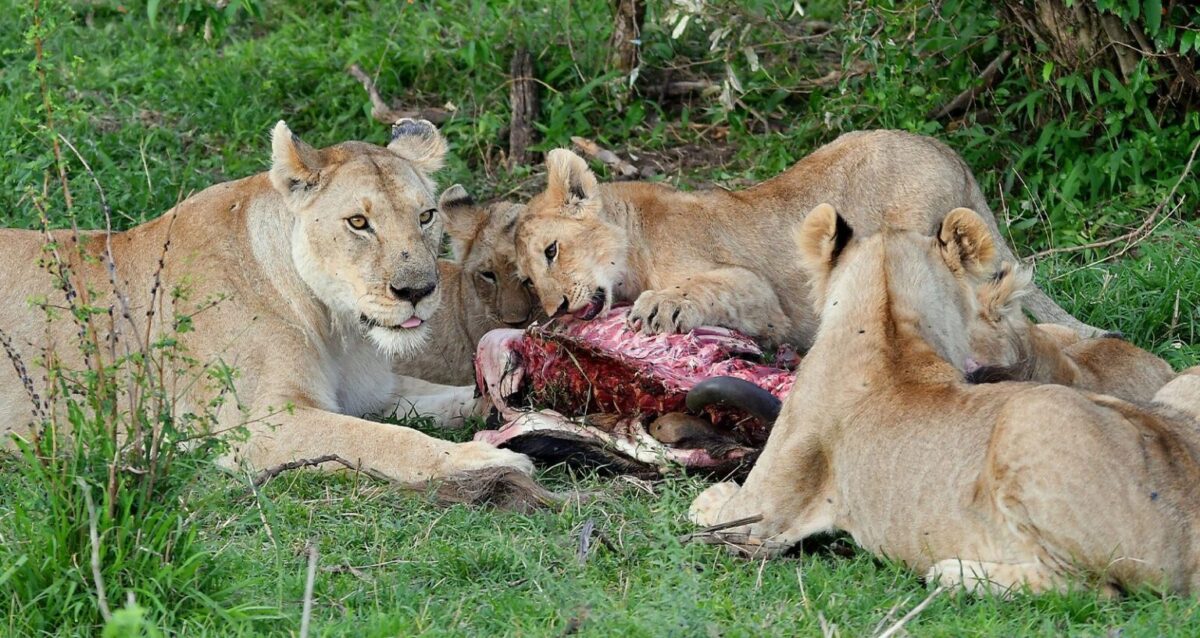
What Do Lions Eat? A Safari Guide’s Prey Breakdown
Lions are powerful carnivores that occupy an important position within African ecosystems. Their diets include a wide range of mammals, from medium-sized antelope to large herbivores such as buffalo and wildebeest. Although popular wildlife documentaries often focus on dramatic hunts, lions also exploit opportunities created by scavenging, vulnerable prey, and changing environmental conditions. Understanding what do lions eat prey Africa research reveals how these predators adapt their feeding strategies across different habitats.
Lion diets vary considerably between regions because prey populations, vegetation, competition, and seasonal conditions influence hunting opportunities. A pride living in the Serengeti may depend heavily on wildebeest and zebras, while lions in other ecosystems may target buffalo, antelope, or different locally abundant animals. Their feeding behaviour reflects both physical capabilities and the ecological conditions surrounding them.
For safari travellers, learning about lion diets adds valuable context to wildlife encounters. A lion resting beside a carcass, stalking antelope, or responding to hyenas demonstrates different aspects of predator ecology. Experienced guides can explain these interactions while helping visitors appreciate the balance between hunting success and the substantial energy demands of large carnivores.
Understanding the Natural Diet of African Lions
African lions are obligate carnivores, meaning they depend on animal-derived nutrients for their survival. Their digestive systems and physical adaptations support a diet based primarily on meat. Powerful jaws, specialised teeth, and muscular bodies allow them to capture and consume a variety of prey.
Lions generally favour animals that provide sufficient food relative to the effort and risk involved in hunting. Medium-sized and large herbivores often form important parts of their diets. However, individual lions may exploit smaller animals or unusual food sources when suitable opportunities arise.
Dietary patterns differ between populations because prey abundance and habitat conditions vary. Researchers investigate lion feeding through direct observations, carcass records, and other ecological methods. These studies demonstrate that lions are flexible predators rather than specialists dependent on one prey species.
Why Lions Prefer Large Herbivores
Large herbivores can provide substantial quantities of meat, making them valuable food sources for lions. Animals such as wildebeest, zebra, and buffalo may support several pride members after a successful hunt. However, capturing large prey can involve considerable danger.
Lions must balance the potential reward against the risk of injury. Large herbivores possess defensive adaptations that include powerful kicks, horns, and substantial body mass. An unsuccessful attack can consume energy without producing food.
Prey selection therefore depends on opportunity, group composition, and environmental conditions. Lions may target vulnerable individuals when circumstances favour success. Their hunting decisions reflect a complex relationship between energy requirements and risk.
Wildebeest: An Important Food Source for Lions
Wildebeest form a major part of lion diets in several East African ecosystems, particularly where large migratory populations occur. Their abundance creates feeding opportunities for resident predators. Lions may hunt wildebeest individually or through cooperative approaches.
The availability of wildebeest changes as herds move between seasonal grazing areas. Lions occupying migration routes may experience periods of abundant prey followed by reduced opportunities. These fluctuations influence feeding behaviour and local predator ecology.
Wildebeest are powerful animals capable of rapid movement and defensive responses. Successful hunts depend on timing, terrain, and the condition of individual prey animals. Observing these encounters reveals the challenges involved in capturing large herbivores.
Zebras and Their Role in Lion Diets
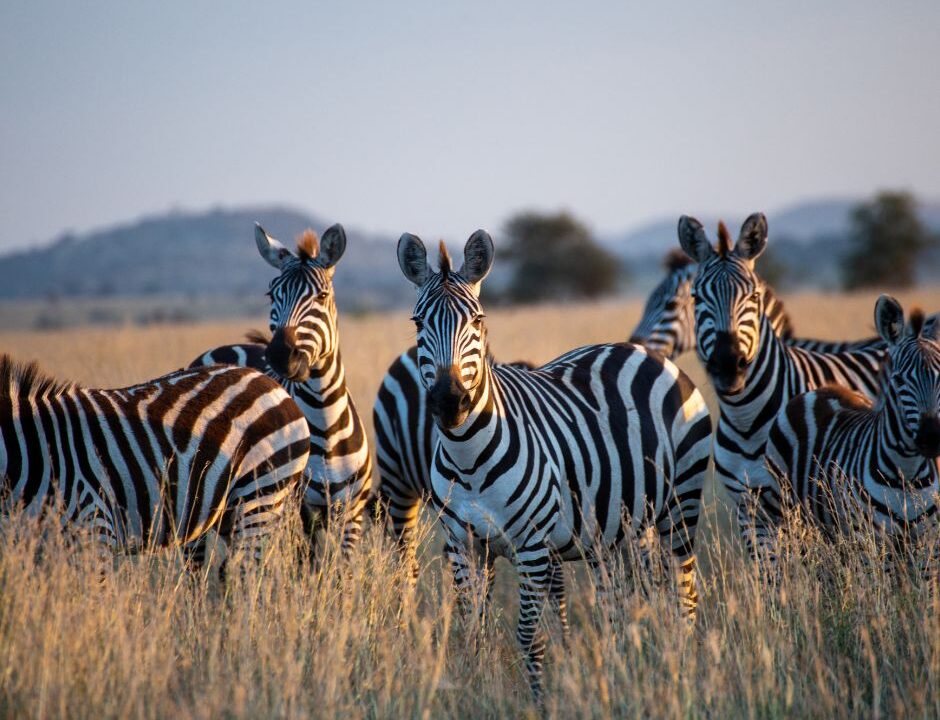
Zebras provide another important food source for lions across several African savannah ecosystems. Their substantial body size offers considerable nutritional rewards, but they are fast and capable of delivering dangerous kicks. Lions must approach carefully to improve their chances of success.
Zebra herds use vigilance and group movement to reduce predation risk. Individuals may respond quickly when predators approach, creating difficult hunting conditions. Lions sometimes exploit vegetation or darkness to approach within striking distance.
The importance of zebras in lion diets varies between regions. In some ecosystems, they represent a major prey species, while elsewhere other herbivores dominate. Local prey abundance strongly influences these differences.
African Buffalo: Powerful and Dangerous Prey
African buffalo are among the most formidable animals regularly hunted by lions. Their large size provides substantial food, but their strength and defensive horns create serious risks. Lions targeting adult buffalo often require favourable conditions and may benefit from cooperation.
Buffalo herds can respond aggressively when predators approach. Adults may confront lions or move together to protect vulnerable individuals. These behaviours make buffalo hunting particularly demanding.
Some lion populations develop considerable experience hunting buffalo where the species is abundant. However, successful attacks still depend on individual circumstances. Safari guides often explain that even powerful predators face significant dangers when confronting large prey.
Antelope Species Commonly Hunted by Lions
Lions hunt numerous antelope species, including impala, kudu, waterbuck, hartebeest, and other animals according to regional availability. Medium-sized antelope can provide valuable food without the same physical risks associated with very large herbivores. Their speed and vigilance nevertheless make them challenging targets.
Impala occur widely in southern African savannah habitats and frequently feature in predator-prey interactions. Their agility allows them to escape through rapid acceleration and sudden changes in direction. Lions often depend on concealment and short attacks when hunting them.
Larger antelope such as kudu may provide more meat but can occupy habitats that complicate pursuit. Their distribution influences where lions hunt and how they approach prey. These differences demonstrate the flexibility of lion feeding behaviour.
Do Lions Eat Giraffes?
Lions can hunt giraffes, although adult giraffes are dangerous prey because of their size and powerful kicks. Calves and vulnerable individuals may face greater risks, but even younger giraffes can be difficult to capture. Successful attacks require favourable circumstances.
Some lion populations occasionally target adult giraffes, particularly where group cooperation and local experience support such attempts. However, giraffes do not form the primary prey of most lion populations. Their importance varies considerably between ecosystems.
Safari visitors may observe lions investigating giraffe herds without launching an attack. Predators assess opportunities according to risk and potential reward. Not every interaction develops into a hunt.
Do Lions Hunt Elephants?
Lions occasionally prey on elephants under unusual circumstances, particularly vulnerable calves or weakened individuals. However, healthy adult elephants are generally far too large and dangerous for ordinary lion hunting strategies. Elephant predation remains exceptional compared with attacks on antelope, zebra, and buffalo.
Certain lion populations have developed specialised behaviour involving attacks on young elephants under particular environmental conditions. These cases attract scientific interest because they demonstrate behavioural flexibility. They should not be interpreted as typical lion feeding patterns.
Elephants often respond defensively when lions approach calves. Family members may gather protectively around vulnerable individuals. These interactions demonstrate the importance of elephant social behaviour in reducing predation risks.
Do Lions Eat Hippopotamuses?
Lions may occasionally prey on hippopotamuses, particularly young or vulnerable individuals. However, adult hippos possess enormous strength, substantial body mass, and dangerous jaws. They are therefore highly risky targets.
Hippos generally spend much of the day in water and emerge to graze during cooler periods. Lions may encounter them near riverbanks or grazing areas. Such interactions do not necessarily result in hunting attempts.
Documented cases of lion predation on hippos reveal the flexibility of large predators, but these events remain unusual. Safari travellers should avoid assuming that lions regularly hunt every large mammal they encounter. Prey selection depends on realistic opportunities and risk.
Do Lions Eat Warthogs?
Warthogs can form part of lion diets, particularly in habitats where they occur frequently. Their relatively smaller size may make them suitable prey for individual lions under favourable circumstances. However, warthogs can run quickly and use burrows for shelter.
Lions may encounter warthogs while moving through open grasslands or woodland edges. A successful attack often depends on surprise and the availability of cover. Warthogs may escape by accelerating rapidly towards suitable shelter.
The species contributes to the varied diets of African predators. Although warthogs provide less meat than large antelope, they can still represent valuable feeding opportunities. Their importance varies according to local conditions.
Do Lions Eat Smaller Animals?
Lions sometimes capture smaller mammals, birds, and other animals when suitable opportunities arise. However, their substantial energy requirements make larger prey generally more rewarding. Small animals rarely provide enough food to support an entire pride.
Individual lions may exploit unexpected opportunities while travelling or resting. Such behaviour reflects dietary flexibility rather than a specialised preference for small prey. Young lions may also practise hunting skills on smaller animals.
These encounters remind travellers that predator diets cannot be reduced to a short list of preferred species. Lions respond to food availability and changing circumstances. Their feeding behaviour remains opportunistic within the limits of their physical abilities.
How Lions Hunt Their Prey
Lions commonly use stalking and short, powerful attacks rather than prolonged high-speed pursuits. Their muscular bodies provide explosive acceleration, but they cannot maintain extreme running speeds for extended periods. Approaching prey closely improves the chances of success.
Vegetation, darkness, and terrain can help lions conceal their movements. Some hunts involve individual animals, while others include several pride members. Cooperation may become particularly useful when targeting large or difficult prey.
Hunting success varies according to prey species, environmental conditions, and group composition. Many attempts fail because prey detect danger or escape before the lions can make contact. These unsuccessful hunts form a normal part of predator ecology.
Do Male Lions Hunt?
Male lions hunt as well as females, despite the common misconception that lionesses perform all hunting activities. Males may capture prey independently or participate in group hunts. Their behaviour depends on habitat, social circumstances, and food availability.
Male lions possess substantial strength that can help them confront large prey. However, their size and conspicuous appearance may influence hunting strategies. Some males rely heavily on opportunities associated with pride members, while others hunt regularly.
The division of hunting activity varies between populations. Researchers have documented differences associated with habitat and social organisation. Safari guides should therefore avoid presenting one universal pattern.
Why Lions Sometimes Scavenge
Lions are capable scavengers and may feed on carcasses killed by other predators or animals that died naturally. Scavenging allows them to obtain food without expending the energy required for hunting. However, competition over carcasses can create risks.
Lions may displace hyenas, leopards, or other carnivores from available food under suitable circumstances. The outcome depends on the number and strength of animals involved. Scavenging interactions can become particularly dramatic when several predator species gather.
The behaviour does not make lions less effective hunters. Many successful predators also exploit available carcasses because doing so can provide an energetic advantage. Scavenging forms a normal part of carnivore ecology.
How Much Meat Can a Lion Eat?
Adult lions can consume substantial quantities of meat during a single feeding event, particularly after periods without food. Their intake depends on body size, hunger, and the amount of food available. A large carcass may support several individuals over an extended period.
Lions do not necessarily eat the same amount every day. Their feeding patterns reflect the irregular success of hunting and scavenging. Periods of abundant food may alternate with days when little or no meat becomes available.
This flexibility helps lions survive in environments where prey capture remains unpredictable. However, prolonged food shortages can affect body condition and reproductive success. Healthy prey populations remain essential for lion conservation.
Feeding Hierarchies Within Lion Prides
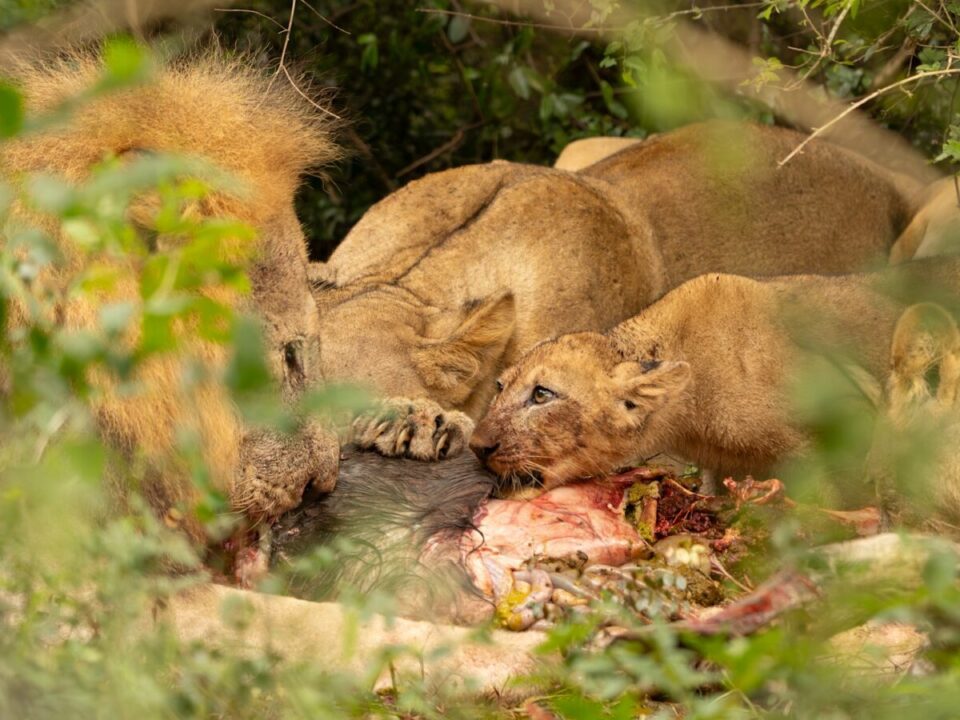
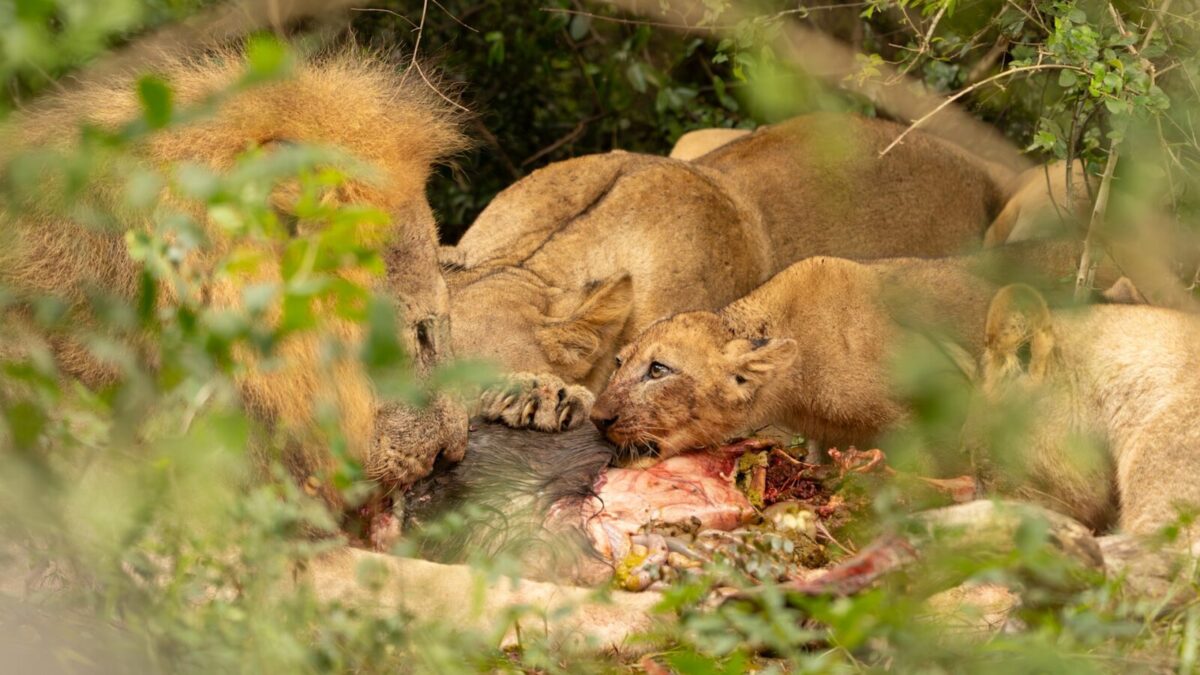
Lions may compete intensely when feeding on a carcass. Larger or dominant individuals sometimes gain access to food before smaller animals. Cubs may struggle when resources are limited, particularly if several adults compete over a relatively small kill.
Feeding interactions can involve growling, pushing, and aggressive displays. These behaviours reflect competition over valuable resources rather than a complete absence of social bonds. Pride members cooperate in some circumstances while competing in others.
The size of the carcass influences the intensity of competition. Large prey may provide sufficient food for numerous lions, while smaller animals create greater pressure. Observing feeding behaviour reveals the complexity of lion social relationships.
How Lion Cubs Learn to Hunt
Lion cubs gradually develop hunting abilities through play, observation, and experience. Young animals chase one another, practise stalking movements, and investigate prey remains. These activities contribute to physical coordination and behavioural learning.
As cubs mature, they may accompany adults during hunting activities. Their early attempts often lack the precision and timing of experienced hunters. Repeated exposure helps them develop the skills necessary for independent survival.
Learning continues as young lions encounter different prey species and environmental conditions. Successful hunting requires more than strength because animals must assess opportunities and respond to prey behaviour. Experience plays an important role.
How Seasonal Changes Affect Lion Diets
Rainfall influences vegetation and prey distribution across many African ecosystems. During wetter periods, herbivores may spread across extensive grazing areas. In drier conditions, animals sometimes concentrate near reliable water sources.
Lions respond to these changes by adjusting movement and hunting activity. Their access to particular prey species may vary throughout the year. Seasonal migrations can create temporary periods of abundant food in some territories.
These patterns help explain why lion sightings and hunting opportunities differ between safari seasons. A location that supports large prey concentrations during one month may become quieter later. Understanding seasonal ecology improves safari planning.
Lion Diets in Different African Ecosystems
Lions in the Serengeti frequently encounter wildebeest, zebra, and other grazing herbivores. Their feeding opportunities reflect the movements of large prey populations across grassland habitats. Seasonal migration influences local prey availability.
In Botswana’s Okavango Delta and Chobe region, lions may hunt buffalo, antelope, and other animals associated with floodplains and woodland. South Africa’s Kruger ecosystem supports a broad variety of prey species. Zambia’s South Luangwa also provides diverse hunting opportunities.
These differences demonstrate the adaptability of lions across Africa. Their diets reflect the animals available within particular habitats rather than a fixed menu. Regional ecology shapes predator behaviour.
Where to Observe Lion Hunting on Safari
Tanzania’s Serengeti National Park and Kenya’s Maasai Mara National Reserve provide opportunities to observe lions in productive savannah ecosystems. Their open landscapes can make predator-prey interactions easier to follow. However, actual hunts remain unpredictable.
South Africa’s Kruger National Park and adjoining private reserves also offer excellent lion-viewing opportunities. Botswana’s Okavango Delta and Zambia’s South Luangwa National Park provide contrasting habitats where lions use different hunting strategies. Each destination offers distinctive experiences.
Travellers interested in lion behaviour may benefit from spending several nights in one wildlife area. Repeated game drives increase opportunities to observe changing activity patterns. Experienced guides can explain behaviour without interfering with natural events.
Why Lion Prey Populations Matter for Conservation
Healthy prey populations are essential for maintaining viable lion populations. Habitat loss, excessive hunting of herbivores, and environmental changes can reduce available food. These pressures may force lions to travel farther or increase conflict with people.
Conservation programmes therefore protect entire ecosystems rather than focusing exclusively on predators. Maintaining grazing habitats, movement corridors, and suitable water resources supports prey species and the carnivores that depend on them. Effective management requires long-term ecological monitoring.
Human-wildlife conflict can become more serious when lions encounter livestock near protected areas. Community-based conservation and practical livestock protection measures help reduce these risks. Sustainable coexistence remains important for the future of African lions.
Plan Your Safari
Lions are adaptable predators whose diets reflect the extraordinary diversity of African wildlife. From wildebeest and zebras to buffalo, antelope, and occasional unusual prey, their feeding behaviour demonstrates the relationship between physical ability, opportunity, and ecological conditions. Understanding what lions eat makes predator encounters more meaningful and reveals the importance of protecting healthy ecosystems.
Southern Africa Tours can arrange lion-focused safaris in South Africa, Botswana, Zambia, Tanzania, and Kenya. Our itineraries combine experienced guides, carefully selected accommodation, and responsible wildlife-viewing opportunities. Contact Southern Africa Tours to plan a safari that explores the hunting behaviour and ecological role of African lions.