Why Zebras Have Stripes
November 5, 2026
What Do Lions Eat?
November 5, 2026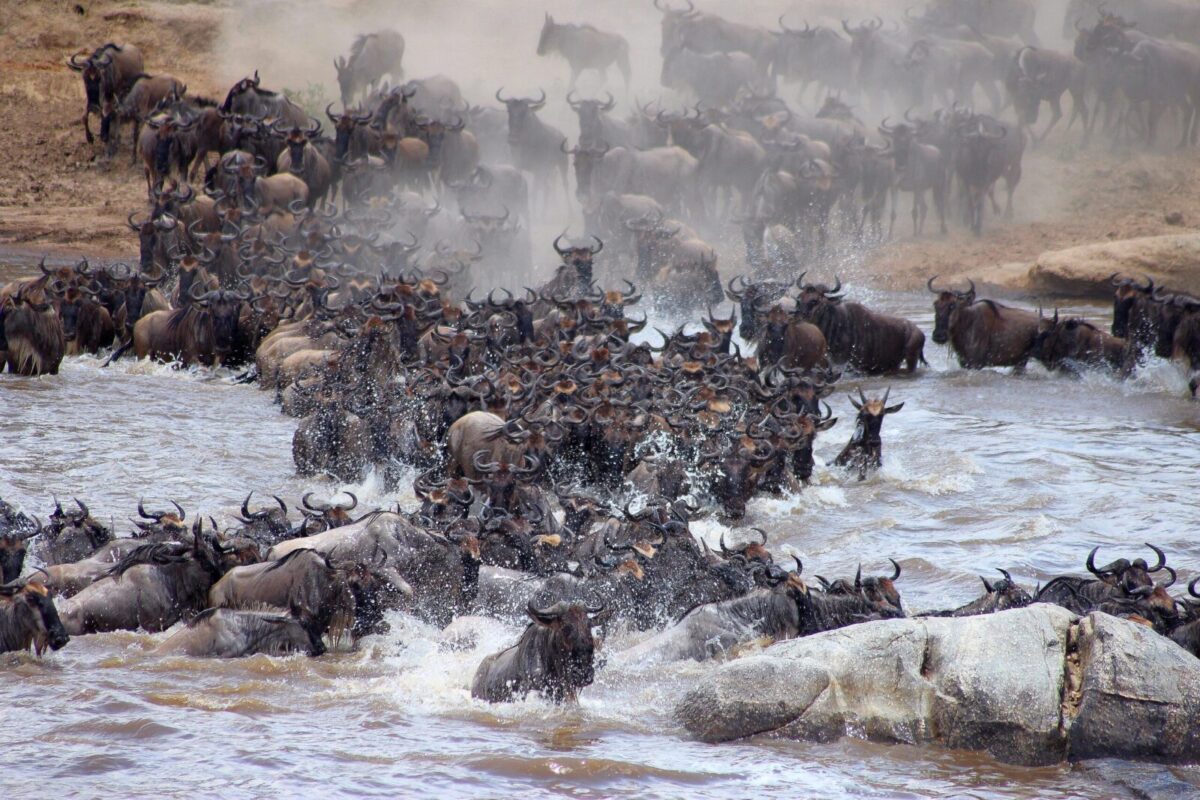
The Wildebeest Life Cycle: Birth, Migration & Survival
The wildebeest life cycle reveals one of the most remarkable survival stories in African wildlife. From the first uncertain steps of a newborn calf to the demanding journeys of mature adults, wildebeest depend on movement, social behaviour, and remarkable physical adaptations to survive. Their lives unfold across grasslands where rainfall, food availability, predators, and seasonal conditions constantly influence their decisions.
The annual movement of wildebeest through the Serengeti-Mara ecosystem has become one of Africa’s most celebrated wildlife spectacles. However, migration represents only one aspect of their biology. Understanding the wildebeest life cycle migration survival relationship requires exploring reproduction, calf development, grazing behaviour, social organisation, and the environmental pressures that influence populations.
For safari travellers, observing wildebeest at different stages of life provides an opportunity to understand the ecological processes that sustain African grasslands. Calving seasons, river crossings, predator encounters, and daily grazing movements all reveal how these animals respond to the challenges of survival.
Understanding the Wildebeest Life Cycle
Wildebeest belong to the antelope family and occupy grassland and savannah habitats across parts of Africa. The two living species are the blue wildebeest and the black wildebeest, which differ in appearance, distribution, and aspects of their ecology. Blue wildebeest are particularly famous for their extensive seasonal movements through East Africa.
The life cycle begins with birth following a gestation period of approximately eight months. Calves develop rapidly and soon begin moving alongside their mothers. As they mature, they learn to locate food, recognise social signals, and respond to predators.
Adult wildebeest may reproduce over several years when environmental conditions support their survival. However, drought, disease, predation, and competition can influence life expectancy. Their life cycle therefore reflects a continuous interaction between individual development and changing ecological conditions.
The Wildebeest Breeding Season
Wildebeest breeding activity often follows seasonal patterns that influence when calves are born. In the Serengeti ecosystem, mating commonly occurs during a relatively concentrated period, with many births taking place several months later. This timing helps align calf development with periods when grazing conditions are favourable.
Male wildebeest compete for reproductive opportunities through territorial displays, vocalisations, and physical confrontations. Their behaviour can become particularly noticeable during the breeding season. Females select mates within the social and environmental conditions prevailing at the time.
The concentration of breeding activity contributes to the synchronised birth patterns that characterise major migratory populations. However, reproductive timing varies between populations and environments. Not every wildebeest herd follows exactly the same seasonal schedule.
Wildebeest Pregnancy and Gestation
Female wildebeest carry their developing calves for approximately eight months before giving birth. Successful pregnancy depends on physical condition, food availability, and environmental conditions. Seasonal grazing patterns therefore influence reproductive success.
Pregnant females continue moving and feeding alongside other wildebeest for much of the gestation period. Their ability to travel across extensive landscapes helps them access suitable vegetation. However, demanding conditions can place additional pressure on animals approaching birth.
The timing of reproduction reflects the importance of matching calf development with favourable resources. In the Serengeti, many calves arrive during the rainy season when nutritious grasses support milk production and early growth. This relationship between reproduction and rainfall is central to wildebeest survival.
The Great Wildebeest Calving Season
The southern Serengeti and neighbouring Ndutu region are internationally recognised for the large-scale wildebeest calving season. During favourable seasonal conditions, hundreds of thousands of calves may be born within a relatively short period. This concentration creates one of Africa’s most extraordinary wildlife spectacles.
Many births occur on open grasslands where mothers can access nutritious vegetation and maintain contact with surrounding herds. The abundance of calves also attracts predators, including lions, cheetahs, hyenas, and other carnivores. The resulting interactions reveal the ecological importance of the calving season.
The exact timing varies according to rainfall and grazing conditions, but the main calving period commonly occurs during the early months of the year. Travellers planning to observe newborn wildebeest should allow flexibility because natural seasonal patterns cannot be guaranteed.
The First Hours of a Wildebeest Calf’s Life
Newborn wildebeest calves face immediate challenges because they enter landscapes occupied by numerous predators. Their ability to stand and move soon after birth provides an important survival advantage. Many calves begin attempting to stand within minutes and can follow their mothers relatively quickly.
The mother encourages movement and maintains close contact with her calf. This relationship allows the newborn to remain within the protection of the surrounding herd. Early mobility becomes especially important when the group needs to move away from danger.
Calves also begin learning to recognise their mothers through vocalisations, scent, and close interaction. These abilities help maintain contact among large numbers of animals. The first hours of life therefore involve rapid physical and behavioural development.
How Wildebeest Mothers Protect Their Calves
Wildebeest mothers provide nourishment and protection during the early stages of calf development. They remain attentive to their offspring while feeding and moving with the herd. Their behaviour helps calves develop the skills required to survive in open grasslands.
Large groups may provide advantages because many animals remain alert to approaching predators. However, group living does not eliminate danger, particularly when predators target vulnerable calves. Mothers may respond defensively, but their ability to prevent attacks remains limited.
The mother-calf relationship changes as the young animal grows stronger and begins feeding more independently. Calves gradually increase their consumption of grass while continuing to nurse. This transition prepares them for life as grazing herbivores.
Why Wildebeest Give Birth at Similar Times
Synchronised calving provides several potential ecological advantages. When many calves arrive during the same period, predators cannot capture every vulnerable newborn. This concentration may reduce the proportion of calves lost to predation, an effect researchers describe as predator satiation.
Birth timing also aligns with favourable grazing conditions that support lactating mothers and growing calves. Nutrient-rich grasses contribute to milk production and early development. These resources can improve the physical condition of both mothers and offspring.
However, synchronised births do not guarantee survival. Disease, adverse weather, and predation continue to affect calves. The strategy represents one adaptation within a complex ecological system.
The Development of Young Wildebeest
Young wildebeest develop rapidly because survival requires movement alongside adults. Their muscles strengthen through daily walking, running, and interaction with other calves. They also begin learning how to respond to warning signals and sudden changes in herd behaviour.
As calves grow, they increasingly graze on vegetation while gradually reducing their dependence on milk. Their digestive systems develop to process fibrous grasses. This transition allows them to obtain energy directly from the surrounding environment.
Social learning contributes to their development. Young animals observe adults responding to predators, crossing difficult terrain, and locating grazing areas. These experiences prepare them for the demands of migration and independent survival.
Wildebeest Social Behaviour and Herd Structure
Wildebeest are social herbivores that often gather in groups ranging from small associations to enormous seasonal herds. Their social organisation changes according to breeding activity, food availability, and environmental conditions. Large gatherings can provide opportunities for shared vigilance.
Adult males may establish territories during breeding periods, while females and young animals move through suitable grazing areas. Outside the breeding season, group arrangements can become more flexible. These changes reflect the relationship between reproduction and resource availability.
Wildebeest communicate through vocalisations, posture, and movement. Their distinctive calls help maintain contact and contribute to interactions within groups. Guides often recognise their activity through sound before observing the animals directly.
Why Wildebeest Migrate
Wildebeest migration primarily reflects the search for suitable grazing and water resources. Seasonal rainfall influences grass growth, creating changing patterns of food availability across the Serengeti-Mara ecosystem. Herds respond by moving between areas that provide favourable conditions.
Migration does not follow a perfectly fixed calendar because rainfall varies between years. Herd movements can change in timing and location according to environmental conditions. This flexibility allows animals to exploit resources across extensive landscapes.
The journey also supports broader ecological processes. Wildebeest grazing influences vegetation, while their movements redistribute nutrients and provide food for predators and scavengers. Migration therefore shapes the functioning of the wider ecosystem.
The Great Wildebeest Migration Through the Serengeti
The Serengeti ecosystem supports one of the world’s largest terrestrial mammal migrations. Vast numbers of wildebeest move through grasslands alongside zebras and other herbivores. Their movements connect different habitats across northern Tanzania and southern Kenya.
During periods of favourable rainfall, herds graze on productive southern plains. As seasonal conditions change, many animals move towards western and northern areas. The timing and distribution of these movements vary from year to year.
The migration provides opportunities to observe large-scale ecological interactions. Predators respond to prey movements, while scavengers exploit available food. Travellers who understand these relationships gain a deeper appreciation of the spectacle.
River Crossings and the Challenge of Survival
River crossings represent some of the most dramatic events associated with wildebeest migration. Herds may gather near riverbanks before attempting to cross channels containing strong currents, steep banks, or crocodiles. These conditions create substantial risks.
Wildebeest do not cross rivers according to a predictable daily schedule. Animals may hesitate, move along banks, or change direction before entering the water. Their decisions depend on herd movement, local conditions, and perceived danger.
Not every crossing results in heavy mortality, but accidents and predator attacks can occur. Safari visitors should observe these events responsibly without interfering with animal movements. Guides must maintain suitable distances and respect protected-area regulations.
Predators and Wildebeest Survival
Wildebeest provide an important food source for several African predators. Lions, spotted hyenas, cheetahs, leopards, and African wild dogs may hunt wildebeest depending on prey size and local conditions. Young or weakened animals can face particularly high risks.
Predators use different hunting strategies to exploit wildebeest populations. Lions may rely on powerful attacks and cooperation, while hyenas combine endurance with social hunting behaviour. Cheetahs generally target prey they can capture through rapid acceleration.
Predation influences wildebeest behaviour and population dynamics. However, predator populations also depend on the availability of suitable prey. These relationships form an essential part of healthy African ecosystems.
How Wildebeest Survive Drought
Drought can reduce grazing quality and limit access to water across wildebeest habitats. Animals respond by moving towards areas that retain suitable resources. Their mobility provides an important advantage, particularly within connected ecosystems.
However, severe drought can affect body condition, reproduction, and calf survival. Young animals may be especially vulnerable when mothers struggle to obtain sufficient nutrition. The impact depends on the duration and geographical extent of dry conditions.
Conservation efforts that maintain migration corridors help wildebeest respond to environmental changes. Fences and other barriers can restrict access to alternative grazing areas. Protecting connected landscapes therefore supports long-term population resilience.
The Role of Wildebeest in African Ecosystems
Wildebeest influence grassland ecosystems through grazing, nutrient cycling, and seasonal movement. Their feeding can affect vegetation structure and the distribution of plant growth. Large herds also provide food for predators and scavengers.
Dung and other organic material contribute nutrients to the soil, supporting ecological processes across grazing areas. Migration redistributes these resources over extensive landscapes. The animals therefore influence more than the immediate vegetation they consume.
Healthy wildebeest populations support the wider biodiversity of savannah ecosystems. Their movements connect different habitats and contribute to ecological productivity. Protecting migration routes benefits numerous species beyond wildebeest themselves.
Best Time to See Wildebeest Calving
Travellers interested in wildebeest births often visit the southern Serengeti and Ndutu region during the main calving season, commonly around January through March. February frequently offers strong opportunities under suitable rainfall conditions. However, exact timing changes between years.
The experience provides opportunities to observe newborn calves, maternal behaviour, and predator-prey interactions. Open grasslands can make wildlife observation particularly rewarding. Visitors should remain patient because individual births and hunting encounters cannot be guaranteed.
Choosing accommodation near the relevant seasonal grazing areas reduces unnecessary travel. Experienced guides can follow current herd distributions while respecting park rules. A flexible itinerary improves opportunities to observe natural behaviour.
Best Time to See the Wildebeest Migration
The best travel period depends on which stage of migration visitors want to experience. Calving commonly occurs during the early months of the year, while northern movements and river crossings often attract attention during the middle and later parts of the year. Rainfall can shift these patterns.
Travellers should avoid assuming that migration events occur on exact dates. Herds respond to natural environmental conditions rather than fixed tourism schedules. Guides use current observations to identify suitable wildlife-viewing areas.
A longer stay can provide more opportunities to observe changing herd movements. Combining several game drives with knowledgeable guiding creates a richer experience than relying on one anticipated event. Realistic expectations remain essential.
Where to Observe Wildebeest in Africa
Tanzania’s Serengeti National Park and Kenya’s Maasai Mara National Reserve provide the most famous opportunities to observe migratory wildebeest. Their extensive grasslands support large herds and a remarkable diversity of predators. Seasonal movements influence the best locations for viewing.
South Africa also supports wildebeest populations in suitable reserves and national parks. Botswana and Namibia contain populations adapted to different savannah environments. These destinations provide opportunities to observe wildebeest behaviour outside the famous Serengeti migration.
Travellers interested in the complete life cycle may benefit from visiting during calving or breeding periods. Those prioritising large herd movements may choose different seasons. A carefully planned safari can focus on the experiences most relevant to individual interests.
Wildebeest Conservation and Migration Corridors
Wildebeest populations depend on suitable grazing habitats and the ability to move between seasonal resources. Habitat fragmentation, fencing, agricultural expansion, and other land-use changes can interrupt these movements. Such barriers may reduce access to food and water during difficult periods.
Conservation programmes work to protect migration corridors and maintain healthy ecosystems. These efforts require cooperation between protected-area authorities, communities, and land managers. Sustainable tourism can contribute to the economic value of preserving wildlife habitats.
Protecting wildebeest also benefits the predators, scavengers, and other species that depend on grassland ecosystems. Their life cycle connects numerous ecological relationships. Maintaining these connections remains essential for long-term conservation.
Plan Your Safari
The wildebeest life cycle demonstrates the extraordinary relationship between reproduction, migration, and survival in African grasslands. From synchronised calving and rapid calf development to demanding seasonal journeys, wildebeest depend on adaptations that allow them to respond to changing environmental conditions. Their movements support one of Africa’s most remarkable ecological spectacles.
Southern Africa Tours can arrange wildlife safaris in Tanzania, Kenya, and other African destinations where travellers can observe wildebeest behaviour. Our itineraries combine experienced guides, carefully selected accommodation, and seasonal wildlife-viewing opportunities. Contact Southern Africa Tours to plan a safari that explores the remarkable life cycle of the wildebeest.