Lion Social Behaviour
November 5, 2026
The Wildebeest Life Cycle
November 5, 2026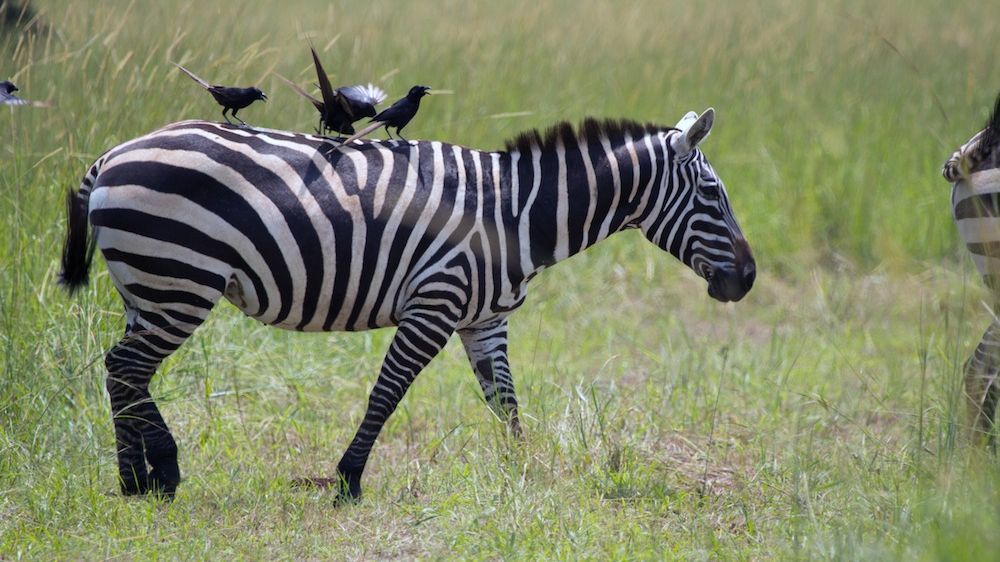
Why Zebras Have Stripes: The Science Behind the Pattern
Zebras are among Africa’s most recognisable wild animals, famous for the contrasting black and white stripes that cover their bodies. Their striking appearance has fascinated travellers, naturalists, and scientists for generations. Yet the reason zebras developed stripes remains one of the most interesting questions in African wildlife biology. Researchers have investigated several explanations, including protection against biting insects, camouflage, temperature regulation, and social recognition.
Modern research has provided particularly strong evidence that zebra stripes help reduce landings by certain biting flies. However, scientists continue to examine how different ecological factors influence stripe patterns across species and populations. Understanding why zebras have stripes science research reveals how evolution can produce remarkable adaptations that serve important functions in the natural environment.
For safari travellers, zebra stripes provide more than an attractive photographic subject. Their patterns offer an opportunity to explore animal behaviour, evolutionary biology, and the relationships between wildlife and environmental conditions. Observing zebras in African grasslands becomes even more rewarding when visitors understand the scientific explanations behind their appearance.
Understanding the Unique Stripe Patterns of Zebras
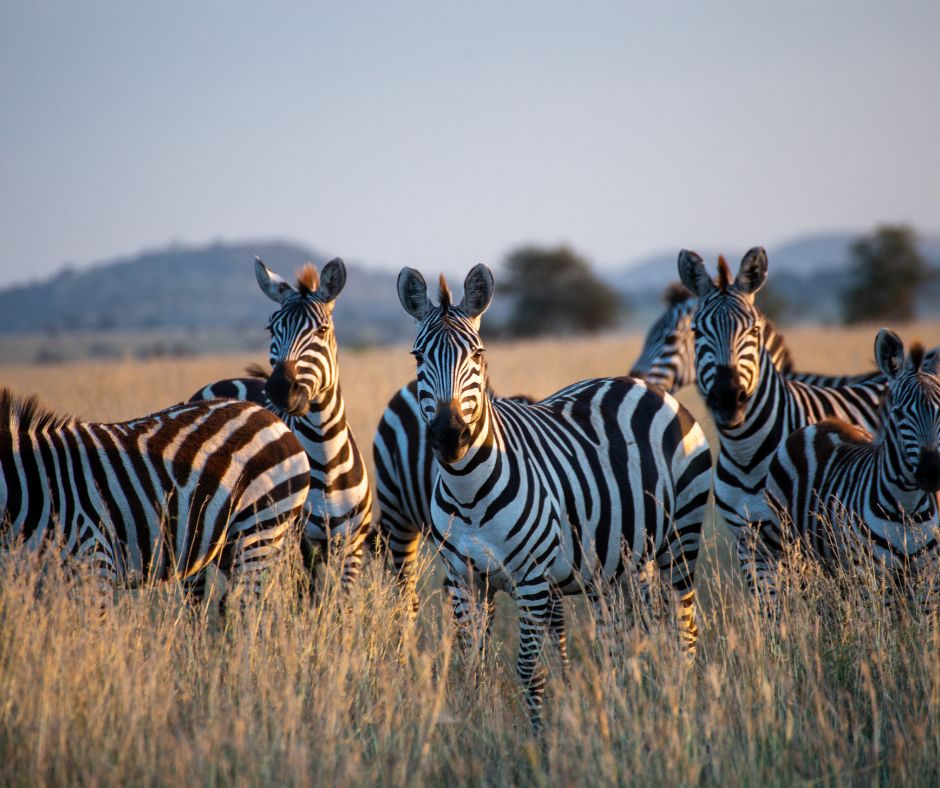
Every zebra possesses a distinctive arrangement of black and white stripes, although the overall appearance varies between species. The patterns differ in stripe width, distribution, and the presence of additional markings. These differences reflect evolutionary history and environmental influences across the habitats zebras occupy.
Zebras develop their characteristic markings during early development, and the patterns remain relatively stable throughout their lives. Their coats contain dark and light regions created through differences in pigmentation. Although people often describe zebras as white animals with black stripes or black animals with white stripes, their appearance results from the distribution of pigment across the skin and hair.
Scientists study these patterns using photographs, field observations, and comparative analyses. Individual identification can sometimes rely on stripe arrangements, particularly when researchers monitor populations over extended periods. These methods help scientists investigate zebra behaviour without repeatedly capturing or physically marking animals.
The Main Scientific Theories Behind Zebra Stripes
Researchers have proposed several explanations for the evolution of zebra stripes. Early theories suggested that the patterns helped zebras blend into grasslands or confuse predators during movement. Other explanations focused on social recognition, temperature regulation, and protection from biting insects.
Modern studies have compared stripe patterns with environmental conditions, predator distributions, and the presence of disease-carrying insects. These comparisons help researchers identify which explanations best fit the available evidence. The results have increasingly highlighted the importance of biting-fly avoidance.
However, evolutionary adaptations do not always serve a single function. A feature may provide several benefits, and those benefits may differ between habitats. Scientists therefore continue examining whether zebra stripes influence other aspects of behaviour or physiology.
How Zebra Stripes Help Protect Against Biting Flies
One of the strongest explanations for zebra stripes involves protection against biting flies, particularly horseflies and related insects. These flies can cause irritation, blood loss, and potential disease transmission. Animals living in environments with high biting-fly activity may benefit from physical features that reduce insect landings.
Experiments have shown that certain biting flies approach striped and unstriped surfaces differently. Researchers have observed that flies may approach zebras but experience difficulty completing controlled landings on their striped coats. These findings suggest that the visual pattern interferes with the insects’ landing behaviour.
The protective effect may be particularly important because zebras possess relatively short hair that offers limited physical protection against biting insects. Their stripes may therefore provide an additional defence that reduces exposure to persistent insect attacks. This explanation has gained considerable scientific support.
What Scientific Experiments Reveal About Zebra Stripes
Researchers have tested the biting-fly hypothesis using live animals, striped coverings, and specially designed visual patterns. In some experiments, horses wearing striped coats attracted fewer successful fly landings on covered areas than horses wearing plain coverings. Such findings support the idea that the pattern itself influences insect behaviour.
Other studies have examined how flies approach striped surfaces during flight. Researchers have suggested that contrasting patterns may interfere with visual information used during landing. The precise mechanism remains an active subject of investigation.
Scientific experiments also demonstrate the importance of testing traditional explanations rather than accepting them without evidence. Zebra stripes appear visually dramatic to humans, but insects perceive patterns through different visual systems. Understanding these differences helps explain why stripes may provide an evolutionary advantage.
Do Zebra Stripes Confuse Lions and Other Predators?
The idea that zebra stripes confuse predators has remained popular for many years. According to this explanation, moving groups of striped animals may create visual complexity that makes individual zebras difficult to distinguish. However, scientific evidence for this theory remains less convincing than evidence supporting biting-fly avoidance.
Lions regularly hunt zebras despite their distinctive markings. Predators use movement, scent, sound, and other information when identifying prey, so stripes do not provide complete protection. The visibility of patterns also changes according to distance, lighting, and surrounding vegetation.
Researchers continue investigating whether stripes influence predator perception under particular circumstances. Nevertheless, current evidence does not establish predator confusion as the primary evolutionary reason zebras developed their coats. Safari guides should present the theory as a possibility rather than a confirmed explanation.
Can Zebra Stripes Provide Camouflage?
Camouflage involves reducing an animal’s visibility within its environment. At first glance, black and white stripes may appear unsuitable for concealment because they contrast strongly with many African landscapes. However, visibility depends on distance, lighting, and the visual abilities of the observer.
Under certain conditions, stripes may become less distinct at greater distances or blend with shadows and vegetation. Researchers have examined whether these effects could influence predator detection. The results have not consistently demonstrated that camouflage explains zebra stripe evolution.
Zebras also occupy open grasslands where their patterns remain clearly visible to human observers. Their survival depends heavily on vigilance, running ability, and social behaviour. These adaptations may provide more direct protection against predators than camouflage alone.
Do Zebra Stripes Help Regulate Body Temperature?
Another proposed explanation suggests that black and white stripes influence heat absorption and airflow around the body. Dark surfaces absorb more solar radiation than light surfaces under comparable conditions. Researchers have investigated whether these differences create temperature patterns that help zebras remain cool.
Some studies have reported differences in surface temperatures between dark and light stripes. However, demonstrating surface-temperature differences does not automatically prove that stripes reduce an animal’s overall body temperature. Other factors, including sweating, wind, and behaviour, influence heat regulation.
The temperature-regulation hypothesis therefore remains debated. Researchers continue testing whether stripe patterns provide measurable cooling benefits under natural conditions. Travellers should distinguish between interesting possibilities and explanations supported by stronger experimental evidence.
How Zebras Recognise One Another
Zebras live in social groups where individuals maintain relationships and respond to familiar companions. Their stripe patterns may provide visual information that helps distinguish animals, although researchers continue studying the importance of this function. Recognition also involves sound, scent, movement, and social experience.
Plains zebras commonly form family groups containing a stallion, several mares, and their offspring. Members maintain contact while feeding and travelling through open habitats. Their relationships contribute to vigilance and the protection of vulnerable animals.
Young zebras learn to recognise their mothers shortly after birth. Vocalisations, scent, and close contact support this process. Stripe patterns may provide additional visual information, but social recognition cannot be explained by coat markings alone.
Why Different Zebra Species Have Different Stripes
Africa supports three living zebra species: the plains zebra, the mountain zebra, and Grévy’s zebra. Each displays distinctive markings that reflect its evolutionary history. Differences include stripe width, spacing, and the appearance of the belly and hindquarters.
Plains zebras generally have broad stripes, although regional populations show considerable variation. Mountain zebras possess distinctive patterns and occur in selected southern African habitats. Grévy’s zebras have relatively narrow stripes and large ears, giving them a noticeably different appearance.
Scientists investigate these differences through genetics, ecology, and comparative anatomy. Stripe variation may reflect historical population separation and environmental influences. Understanding these distinctions helps travellers identify species during African safaris.
The Plains Zebra and Its Stripe Patterns
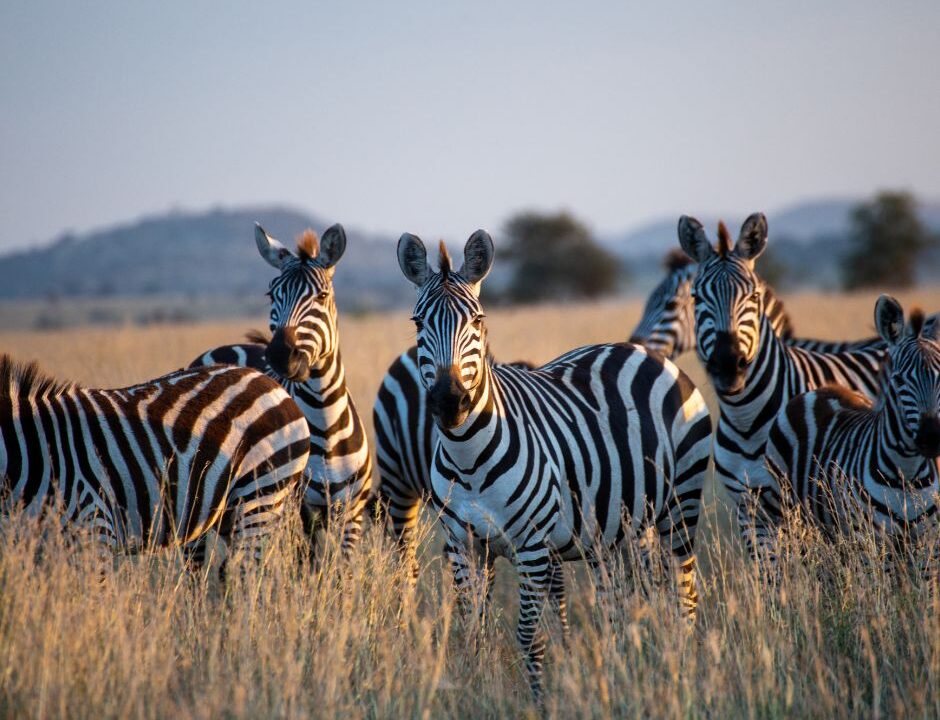
The plains zebra is the most widespread living zebra species and occurs across several eastern and southern African ecosystems. Its markings vary geographically, with some populations displaying additional faint stripes between darker bands. These differences contribute to the diversity of zebra appearances across the continent.
Plains zebras occupy grasslands and open woodland where they feed primarily on grasses. Their digestive systems allow them to process substantial quantities of fibrous vegetation. This feeding strategy supports movement across landscapes with changing seasonal resources.
Large zebra herds often gather in productive habitats, creating impressive wildlife spectacles. Travellers visiting the Serengeti, Maasai Mara, or Botswana’s grasslands may observe extensive groups moving between feeding areas. Their social behaviour adds another dimension to the scientific interest surrounding their stripes.
Grévy’s Zebra: Africa’s Distinctive Endangered Zebra
Grévy’s zebra is the largest living wild equid and possesses narrow stripes that extend across much of its body. Its large ears and relatively different social organisation distinguish it from the plains zebra. The species occupies semi-arid habitats in parts of East Africa.
Grévy’s zebras face serious conservation challenges associated with habitat degradation, competition for resources, and restricted distribution. The IUCN classifies the species as Endangered. Conservation programmes focus on habitat protection, monitoring, and cooperation with local communities.
Northern Kenya provides opportunities to observe Grévy’s zebras in suitable protected and community-managed landscapes. Their distinctive markings make identification relatively straightforward when compared with plains zebras. Responsible tourism can contribute to conservation awareness and local economic benefits.
Mountain Zebras and Their Rocky Habitats
Mountain zebras occupy selected mountainous and semi-arid landscapes in southern Africa. Their physical adaptations allow them to move across rugged terrain where grazing opportunities may be scattered. Their stripe patterns differ from those of plains zebras, particularly around the hindquarters and belly.
South Africa and Namibia support important mountain zebra populations. Conservation programmes have helped protect habitats and manage populations within suitable reserves. Their recovery in some areas demonstrates the value of sustained wildlife protection.
Travellers can encounter mountain zebras in destinations such as Mountain Zebra National Park in South Africa and selected Namibian conservation areas. Their habitats provide a different safari experience from the open grasslands associated with plains zebras. Observing several zebra species reveals the diversity of African equids.
Zebra Stripes and Evolutionary Adaptation
Evolutionary adaptations develop over many generations when inherited characteristics influence survival or reproductive success. Zebra stripes represent a striking example of how natural selection may shape physical appearance. Researchers investigate which environmental pressures contributed most strongly to the development of the pattern.
The biting-fly hypothesis suggests that animals with particular stripe arrangements experienced fewer successful insect landings. If this advantage improved survival or reproduction, natural selection could favour those patterns over time. However, evolutionary explanations require evidence from genetics, ecology, and comparative studies.
The history of zebra stripes remains an active research topic because scientists continue examining the relationships between pattern variation and environmental conditions. New techniques may reveal additional details about how the markings developed. Scientific understanding therefore continues to evolve.
Where to See Zebras on an African Safari
Tanzania’s Serengeti National Park and Kenya’s Maasai Mara National Reserve provide excellent opportunities to observe plains zebras. Large herds move through grassland ecosystems alongside wildebeest and other herbivores. Seasonal migrations create impressive opportunities for wildlife photography and behavioural observation.
Botswana’s Makgadikgadi and Nxai Pan regions also support remarkable zebra movements linked to seasonal rainfall. South Africa’s Kruger National Park and Namibia’s Etosha National Park provide further opportunities to observe plains zebras. These destinations offer different habitats and ecological conditions.
Travellers interested in rarer species can consider northern Kenya for Grévy’s zebra or suitable reserves in South Africa and Namibia for mountain zebras. A carefully planned itinerary can combine several wildlife destinations. Experienced guides help identify species and explain their distinctive adaptations.
Photographing Zebra Stripes on Safari
Zebras offer outstanding photographic opportunities because their contrasting patterns create strong visual compositions. Photographers can focus on individual animals, close-up details, or large groups moving across open landscapes. The patterns become particularly striking when animals stand close together.
Morning and late-afternoon light often provides attractive conditions for wildlife photography. Side lighting can reveal body shape and texture, while open landscapes allow compositions that include the surrounding environment. Patience helps photographers capture natural behaviour.
Visitors should avoid approaching zebras too closely or interfering with herd movement. Responsible photography allows animals to continue feeding, resting, and interacting naturally. The most rewarding images often combine the beauty of the stripes with genuine wildlife behaviour.
Zebra Conservation and Habitat Protection
Zebra populations face different conservation challenges according to species and region. Habitat fragmentation, competition for grazing resources, and human-wildlife conflict can affect movement and survival. Some populations remain relatively widespread, while others require intensive conservation attention.
Maintaining connected grassland habitats supports seasonal movement and access to suitable food. Conservation programmes also work with communities that share landscapes with wildlife. These partnerships help balance ecological protection with local livelihoods.
Safari tourism can support zebra conservation when operators follow responsible practices and contribute to protected-area management. Travellers who understand the scientific importance of zebra stripes may develop greater appreciation for these animals. Protecting their habitats preserves both biodiversity and opportunities for future research.
Plan Your Safari
Zebra stripes remain one of Africa’s most fascinating examples of evolutionary adaptation. Scientific research provides strong evidence that their contrasting patterns help reduce successful landings by certain biting flies, while other proposed functions continue to attract investigation. Observing zebras in their natural habitats allows travellers to appreciate both their remarkable appearance and the ecological pressures that shaped it.
Southern Africa Tours can arrange zebra-focused wildlife safaris in Botswana, Namibia, South Africa, Tanzania, and Kenya. Our itineraries combine experienced guides, carefully selected accommodation, and responsible wildlife experiences. Contact Southern Africa Tours to explore the science and beauty of Africa’s remarkable zebras.