
Black Rhino vs White Rhino
November 5, 2026
Cape Buffalo Herd Behaviour
November 5, 2026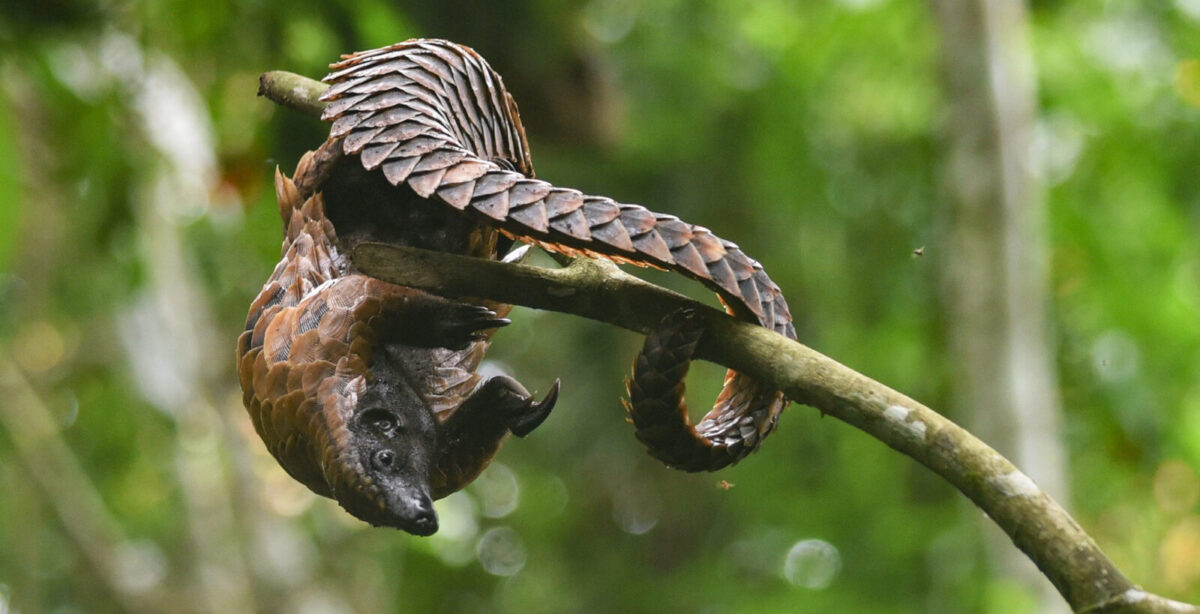
What Is a Pangolin? Africa’s Most Trafficked Animal
The pangolin is one of Africa’s most unusual mammals, recognised for the protective scales that cover much of its body. Its appearance resembles a combination of several familiar animals, yet pangolins belong to their own distinctive evolutionary group. These secretive creatures feed primarily on ants and termites, use powerful claws to investigate insect colonies, and rely on specialised adaptations to survive in forests, savannahs, and other suitable habitats.
Understanding what is pangolin Africa endangered conservation research reveals why these remarkable mammals have become a major focus of international wildlife protection. Pangolins face serious threats from illegal trade, habitat destruction, and exploitation. Their scales and meat have attracted demand in certain markets, contributing to widespread trafficking.
For safari travellers, a natural pangolin encounter is exceptionally special because the animals are elusive and often active after dark. Learning about their biology and conservation challenges helps visitors appreciate why responsible wildlife tourism must avoid handling, disturbing, or exploiting these vulnerable mammals.
Understanding What a Pangolin Is
Pangolins are mammals belonging to the order Pholidota. Their bodies possess overlapping keratin scales that provide a distinctive protective covering. Unlike reptiles, pangolins give birth to live young and nurse them with milk.
Their elongated snouts, powerful claws, and specialised tongues support a diet dominated by social insects. Pangolins generally possess no functional teeth, relying instead on swallowing insects and processing food through their digestive systems. Their feeding adaptations make them highly specialised mammals.
Pangolins occupy different habitats according to species. Some live primarily on the ground, while others climb trees. Their secretive behaviour makes them difficult to study, particularly in dense tropical forests.
How Many Pangolin Species Live in Africa?
Africa supports four living pangolin species: the Temminck’s ground pangolin, the giant ground pangolin, the white-bellied pangolin, and the black-bellied pangolin. Each species possesses distinctive physical characteristics and habitat preferences.
The Temminck’s ground pangolin occurs in suitable savannah and woodland habitats across parts of eastern and southern Africa. The giant ground pangolin inhabits selected forest and savannah environments in Central and West Africa. Both species spend much of their time on the ground.
White-bellied and black-bellied pangolins are more strongly associated with forest habitats and climbing behaviour. Their adaptations allow them to exploit insect resources in trees and surrounding vegetation. Protecting all four species requires conservation strategies suited to their different environments.
Why Pangolins Have Scales
Pangolin scales consist primarily of keratin, a structural protein also found in human hair and nails. The scales overlap to create a protective covering across much of the body. Their arrangement allows movement while providing a defensive barrier.
When threatened, many pangolins curl into a tight ball, positioning their scales outward. This behaviour can discourage natural predators that struggle to penetrate the protective covering. Their muscular tails and body movements help maintain the defensive posture.
However, the same behaviour makes pangolins vulnerable to human capture. People can sometimes pick up a curled pangolin without overcoming its natural defences. This vulnerability contributes to the seriousness of illegal exploitation.
What Do Pangolins Eat?
Pangolins feed primarily on ants and termites, although their exact diets vary between species and habitats. Their long tongues allow them to collect insects from nests and feeding areas. Powerful claws help them open suitable insect colonies.
Their specialised feeding behaviour influences soil and insect communities. By excavating nests and consuming insects, pangolins contribute to ecological processes within their habitats. Their activities can also create small disturbances that affect surrounding vegetation.
Because pangolins depend on particular insect resources, habitat degradation can reduce feeding opportunities. Protecting healthy forests, savannahs, and woodland environments supports the insects they require. Conservation therefore involves maintaining entire ecosystems.
How Pangolins Find Their Food
Pangolins possess a well-developed sense of smell that helps them locate insect colonies. They investigate soil, vegetation, and other surfaces while searching for suitable feeding opportunities. Their strong forelimbs allow them to dig into nests.
Their tongues possess specialised structures that help collect insects efficiently. Sticky saliva assists with capturing prey, while the digestive system processes swallowed material. These adaptations compensate for the absence of conventional chewing teeth.
Feeding activity may vary according to temperature, season, and species. Some pangolins become particularly active during the evening and night. Their behaviour contributes to the difficulty of observing them during ordinary daytime safaris.
Why Pangolins Are So Difficult to See
Many pangolins are solitary and predominantly nocturnal. Their low population densities and secretive movements make encounters uncommon. Some species also occupy dense vegetation or extensive habitats that limit visibility.
Pangolins may shelter in burrows, hollow trees, or other concealed locations when inactive. Their movements often follow insect availability rather than predictable safari routes. Even experienced guides cannot reliably guarantee sightings.
The rarity of encounters contributes to the excitement surrounding natural pangolin observations. However, ethical tourism should never pressure guides to handle or relocate animals. A genuine sighting should occur without interfering with the pangolin’s behaviour.
Why Pangolins Are Heavily Trafficked
Pangolins face intense illegal trade pressure because of demand for their scales and meat. Some markets use scales in traditional medicine despite the absence of reliable scientific evidence supporting extraordinary medicinal benefits. Their meat also attracts demand in certain regions.
Illegal trafficking networks can move pangolin products across national borders, making enforcement challenging. The trade threatens multiple species and contributes to population declines. Pangolins have become widely recognised as among the world’s most heavily trafficked wild mammals.
Conservation responses involve law enforcement, public education, and efforts to reduce consumer demand. International cooperation remains essential because trafficking routes often cross several countries. Protecting pangolins requires addressing both capture and market demand.
Are Pangolins Endangered?
All eight living pangolin species worldwide face conservation concern, although their IUCN Red List categories differ. African pangolin species range across threatened categories depending on the species and assessment. Their populations face varying levels of pressure from trade and habitat loss.
The distinction between Vulnerable, Endangered, and Critically Endangered matters because these categories describe different levels of extinction risk. Travellers should avoid assuming that every pangolin species shares an identical conservation classification. Scientific assessments provide the most reliable information.
Population monitoring remains difficult because pangolins are secretive and often occur at low densities. Researchers continue developing methods to estimate populations and identify important habitats. Better information supports targeted conservation action.
The Temminck’s Ground Pangolin
The Temminck’s ground pangolin is among the African species most relevant to southern African safari destinations. It inhabits suitable savannah, woodland, and semi-arid environments. Its strong claws and protective scales support a largely terrestrial lifestyle.
This species feeds primarily on ants and termites while moving across extensive areas. Its activity patterns vary according to environmental conditions. In some regions, cooler temperatures may influence when individuals forage.
Natural encounters remain uncommon, even in areas where the species occurs. Responsible guides maintain distance and avoid handling animals. Conservation programmes work to reduce threats associated with illegal capture and habitat disturbance.
The Giant Ground Pangolin
The giant ground pangolin is the largest living pangolin species and occupies suitable habitats in parts of Central and West Africa. Its substantial body and powerful claws allow it to investigate large insect colonies. Despite its size, it remains secretive and difficult to observe.
The species depends on healthy forest and savannah environments that provide suitable food and shelter. Habitat disturbance can reduce these resources. Illegal trade creates additional conservation pressure.
Research into giant ground pangolins remains challenging because their movements often occur at night and within difficult terrain. Camera traps and other monitoring techniques help scientists document their presence. Protecting remote habitats remains essential.
Tree-Dwelling African Pangolins
White-bellied and black-bellied pangolins possess adaptations that support climbing. Their tails help them move through branches and maintain stability. They exploit insect resources within forest vegetation and surrounding habitats.
Tree-dwelling behaviour distinguishes these species from the larger ground pangolins. Their movements can be difficult to observe because dense foliage conceals activity. Researchers often depend on specialised monitoring methods.
Forest clearance and fragmentation threaten suitable habitats. Maintaining connected forest landscapes supports feeding opportunities and movement. Conservation strategies must consider the ecological needs of arboreal species.
Pangolin Reproduction and Parental Care
Pangolins generally reproduce slowly compared with many smaller mammals. Females typically give birth to a small number of young, often one offspring. Their reproductive patterns make populations vulnerable when adult mortality increases.
Young pangolins depend on maternal care during early development. Mothers provide milk and protection while offspring gradually develop feeding and movement skills. In some species, young animals may ride on their mothers’ tails or backs.
Slow reproduction can limit population recovery after heavy exploitation. Even successful conservation programmes may require many years to produce substantial improvements. Preventing adult mortality remains particularly important.
Natural Predators of Pangolins
Pangolins may face predation from large carnivores, including lions, leopards, and hyenas, depending on habitat and circumstances. Their protective scales and curling behaviour provide substantial defence. However, these adaptations do not guarantee survival.
Young or vulnerable individuals may face greater risks. Predators with sufficient strength or specialised behaviour can sometimes overcome pangolin defences. Natural predation forms part of ecological relationships within healthy ecosystems.
Human exploitation presents a different challenge because curling does not prevent capture. This contrast demonstrates how adaptations effective against natural predators can become disadvantages under human pressure. Conservation must address these unusual vulnerabilities.
Pangolins and Their Ecological Importance
Pangolins contribute to ecosystem functioning through insect consumption and digging activity. Their feeding may influence local ant and termite populations. Excavations can also affect soil structure and create small habitat disturbances.
Their specialised diets connect them to the health of insect communities and surrounding vegetation. Changes in habitat quality can therefore influence pangolin survival. Protecting them supports broader biodiversity.
Pangolins also possess considerable scientific importance because of their distinctive evolutionary history. Their adaptations demonstrate the diversity of mammalian life. Conservation preserves both ecological functions and unique biological heritage.
Why Pangolins Struggle in Captivity
Pangolins possess specialised feeding requirements and can experience considerable stress under inappropriate captive conditions. Their dependence on particular insect diets makes long-term care challenging. Transport and handling can also create serious health problems.
Many illegally captured pangolins suffer from dehydration, injury, or unsuitable feeding. Rehabilitation requires specialised veterinary expertise and carefully managed conditions. Not every rescued animal can return immediately to the wild.
Visitors should avoid attractions that promote casual handling or display pangolins for entertainment. Genuine conservation facilities prioritise welfare, rehabilitation, and appropriate release decisions. Ethical tourism should support these principles.
Pangolin Conservation Programmes in Africa
Conservation organisations across Africa work to protect pangolins through research, law enforcement, rescue, and community education. Monitoring programmes help identify important habitats and assess threats. Partnerships with local authorities support efforts against illegal trade.
Community involvement remains essential because many pangolins occur outside formal protected areas. Education can reduce unnecessary killing and encourage reporting of illegal activities. Sustainable livelihood initiatives may also support conservation goals.
International cooperation helps address trafficking networks that operate across borders. Conservation progress depends on reducing demand as well as protecting habitats. Long-term success requires sustained commitment.
Where to See Pangolins on Safari
Selected private reserves and conservation landscapes in South Africa, Botswana, Namibia, and other African countries support pangolin populations. However, sightings remain exceptionally rare. Ordinary safari itineraries should never promise guaranteed encounters.
Some specialist conservation experiences focus on pangolin research and protection, but visitors must evaluate their ethical standards carefully. Activities should not involve unnecessary handling, staged encounters, or disturbance. The animal’s welfare must remain the priority.
Travellers interested in pangolins can also learn about their conservation through reputable educational programmes. Understanding their biology and threats provides value even without a direct sighting. Responsible tourism contributes to awareness of these remarkable mammals.
How Travellers Can Help Protect Pangolins
Travellers can support pangolin conservation by choosing responsible safari operators and avoiding wildlife products derived from threatened species. Purchasing pangolin scales or other body parts contributes to harmful demand. Awareness of illegal trade helps visitors make informed decisions.
Supporting credible conservation organisations can contribute to research, habitat protection, and rescue programmes. Visitors should examine how organisations use funds and whether activities prioritise genuine conservation outcomes. Transparent reporting provides useful guidance.
Sharing accurate information also helps challenge misconceptions. Pangolin scales possess no scientifically established miraculous medicinal properties. Public education remains an important part of reducing exploitation.
Plan Your Safari
Pangolins are extraordinary mammals whose protective scales, specialised feeding habits, and secretive behaviour distinguish them from other African wildlife. Their survival faces serious threats from illegal trafficking and habitat loss. Protecting these animals requires coordinated conservation action and responsible public awareness.
Southern Africa Tours can arrange wildlife safaris in destinations where pangolins inhabit suitable natural environments, while maintaining realistic expectations about sightings. Our itineraries prioritise ethical wildlife viewing, experienced guides, and responsible conservation practices. Contact Southern Africa Tours to explore Africa’s remarkable biodiversity and learn more about protecting its most elusive mammals.