Elephant Intelligence
November 5, 2026
Why Zebras Have Stripes
November 5, 2026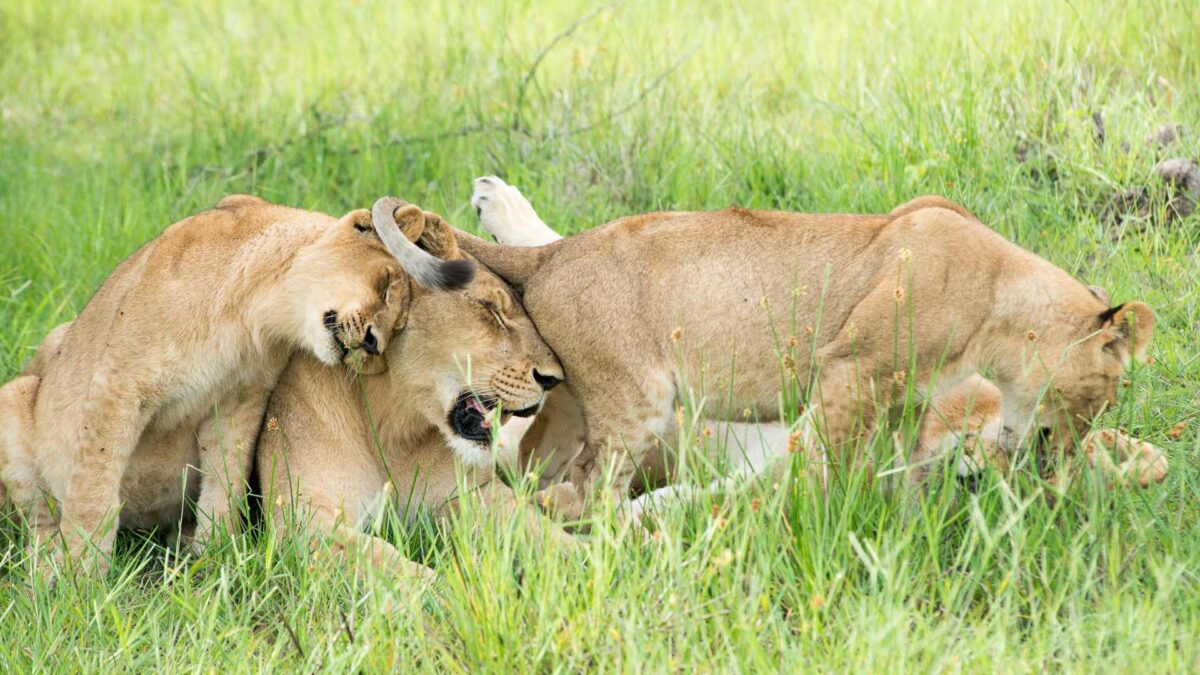
Lion Social Behaviour: Pride Dynamics Explained by Guides
Lions are among Africa’s most fascinating social predators because they live in groups that depend on cooperation, communication, and complex relationships. Unlike most other wild cat species, lions regularly form prides containing related females, their offspring, and one or more adult males. Understanding lion pride social behaviour explained through field observations reveals how these animals hunt, raise young, defend territories, and maintain relationships within the African wilderness.
A lion pride operates through relationships that change as animals mature, reproduce, and compete for resources. Female lions often provide the long-term social foundation, while adult males may join or leave following territorial challenges. These changing dynamics create some of the most dramatic wildlife encounters that travellers can witness during a safari.
Guides who observe lions regularly learn to recognise individual animals and interpret their behaviour. Their knowledge helps visitors understand why lions gather, separate, vocalise, or respond aggressively to unfamiliar individuals. Exploring these social patterns transforms a lion sighting into a deeper understanding of one of Africa’s most recognisable predators.
Understanding the Structure of a Lion Pride
A typical lion pride contains several related adult females and their dependent offspring. Adult males may associate with the pride individually or as members of a coalition, depending on local circumstances. Pride composition varies considerably according to habitat, prey availability, population density, and competition.
Female lions often remain within their natal pride, creating long-lasting family relationships. Sisters, mothers, daughters, and other relatives may cooperate in raising cubs and defending important areas. These connections form the social foundation of many lion populations.
Male lions usually leave their birth pride as they approach maturity. They may spend time travelling alone or forming coalitions before attempting to establish access to breeding groups. This movement influences genetic exchange and territorial competition across lion populations.
Why Lions Live in Social Groups
Social living provides several potential advantages for lions, although group life also creates competition over food and reproductive opportunities. Cooperation can improve the defence of territories and vulnerable cubs against rival lions. In some environments, group hunting may also help lions capture large or difficult prey.
The benefits of pride living depend on local ecological conditions. In regions with abundant large prey, lions may support relatively substantial social groups. Where food resources remain limited, smaller groups may experience less competition during feeding.
Researchers continue to investigate how these advantages interact across different ecosystems. Pride size does not follow a single universal pattern because environmental conditions and population pressures vary. Observing lions in several national parks can reveal noticeable differences in their social organisation.
The Role of Lionesses Within the Pride
Lionesses provide much of the long-term continuity within lion prides because related females commonly remain together for many years. They participate in hunting, defend cubs, and maintain relationships through grooming, physical contact, and vocal communication. Their cooperation contributes to the stability of the group.
Female lions may hunt alone or alongside other pride members depending on prey, terrain, and opportunity. Cooperative hunting can be particularly useful when pursuing large animals or prey that requires coordinated movement. However, not every hunt involves a carefully organised group strategy.
Lionesses also play important roles in protecting territory from unfamiliar females and other threats. Their responses depend on the circumstances and the level of risk involved. Strong social relationships can help them coordinate behaviour when defending shared resources.
The Role of Male Lions in Pride Dynamics
Adult male lions often gain access to prides by competing with resident males or forming alliances with other males. Successful males may defend access to females and territories for a limited period before facing challenges from rivals. Their tenure varies according to coalition strength, age, and local competition.
Male lions can contribute to pride defence by confronting rival males and responding to territorial intrusions. Their presence may reduce certain threats to cubs, although the relationship between males and pride members remains complex. Males also participate in feeding and may hunt independently or alongside females.
Changes in male leadership can create periods of instability. Incoming males sometimes kill dependent cubs fathered by previous males, a behaviour known as infanticide. Although distressing to observe, researchers interpret this behaviour within the reproductive competition that shapes lion social systems.
How Lion Coalitions Work
Male lions frequently form coalitions that allow them to cooperate when defending territories and competing for access to prides. Coalition members may be brothers or unrelated individuals that establish alliances during their development. These partnerships can influence reproductive success and territorial control.
Larger coalitions may gain advantages when confronting rivals, although their success depends on age, physical condition, and experience. Coalition members sometimes share access to females and cooperate in territorial defence. Their relationships can remain stable for extended periods but may change as circumstances develop.
Safari guides often identify coalitions through the appearance and behaviour of individual males. Differences in mane colour, scars, and physical features can help distinguish animals during repeated sightings. Following a coalition over several days provides insight into the changing dynamics of lion territories.
How Lions Communicate Within a Pride
Lions communicate through vocalisations, body movements, scent marking, and physical contact. Roaring is among their most recognisable behaviours and can help advertise presence across considerable distances. Lions also use softer sounds during close interactions with pride members.
Scent marking provides information about territorial activity and the presence of other lions. Individuals may rub against vegetation or mark particular locations while moving through their ranges. These behaviours help maintain communication even when animals do not encounter one another directly.
Physical contact also contributes to social relationships. Lions frequently rub their heads together, groom companions, and rest in close proximity. Such interactions can reinforce bonds and reduce tension within the group.
The Importance of Lion Roaring
Lion roars serve several functions, including territorial advertisement and communication between separated individuals. Their deep vocalisations can travel long distances under favourable conditions, particularly during quieter periods. Roaring activity often becomes noticeable during the evening and early morning.
Male and female lions both roar, although their vocal patterns and circumstances may differ. Individuals may respond to distant calls from pride members or unfamiliar lions. These exchanges provide information about the distribution of lions across a landscape.
For safari travellers, hearing lions roar at night can be an unforgettable experience. The sound carries through open savannah and woodland habitats, sometimes reaching nearby camps. Visitors should remain within authorised accommodation areas and follow staff instructions when wildlife moves close to camp.
Cooperative Hunting Among Lions
Lion hunting behaviour varies according to prey species, vegetation, group composition, and environmental conditions. Some lions pursue prey individually, while others participate in coordinated attacks. Cooperation may increase opportunities to capture large animals such as buffalo, although success is never guaranteed.
During group hunts, individuals may approach prey from different positions or respond to movements created by other hunters. Researchers have observed patterns of cooperation, but hunting strategies are not identical across prides. Experience and local habitat conditions influence the techniques lions use.
The outcome of a hunt depends on many factors, including prey awareness, terrain, and the physical condition of the hunters. Lions frequently fail during hunting attempts because prey animals possess strong defensive abilities. These unsuccessful encounters form an important part of predator-prey relationships.
Feeding Hierarchies and Competition
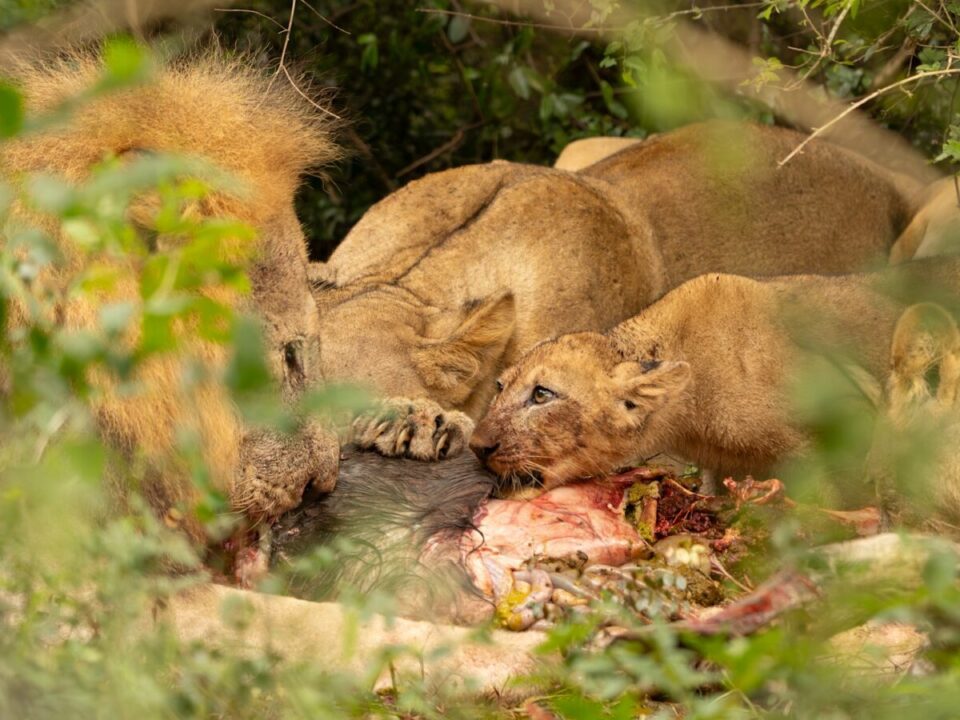
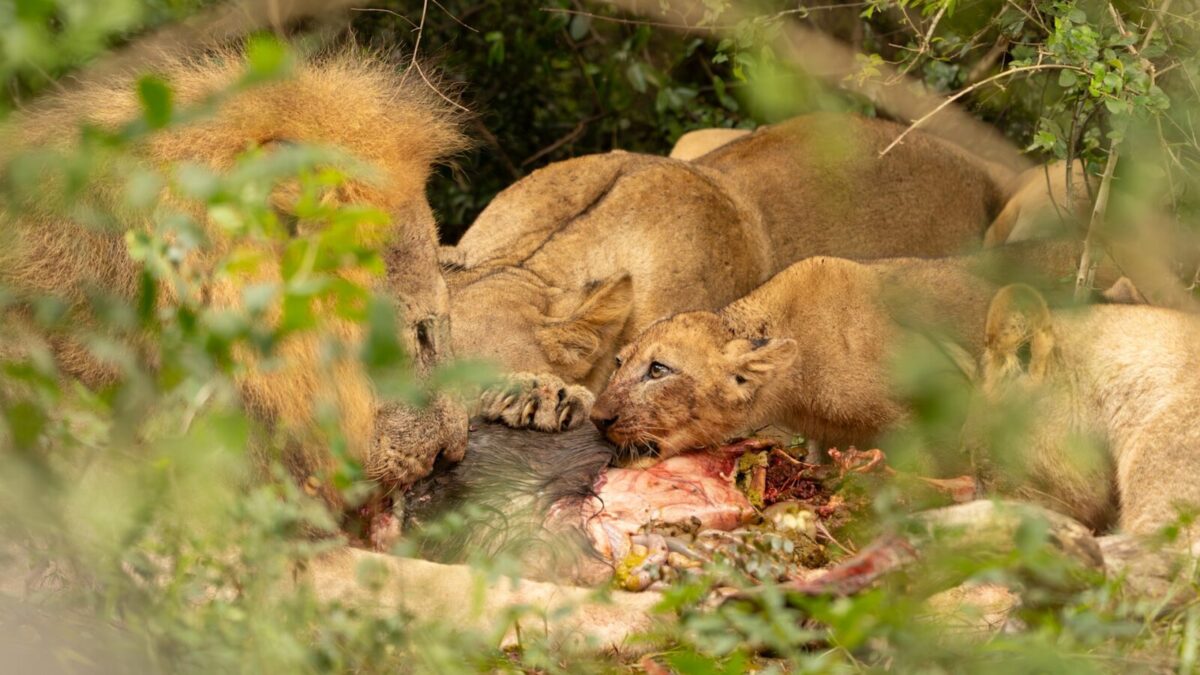
Lions may compete intensely over food after a successful hunt. Larger or more dominant individuals sometimes gain access to carcasses before others, while cubs may struggle to feed when resources remain limited. These interactions can involve growling, pushing, and other displays of aggression.
Feeding behaviour varies according to the size of the kill and the number of animals present. A large carcass may provide sufficient food for several individuals, while smaller prey can create greater competition. The presence of unrelated lions or scavengers may also influence feeding dynamics.
Guides often use feeding encounters to explain the realities of life within a pride. Social cooperation does not eliminate competition, and individual animals must respond to changing circumstances. Watching these interactions provides insight into the balance between group living and individual survival.
How Lionesses Raise Their Cubs
Lionesses typically give birth in sheltered locations away from the main pride before gradually introducing their cubs to other members. Young cubs depend heavily on their mothers for milk, warmth, and protection. Their early development involves learning to move, communicate, and interact with other lions.
Related lionesses may raise cubs of similar ages within the same pride. Some females nurse one another’s young, creating opportunities for cooperative care. These relationships can improve protection and strengthen social connections among the cubs.
Cubs spend considerable time playing, chasing one another, and practising movements associated with hunting. These activities help develop coordination and social skills. Visitors who observe cubs at play witness an important stage of their behavioural development.
Why Lion Prides Sometimes Split Apart
Lion prides are not always stable groups that remain together continuously. Individuals may separate temporarily while hunting, caring for cubs, or exploring different parts of their territory. Larger prides may also divide into smaller groups when ecological or social conditions change.
Food availability can influence these patterns because large groups require substantial resources. Territorial competition and changes in male leadership may also disrupt established relationships. Some separations remain temporary, while others develop into more permanent divisions.
Researchers describe the flexible grouping patterns of lions as part of their social organisation. Understanding this flexibility helps explain why safari guides may encounter different numbers of lions within the same territory. A small group observed during one drive may belong to a much larger pride.
Territorial Behaviour and Pride Defence
Lion territories contain resources that influence the survival and reproductive success of pride members. These areas may include suitable hunting habitats, resting locations, and access to water. Territorial boundaries can overlap or shift according to competition and environmental conditions.
Lions communicate territorial presence through roaring, scent marking, and movement along familiar routes. Confrontations may occur when unfamiliar individuals enter occupied areas. Such encounters can involve intimidation, pursuit, or physical fighting.
Territorial conflicts can cause serious injuries and influence pride composition. Guides who follow local lion populations often recognise signs of recent competition, including new scars or changes in group membership. These observations help explain the dynamic nature of lion social life.
Where to Observe Lion Pride Behaviour in Africa
The Serengeti ecosystem in Tanzania offers excellent opportunities to observe lion prides across expansive savannah habitats. Large prey populations and open landscapes support a variety of predator interactions. Visitors may encounter hunting behaviour, territorial activity, and family groups depending on season and location.
South Africa’s Kruger National Park and adjoining private reserves provide further opportunities to observe lions in woodland and savannah environments. Botswana’s Okavango Delta and Chobe region also support lions, with behaviour influenced by seasonal water and prey distribution. Zambia’s South Luangwa National Park is another rewarding destination for observing predators.
Different ecosystems reveal different aspects of lion social behaviour. Travellers interested in pride dynamics may benefit from spending several days in one wildlife area rather than changing destinations frequently. Repeated observations create opportunities to recognise individual animals and understand their relationships.
Responsible Lion Viewing on Safari
Responsible lion viewing requires patience and respect for natural behaviour. Guides should avoid surrounding animals, blocking movement routes, or approaching vulnerable cubs too closely. These practices reduce unnecessary disturbance and protect both wildlife and visitors.
Travellers should remain inside safari vehicles unless guides explicitly permit them to leave in a safe location. Lions can react quickly and unpredictably, even when resting or appearing relaxed. Following professional instructions remains essential during every encounter.
Ethical wildlife tourism also avoids encouraging lions to perform for photographs. The most meaningful sightings involve observing genuine behaviour within natural habitats. Responsible operators help visitors appreciate lions while supporting conservation efforts.
Conservation Challenges Facing African Lions
African lion populations face pressure from habitat loss, declining prey availability, human-wildlife conflict, and illegal killing. These threats vary across regions and require conservation strategies suited to local conditions. Protected areas provide important habitats, but many lions also move through landscapes shared with people.
Maintaining connections between populations supports genetic diversity and natural movement. Conservation organisations work with communities to reduce livestock losses and develop practical conflict-prevention measures. Successful programmes must recognise the economic and social needs of people living near lion habitats.
Safari tourism can contribute to conservation when operators follow responsible practices and support protected-area management. Visitors also play a role by choosing ethical experiences and respecting wildlife regulations. Protecting lions requires long-term cooperation across conservation authorities, communities, and tourism businesses.
Plan Your Safari
Lion pride social behaviour reveals the extraordinary complexity of Africa’s most recognisable social predator. Family relationships, cooperative hunting, territorial competition, and cub development create a constantly changing wildlife experience. Observing these interactions with knowledgeable guides allows travellers to appreciate lions beyond their reputation as powerful hunters.
Southern Africa Tours can arrange lion-focused safaris in South Africa, Botswana, Zambia, Tanzania, and other exceptional wildlife destinations. Our itineraries provide opportunities to explore lion habitats through responsible game drives and carefully selected accommodation. Contact Southern Africa Tours to plan a safari that brings you closer to the fascinating social lives of African lions.