Epupa Falls Namibia
November 3, 2026
Lüderitz Namibia Guide
November 3, 2026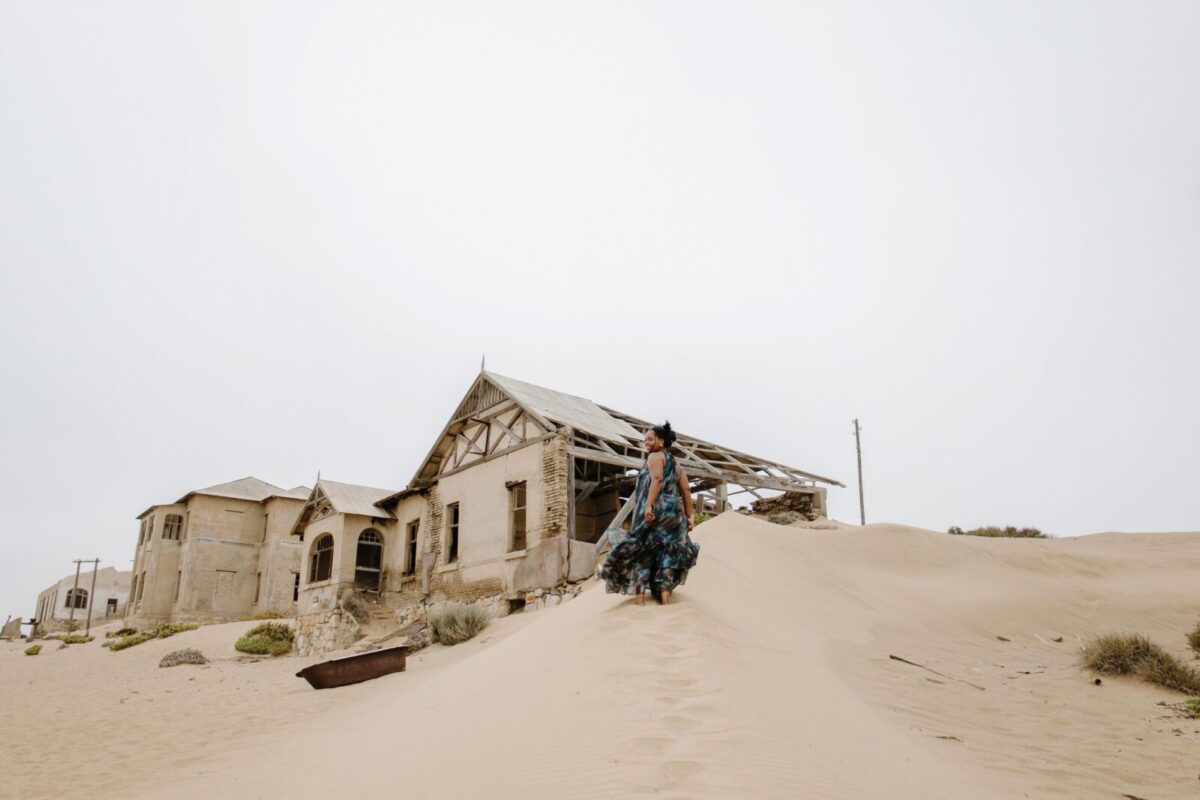
Kolmanskop Ghost Town Namibia: The Diamond Town Swallowed by Sand
Kolmanskop Ghost Town is one of Namibia’s most fascinating historical attractions. Located in the Namib Desert near Lüderitz, this abandoned diamond-mining settlement reveals how a once-prosperous community gradually surrendered to the surrounding sand. Today, empty houses, deserted hallways, and sand-filled rooms create an extraordinary landscape that attracts photographers, historians, and curious travellers.
During the early twentieth century, Kolmanskop became an important centre of diamond mining in German South West Africa. Wealth from the surrounding deposits supported an isolated settlement with facilities that were remarkable for its time and location. However, declining diamond production and the discovery of richer deposits elsewhere eventually caused residents to abandon the town.
The desert has since transformed Kolmanskop into one of southern Africa’s most atmospheric heritage destinations. Sand enters through broken windows and open doorways, forming dunes inside buildings that once contained furniture, businesses, and family homes. Exploring the settlement provides insight into Namibia’s mining history while revealing the powerful influence of the natural environment.
Where Is Kolmanskop Ghost Town Located?
Kolmanskop lies approximately 10 kilometres inland from Lüderitz in southwestern Namibia. The settlement occupies a dry section of the Namib Desert, where strong winds continually move sand across the landscape. Its location near the Atlantic coast creates an unusual environment shaped by desert conditions, coastal fog, and occasional strong winds.
Travellers generally reach Kolmanskop by road from Lüderitz, making it an accessible excursion for visitors staying in the coastal town. The surrounding landscape appears almost empty, with sand, gravel plains, and scattered remnants of former mining activity stretching into the distance. This isolation contributes to the dramatic atmosphere that makes the abandoned settlement so memorable.
Although Kolmanskop is a major tourist attraction, access follows established visitor arrangements. Travellers should confirm current opening hours, admission requirements, and photography permissions before arriving. Some areas may have restrictions because of structural instability or conservation considerations.
The Discovery of Diamonds Near Kolmanskop
Kolmanskop’s development began after diamonds were discovered in the surrounding desert in 1908. The discovery triggered intense interest in the region and attracted prospectors, mining companies, and workers seeking opportunities. Within a relatively short period, an organised settlement emerged to support diamond extraction.
The discovery took place during German colonial rule, when mining interests operated within a broader system of colonial control. Diamond production generated substantial wealth, but the benefits were distributed unequally. Workers faced different living and employment conditions according to the racial and social hierarchies of the period.
As mining operations expanded, Kolmanskop developed from a remote outpost into a community with residential buildings and public facilities. Its growth reflected the commercial importance of diamonds and the resources companies were willing to invest in the settlement. The town’s history therefore provides an important perspective on Namibia’s colonial economy.
Life in Kolmanskop During the Diamond Boom
At its height, Kolmanskop contained facilities designed to make life more comfortable for some residents despite the challenging desert environment. The settlement included a hospital, school, recreational spaces, and other services associated with a growing mining community. These facilities created an appearance of prosperity in an otherwise isolated landscape.
The town also depended on extensive transport and supply arrangements. Fresh water, food, construction materials, and equipment had to reach the settlement across considerable distances. Maintaining daily life required organisation and resources because the surrounding desert offered few natural supplies.
However, living conditions differed sharply between groups within the mining system. Colonial labour practices created inequalities that shaped housing, employment, and access to facilities. Visitors should consider these realities when exploring the settlement rather than viewing its former prosperity as a complete representation of life in Kolmanskop.
Why Was Kolmanskop Abandoned?
Kolmanskop began to decline as diamond deposits around the settlement became less productive. Mining companies increasingly directed attention towards richer deposits elsewhere, reducing the economic importance of the original town. Residents gradually relocated as employment opportunities and services diminished.
The settlement’s decline accelerated during the middle of the twentieth century. By the 1950s, Kolmanskop had effectively become a ghost town, with buildings standing empty and the desert beginning to reclaim the streets. Without regular maintenance, windblown sand entered structures and accumulated across their floors.
The abandonment created the extraordinary scenes visitors encounter today. Rooms that once supported everyday life now contain shifting sand formations, while weathered walls reveal the effects of decades of exposure. The town demonstrates how quickly an isolated settlement can deteriorate when its economic purpose disappears.
Exploring the Sand-Filled Buildings
Walking through Kolmanskop offers an unusual combination of architectural exploration and desert scenery. Many buildings retain recognisable features such as doorways, windows, staircases, and interior walls. However, sand has transformed their appearance, sometimes rising almost to the level of windows.
Sunlight entering through openings creates patterns across the dunes inside individual rooms. The contrast between carefully constructed interiors and natural sand formations makes the site particularly attractive to photographers. Each building offers a different perspective on the settlement’s gradual abandonment.
Visitors should follow authorised routes and avoid entering unstable structures. Decades of exposure have weakened some buildings, and apparently solid surfaces may conceal hazards. Respecting access restrictions protects both visitors and the remaining heritage.
Photography at Kolmanskop Ghost Town
Kolmanskop ranks among Namibia’s most recognisable photography destinations. Its abandoned interiors provide opportunities to capture textures, shadows, geometric patterns, and the movement of sand. The combination of human architecture and natural processes creates scenes that differ from conventional landscape photography.
Morning light can be particularly rewarding because sunlight enters buildings at low angles and highlights the contours of accumulated sand. However, the best conditions depend on the position of individual windows and the weather. Photographers may benefit from exploring several rooms before selecting their preferred compositions.
Special photography access may require a different permit from ordinary admission. Travellers should confirm the current arrangements directly with the site operator before planning an early session. Camera equipment also needs protection because fine desert sand can damage lenses and moving parts.
Kolmanskop’s German Colonial Architecture
The buildings of Kolmanskop reflect architectural influences associated with German colonial settlement. Residential houses, administrative structures, and communal facilities reveal the design preferences of the period. Their appearance contrasts sharply with the surrounding desert, where natural materials and vegetation remain limited.
The architecture provides evidence of how mining wealth supported construction in a remote environment. Companies invested in permanent-looking buildings despite the settlement’s dependence on a finite mineral resource. This contrast between architectural ambition and eventual abandonment forms a central part of Kolmanskop’s story.
Visitors should also recognise that the architecture emerged within a colonial system that imposed severe inequalities. The buildings are valuable historical evidence, but they do not represent the experiences of every person who worked in the diamond industry. A balanced interpretation considers both the physical structures and the wider social history.
The Desert Environment Around Kolmanskop
Kolmanskop lies within one of the world’s oldest desert regions. The Namib Desert experiences extremely low rainfall across many areas, while wind plays a major role in shaping dunes and transporting sand. These conditions explain why abandoned buildings have gradually filled with sediment.
The nearby Atlantic Ocean also influences the local environment. The cold Benguela Current contributes to coastal fog, which can reach parts of the surrounding desert. This moisture supports specialised ecological processes despite the region’s limited rainfall.
The landscape surrounding Kolmanskop appears harsh, but desert ecosystems contain organisms adapted to demanding conditions. Travellers who explore responsibly can appreciate the resilience of these environments. Avoiding unnecessary disturbance helps protect fragile habitats and archaeological remains.
Visiting Kolmanskop from Lüderitz
Lüderitz provides the most convenient accommodation base for exploring Kolmanskop. The coastal town offers guesthouses, boutique properties, restaurants, and additional historical attractions. Visitors can combine a morning at the ghost town with an afternoon exploring Lüderitz’s waterfront and architecture.
The short road journey makes Kolmanskop suitable for a half-day excursion, although photography enthusiasts may prefer more time. Guided tours can provide important historical context and explain how different buildings functioned during the mining period. Visitors should check current tour schedules before departure.
Travellers can also combine the excursion with visits to Diaz Point and other accessible coastal attractions. These experiences reveal the contrast between Namibia’s maritime environment and the surrounding desert. A two-night stay in Lüderitz often provides a comfortable amount of time for exploring the area.
Best Time to Visit Kolmanskop
Kolmanskop can be visited throughout the year, although the coastal desert climate creates changing conditions. Strong winds may occur, while mornings can feel cool because of the nearby Atlantic Ocean. Visitors should prepare for both sun exposure and sudden changes in temperature.
Clear mornings can provide attractive photographic conditions, but fog sometimes influences visibility. The desert’s shifting light creates different opportunities throughout the day. Travellers should avoid relying on a single expected weather pattern when planning their visit.
Comfortable walking shoes, layered clothing, and drinking water are important. Fine sand can enter bags and electronic equipment, so protective cases are useful. Visitors should also follow the site’s safety instructions when exploring abandoned interiors.
Combining Kolmanskop with a Southern Namibia Safari
Kolmanskop fits naturally into a longer itinerary through southern Namibia. Travellers can combine the ghost town with Lüderitz, Aus, the Fish River Canyon region, and other desert attractions. These destinations reveal the country’s distinctive geological landscapes and historical heritage.
A journey through southern Namibia often involves considerable driving distances. Visitors should allow enough time between destinations and confirm accommodation arrangements before entering remote areas. Careful planning makes it possible to appreciate the scenery without rushing.
Kolmanskop adds an important cultural dimension to a landscape-focused holiday. Its history contrasts with the natural wilderness of the surrounding desert and highlights the relationship between human activity and environmental change. This combination makes the region particularly rewarding for travellers interested in both heritage and nature.
Plan Your Safari
Kolmanskop Ghost Town offers a remarkable journey into Namibia’s diamond-mining history. Its abandoned buildings, sand-filled interiors, and isolated desert setting create one of southern Africa’s most distinctive heritage experiences. Visitors can explore the remains of a once-prosperous settlement while reflecting on the economic and social forces that shaped its development.