
Campfire Stories
August 12, 2026
Bush Walks
August 12, 2026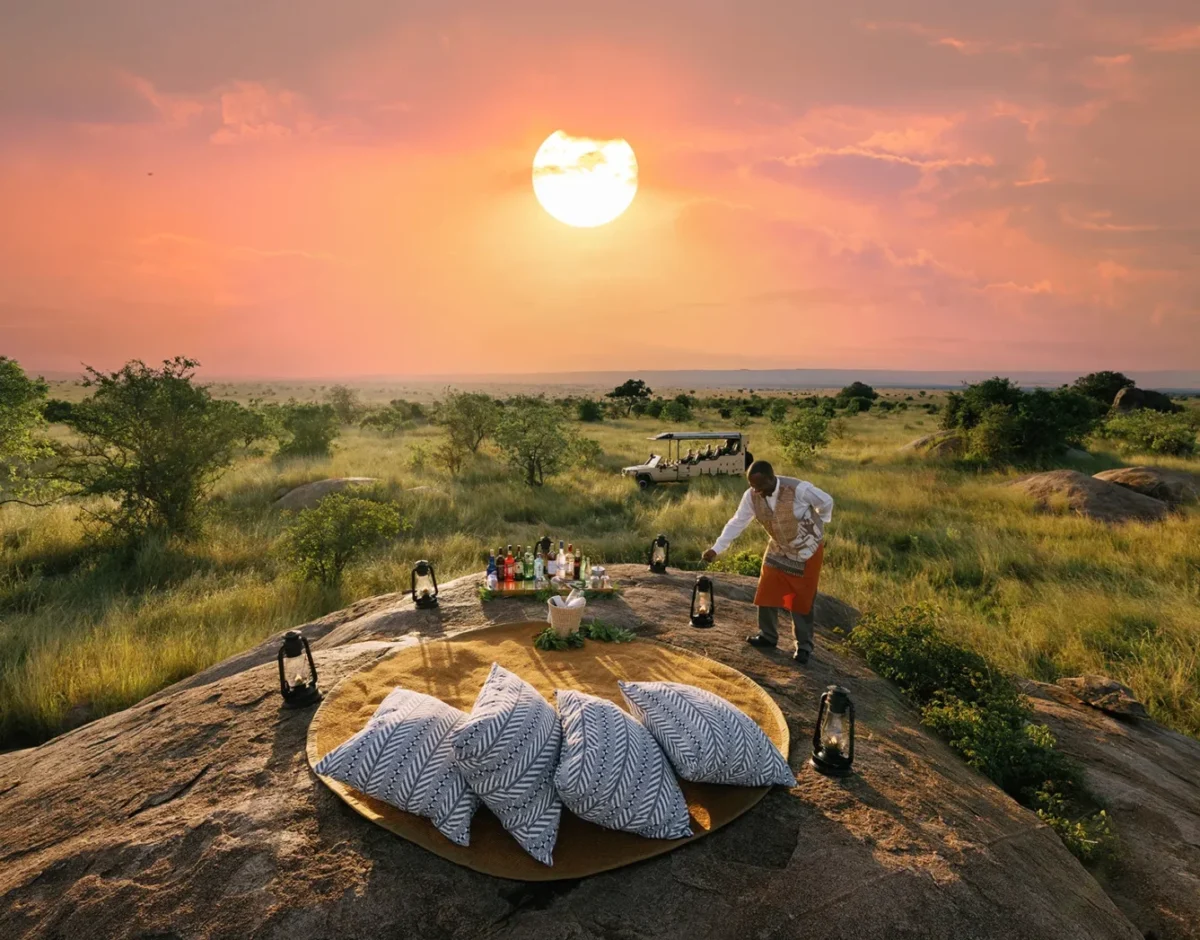
Sundowner Safari Ritual: Why Every Game Drive Ends with a Drink
Few safari traditions capture the spirit of Africa quite like the sundowner. After hours of wildlife viewing, the vehicle stops at a scenic viewpoint as the sun begins to sink below the horizon.
A small table appears, drinks are poured, and everyone pauses to watch the changing sky. The moment feels simple, yet it often becomes one of the strongest memories of an African safari.
Sundowners combine wildlife, scenery, conversation, and relaxation. They give travellers a chance to slow down before returning to camp for dinner.
What Is a Safari Sundowner?
A safari sundowner is an evening stop during a game drive. Your guide chooses a safe and scenic location where you can watch the sunset.
Staff may serve wine, beer, gin and tonic, soft drinks, juice, or other refreshments. Light snacks often accompany the drinks.
The experience usually lasts around 30 to 60 minutes. However, the timing depends on the sunset, wildlife activity, and park regulations.
The goal is not simply to have a drink. It is about appreciating the landscape at the end of the day.
Why Are Sundowners Part of Safari Culture?
Sundowners reflect the slower rhythm of life in the African bush. Safari days often begin early, with guests leaving camp before sunrise for the best wildlife viewing.
After hours of driving and exploring, the evening offers a natural opportunity to stop and relax. The changing light also creates excellent conditions for photography.
The tradition has become closely associated with safari travel across East and Southern Africa. Many camps now consider sundowners an essential part of the safari experience.
The ritual also encourages travellers to appreciate the landscape beyond wildlife sightings.
What Happens During a Sundowner?
Your guide usually chooses an open area with a good view of the sunset. The vehicle stops while the guide checks the surroundings for safety.
Staff may prepare drinks on a small folding table. Some camps provide comfortable chairs, while others keep the setup simple.
Guests can then enjoy drinks and snacks while watching the sun fall across the landscape. Conversations often become quieter as everyone focuses on the scenery.
Once darkness approaches, the group returns to the vehicle. The evening game drive may continue before you return to camp for dinner.
What Drinks Are Served?
There is no single sundowner drink. Safari camps offer different options depending on their location and accommodation style.
Wine is particularly popular. Beer, gin and tonic, sparkling wine, cocktails, and spirits may also feature.
Non-alcoholic options are always worth requesting. Fresh juice, tonic water, soft drinks, sparkling water, and mocktails can make excellent alternatives.
The best sundowner is the one you can enjoy while taking in the surroundings. The drink matters less than the setting.
The Classic Gin and Tonic
Gin and tonic has become closely associated with African safari culture. Its popularity grew during the colonial era, although today’s safari experiences have evolved considerably.
Many camps now serve creative versions of the classic drink. Some add fresh fruit, herbs, spices, or locally inspired ingredients.
You can also choose a non-alcoholic botanical alternative. These provide the same refreshing experience without alcohol.
The drink has become part of the safari image, but it is not essential. A cold juice beside a beautiful waterhole can feel just as special.
Sundowners and African Sunsets
African sunsets provide the perfect backdrop for the ritual. Dust, clouds, trees, grasslands, and mountains can all change colour as daylight fades.
The exact experience depends on the destination. The Serengeti offers wide horizons, while Botswana provides dramatic sunsets over wetlands and waterways.
Namibia offers a different atmosphere with desert landscapes and towering dunes. South Africa combines dramatic scenery with diverse wildlife habitats.
Every destination gives the sundowner a different character.
Sundowners in the Serengeti
The Serengeti provides an iconic setting for sundowners. Its enormous plains create uninterrupted views across the horizon.
After an afternoon game drive, your guide can select a safe location overlooking the grasslands. As the sun sets, the plains can glow with deep orange and golden tones.
The open landscape also creates excellent photography opportunities. Silhouettes of trees, giraffes, and distant animals can add interest to sunset images.
The experience feels especially powerful after a day of following lions, elephants, cheetahs, or other wildlife.
Sundowners in Kenya
Kenya offers many opportunities for memorable sundowners. The Maasai Mara is particularly famous for its open grasslands and dramatic evening skies.
Samburu provides a contrasting landscape with rugged hills, dry valleys, and distinctive wildlife.
Amboseli offers views toward Mount Kilimanjaro on clear days. Watching the sunset with Africa’s highest mountain in the background can create an unforgettable scene.
The setting changes from park to park, but the ritual remains the same.
Sundowners in Botswana
Botswana is another outstanding destination for sundowners. The Okavango Delta combines water, wildlife, islands, and open skies.
Guests may enjoy drinks overlooking a lagoon or floodplain after an afternoon activity. Elephants often move through the surrounding landscape as the light fades.
Chobe National Park also offers excellent sunset experiences. A boat safari can provide a particularly beautiful platform for watching the sun disappear over the river.
Sundowners here often feel closely connected to the water and wildlife.
Sundowners in Uganda
Uganda offers excellent sundowner experiences in several national parks. Queen Elizabeth National Park provides wide views across savannah landscapes and lakes.
Murchison Falls National Park also offers beautiful evening scenery. Guests can watch the sun set over the Nile or across the northern savannah.
In Uganda, the experience often combines wildlife viewing with dramatic landscapes. Elephants, buffaloes, giraffes, and other wildlife may remain active as the evening approaches.
The relaxed atmosphere provides a peaceful contrast to the excitement of a game drive.
Sundowners in Namibia
Namibia gives the sundowner tradition a distinctly desert character. The country’s vast landscapes and low population density create dramatic horizons.
Sossusvlei and the surrounding Namib Desert offer extraordinary sunset scenery. Dunes can change from bright orange to deep red and purple as the sun disappears.
Etosha National Park provides another setting. Waterholes can remain active during the evening, creating opportunities to combine sunset views with wildlife watching.
A sundowner in Namibia often feels wonderfully remote.
Sundowners in South Africa
South Africa offers a wide range of sundowner experiences. Private reserves near Kruger National Park are particularly well suited to evening game drives.
Guests may stop in open grasslands or beside scenic viewpoints. Guides often combine sunset viewing with wildlife sightings before darkness arrives.
Some lodges serve premium South African wines and locally inspired snacks. A traditional braai may follow the sundowner at camp.
The combination of wine, wildlife, and landscape makes South African safari evenings particularly memorable.
What Food Is Served With Sundowners?
Drinks rarely arrive alone. Many safari camps provide small snacks to enjoy during the sunset stop.
You might receive nuts, biltong, cheese, crackers, fresh fruit, pastries, or small savoury bites. Luxury camps may prepare more elaborate canapés.
Some operators create traditional African-inspired snacks. Others focus on international flavours.
The food should remain easy to eat outdoors. The main attraction remains the sunset and surrounding wilderness.
Sundowners for Non-Drinkers
You do not need to drink alcohol to enjoy a sundowner. Safari operators usually offer several non-alcoholic alternatives.
Fresh fruit juice, sparkling water, iced tea, tonic water, and mocktails work well in warm weather.
Some luxury lodges create elaborate non-alcoholic cocktails. These can include herbs, fruit, spices, and botanical ingredients.
What matters is taking time to enjoy the setting. The ritual is about the moment, not the alcohol.
Sundowners for Families
Families can enjoy sundowners together. Children can receive juice, soft drinks, mocktails, or other age-appropriate refreshments.
The experience also gives children a chance to learn about the African landscape. Guides may explain animal behaviour, sunsets, plants, or the changing sounds of the bush.
Parents should keep children close and follow safety instructions. Wildlife can move through the area without warning.
A family sundowner can become one of the most memorable moments of a safari.
Are Sundowners Safe?
Sundowners can be safe when experienced with a professional guide and proper procedures. Guides select locations carefully and monitor the surroundings.
Guests should never wander away from the vehicle without permission. Some African wildlife can move silently and appear unexpectedly.
Hippos, elephants, buffaloes, and other animals may be nearby even when you cannot see them.
Always follow your guide’s instructions. The goal is to enjoy the wilderness without disturbing wildlife or creating unnecessary risks.
Can You Have a Sundowner Every Day?
Not necessarily. Some safari camps offer sundowners regularly, while others arrange them on selected evenings.
Weather can also affect the experience. Rain, strong winds, or poor visibility may make an outdoor stop impractical.
Some parks have strict rules about where vehicles can stop. Your guide must follow local regulations.
If sundowners are important to you, tell your safari operator before booking. They can choose camps and destinations where the experience is readily available.
Private Sundowners for Couples
Couples can arrange private sundowner experiences in many safari destinations. A guide may take you to a secluded viewpoint and arrange drinks for two.
Some camps add snacks, flowers, lanterns, or a private table. Others combine the sundowner with a romantic bush dinner.
The setting can be particularly memorable for honeymoons and anniversaries. Watching the sunset together in a remote wilderness area creates a sense of privacy that few hotels can match.
Always confirm whether a private setup carries an additional charge.
Sundowners for Photographers
Sunset provides excellent opportunities for safari photography. The softer evening light can create dramatic silhouettes and warm landscapes.
Keep your camera ready before the sun reaches the horizon. Light changes quickly, so you may have only a few minutes to capture the strongest colours.
Wildlife silhouettes can add depth to your photographs. Giraffes, elephants, acacia trees, and birds can all create striking compositions.
Remember to enjoy the scene without viewing everything through a camera screen. Some moments are best experienced directly.
Sundowners and Conservation
A sundowner may seem like a simple tourist activity, but safari tourism can support conservation when managed responsibly.
Visitors pay for accommodation, guiding, park access, and other services. These tourism revenues can help support protected areas and local communities.
Private conservancies can also use tourism income to fund wildlife protection and community projects.
Choosing responsible safari operators helps ensure that tourism contributes positively to the landscapes you visit.
Why Sundowners Are More Than a Drink
The word “sundowner” can make the experience sound simple. In reality, it represents a pause in the middle of an extraordinary environment.
You stop searching for wildlife and simply watch the landscape change. You hear birds calling, insects buzzing, and perhaps animals moving nearby.
Conversations become slower. People take photographs, share stories, or sit quietly.
That pause can be just as valuable as the game drive itself.
The Perfect Sundowner Safari Routine
A typical evening begins with an afternoon game drive. Wildlife remains active as temperatures begin to fall.
Your guide searches for animals while also watching the time. As sunset approaches, the vehicle moves toward a safe viewpoint.
The group stops and drinks are served. Everyone takes time to enjoy the sunset and the surrounding wilderness.
Afterward, you continue with an evening drive or return to camp. Dinner usually follows, often around a campfire.
This simple rhythm creates one of the most enjoyable traditions in safari travel.
What Should You Wear for a Sundowner?
Temperatures can change quickly after sunset. Light layers are therefore useful, particularly during dry-season evenings.
Neutral-coloured clothing works well for safari activities. Comfortable shoes are also important because some camps may set up the sundowner away from the vehicle.
A light jacket can become useful once the sun disappears. In cooler destinations, bring a warmer layer.
Your safari operator can advise you based on the destination and season.
What Should You Bring?
You do not need much for a sundowner. Your camera, phone, binoculars, and a light jacket are usually enough.
A small amount of insect repellent can also help in areas with mosquitoes.
Avoid carrying unnecessary food or leaving packaging behind. Safari areas require careful waste management.
Most importantly, bring time to enjoy the experience. The whole point of a sundowner is to slow down.
Why Sundowners Become Safari Memories
Wildlife sightings can be dramatic, but they are not always predictable. You may spend hours searching for a leopard and never find one.
A sundowner almost guarantees a beautiful moment because the landscape itself becomes the experience.
You may remember the colour of the sky, the sound of birds, or the way everyone became quiet as the sun disappeared.
These small details often stay with travellers long after they return home.
Plan Your Sundowner Safari Experience
A sundowner is one of the simplest and most rewarding safari traditions. It brings together scenery, wildlife, conversation, food, and the peaceful rhythm of the African evening.
When planning your safari, ask whether your chosen camps offer regular sundowners. Also check whether drinks, snacks, and private setups form part of your package.
From the Serengeti and Maasai Mara to Botswana, Namibia, Uganda, Zambia, and South Africa, every destination offers its own version of the ritual.
The game drive may introduce you to Africa’s wildlife, but the sundowner gives you time to appreciate the landscape. As the sun disappears, you are reminded that a safari is not only about what you see, but also how you experience it.