

Microlight Flight Over Victoria Falls
July 29, 2026
Skydiving Over the Swartberg Pass
July 29, 2026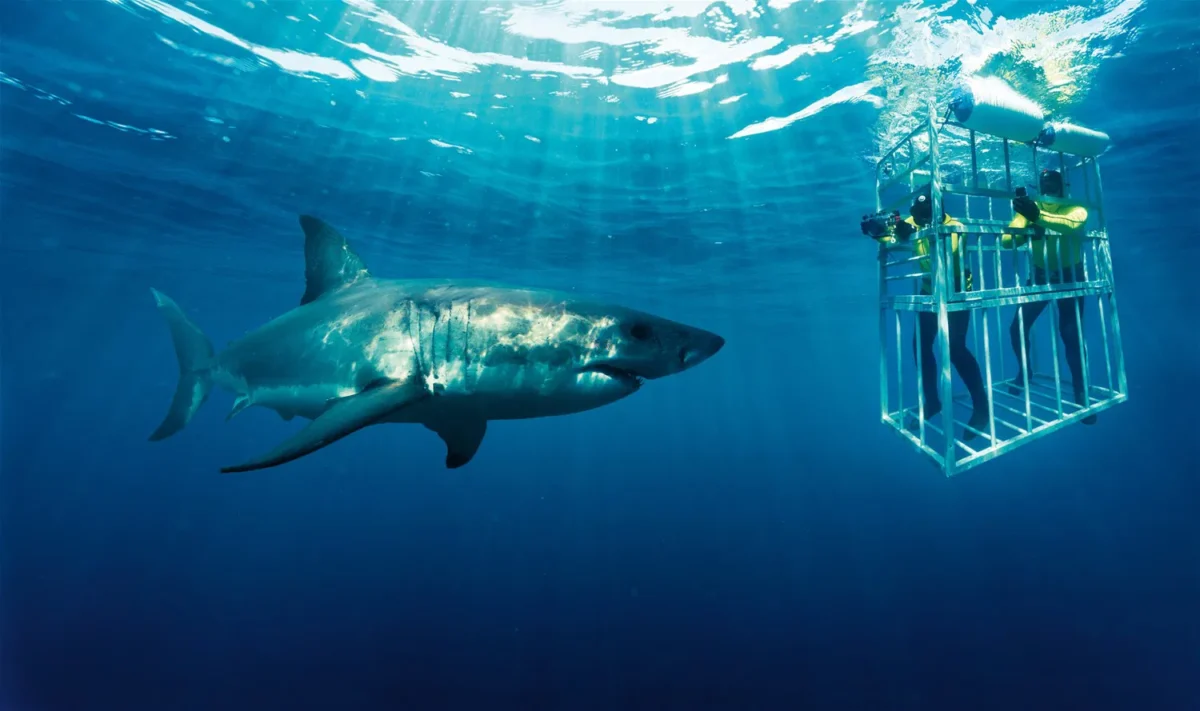
Shark Cage Diving in Gansbaai: South Africa’s Great White Capital
Shark cage diving in Gansbaai offers one of South Africa’s most memorable marine adventures. The experience takes travellers into the waters of the Western Cape for close encounters with powerful sharks.
Gansbaai became internationally famous for its shark encounters. Its coastal waters and nearby marine habitats have attracted adventure travellers, photographers, and wildlife enthusiasts for decades.
A cage diving experience allows you to observe sharks from a protected position in the water. You can watch their movements, feeding behaviour, and powerful swimming technique from remarkably close range.
The experience also offers an opportunity to learn about marine conservation. Responsible operators focus on education, safety, and respectful wildlife encounters rather than simply creating an adrenaline rush.
Where Is Gansbaai?
Gansbaai lies along South Africa’s Western Cape coast, approximately two hours from Cape Town by road. Its location makes it a popular addition to a Cape Town itinerary.
The town sits near the Overberg region, surrounded by rugged coastline, beaches, farms, and marine habitats. Its proximity to several coastal attractions makes it suitable for a longer stay.
Shark cage diving usually takes place offshore from Gansbaai or nearby launch points. Operators travel by boat to suitable areas based on current marine conditions.
The exact location can change because sharks and marine wildlife move naturally. Experienced crews monitor conditions and determine the most appropriate area for each excursion.
Why Is Gansbaai Famous for Shark Diving?
Gansbaai developed a strong reputation for shark encounters because of the productive marine environment around the coast. The area historically attracted large numbers of great white sharks, which helped establish its international reputation.
The nearby channels and islands create habitats that support diverse marine life. Seals, fish, seabirds, and other species form part of the broader ecosystem.
However, shark populations and sightings naturally change over time. Great white sightings can vary significantly depending on season, environmental conditions, and broader ecological changes.
For this reason, responsible operators should never guarantee a great white sighting. The ocean remains a wild environment, and wildlife encounters cannot be controlled.
What Is Shark Cage Diving?
Shark cage diving involves entering a secure cage attached to a boat while sharks swim nearby. Participants remain inside the cage while observing the animals from a protected position.
You do not need scuba diving experience for most cage diving experiences. Many operators use surface cages where participants breathe normally without requiring diving equipment.
The crew provides instructions before entering the water. They explain how to enter the cage, where to position yourself, and how to behave around the sharks.
The experience can feel intense when a shark approaches. Seeing the animal move through the water at close range gives you a powerful appreciation of its size and strength.
What Happens on a Shark Cage Diving Trip?
Most excursions begin early in the morning with registration and a safety briefing. The crew then provides information about the boat journey, cage procedures, and wildlife encounters.
You travel offshore by boat to an area selected according to current conditions. The crew monitors the water and determines where the best wildlife viewing opportunities may occur.
Once the boat is positioned, participants enter the cage in small groups. You may spend several periods in the water depending on conditions and the length of the excursion.
Between cage sessions, you can watch the ocean from the boat. The crew may explain shark behaviour, marine ecology, and conservation while everyone waits for further sightings.
Can You See Great White Sharks in Gansbaai?
Great white sharks have historically been one of the main attractions associated with Gansbaai. However, sightings are not guaranteed on every trip.
Shark populations move naturally and respond to changes in food availability, water temperature, and other environmental factors. Seasonal patterns can also influence where sharks spend their time.
Some excursions may encounter other shark species or marine wildlife instead. These encounters can still provide an excellent wildlife experience.
A responsible operator should explain current sighting patterns honestly. Avoid companies that promise guaranteed encounters with specific wild animals.
What Other Sharks Can You See?
South African waters support several shark species. Depending on the destination and conditions, cage diving trips may encounter bronze whaler sharks, sevengill sharks, blue sharks, or other species.
Bronze whaler sharks can provide particularly impressive encounters. They are large, powerful predators with a distinctive bronze coloration.
The exact species you see depends on the location, season, and current marine conditions. Wildlife encounters remain unpredictable even for experienced operators.
Seeing a different species should not be considered a disappointing outcome. Each shark contributes to the marine ecosystem and provides an opportunity to learn more about ocean wildlife.
Are Great White Sharks Dangerous?
Great white sharks are powerful wild predators, and visitors should respect them as such. However, shark cage diving operators use established procedures to reduce risks during encounters.
Participants remain inside a secure cage while trained crew members manage the experience. Safety briefings explain how to behave before entering the water.
Never attempt to touch, feed, or provoke a shark. Follow the crew’s instructions at all times and remain inside the designated cage area.
The ocean is unpredictable, so no wildlife activity is completely without risk. Choosing an experienced operator and following safety procedures are essential.
Is Shark Cage Diving Safe?
Shark cage diving is designed around strict safety procedures. Reputable operators use appropriate cages, boats, equipment, and trained crew members.
Weather and sea conditions are important factors. Trips can be delayed or cancelled when conditions become unsuitable.
Operators should also provide clear instructions about entering and exiting the cage. Listen carefully to the crew before participating.
Ask about safety procedures when choosing a company. A reputable operator should be willing to explain its equipment, emergency procedures, insurance, and operating standards.
Do You Need Diving Experience?
Most shark cage diving experiences do not require previous diving experience. Surface cage experiences allow participants to observe sharks without using scuba equipment.
The crew explains how to position yourself and observe the sharks safely. You can usually enjoy the experience even if you have never snorkeled or scuba dived before.
Some specialized shark diving experiences may require stronger swimming or diving skills. Always check the requirements before booking.
If you feel nervous about being in the ocean, tell the crew before entering the cage. They can explain the process and help you understand what to expect.
What Should You Wear?
Wear comfortable swimwear underneath warm clothing. The Western Cape can feel cool, especially during early-morning departures.
Operators generally provide wetsuits or other necessary water equipment. Confirm what is included before your trip so you know what to bring.
A warm jacket can be useful for the boat ride. Wind across the ocean can make conditions feel colder than they do on land.
Bring sunscreen, sunglasses, and a hat for time spent on the boat. Secure loose items because wind and waves can easily move belongings.
What Should You Bring?
Bring identification if your operator requires it for registration. You should also carry sunscreen, a towel, warm clothing, and any personal medication you may need.
A waterproof bag can protect phones and other valuables. Keep expensive equipment secure because boats can become wet during the journey.
Motion sickness medication may be useful for travellers who are sensitive to boat movement. Speak with an appropriate healthcare professional about suitable options before your trip.
A camera can help capture the experience, but follow the operator’s rules. The crew may restrict photography in certain situations for safety reasons.
Best Time for Shark Cage Diving in Gansbaai
Shark cage diving can operate throughout much of the year. However, marine conditions and shark activity vary seasonally.
The South African winter and spring months can provide different water conditions from summer. Visibility may also change depending on weather, tides, plankton, and other factors.
There is no single month that guarantees the best shark experience. Natural wildlife movement makes sightings unpredictable.
Your operator can provide the most useful current advice before booking. Ask about recent sightings, sea conditions, and seasonal patterns for your travel dates.
How Long Does a Shark Cage Diving Trip Take?
A complete shark cage diving excursion can take several hours. The duration includes registration, safety preparation, boat travel, time spent observing wildlife, and the return journey.
Boat travel time depends on the launch point and the location of the sharks. Conditions can also affect how quickly the crew reaches the viewing area.
You should therefore allow most of a morning or half a day for the experience. Avoid scheduling a flight or another time-sensitive activity immediately afterward.
The extra time also gives you an opportunity to enjoy the coastal scenery. Gansbaai and the surrounding Overberg region offer plenty to explore after the boat trip.
Shark Cage Diving for Beginners
First-time participants can enjoy shark cage diving without previous experience. The crew provides an introduction before anyone enters the water.
You do not need to be an expert swimmer for many surface cage experiences. However, you should follow all instructions and communicate any concerns before entering the cage.
The first shark encounter can feel intense. Seeing a large predator approach the cage often creates a mixture of excitement, nervousness, and awe.
Once you become comfortable, the experience becomes fascinating rather than frightening. You can focus on observing the shark’s behaviour and movements.
Shark Cage Diving for Families
Family participation depends on the operator’s age and safety requirements. Parents should confirm current minimum ages before booking.
Younger children may find the boat journey or ocean conditions challenging. Families should consider each child’s comfort level and ability to follow safety instructions.
Some operators may offer viewing opportunities for children who do not enter the cage. This can allow families to share the experience while maintaining appropriate safety standards.
Always discuss your group’s ages with the operator before making a reservation. They can recommend the most suitable option.
Shark Cage Diving for Couples
Shark cage diving can add an adventurous experience to a romantic South African holiday. Couples can share the excitement of seeing one of the world’s most famous marine predators.
The activity works especially well as part of a Cape Town and Western Cape itinerary. After the dive, couples can continue through the Winelands, Hermanus, or along the scenic coastal routes.
A private lodge or boutique hotel in the Overberg can provide a relaxing base. This allows you to combine adventure with peaceful evenings and beautiful landscapes.
For honeymooners, the experience creates a memorable story to share. Few romantic trips include the opportunity to look directly into the ocean while a large shark swims nearby.
Shark Cage Diving and Whale Watching
The Western Cape is also famous for whale watching. Depending on the season, you may combine shark cage diving with a coastal whale-watching experience.
Hermanus is one of South Africa’s best-known whale-watching destinations. Its coastal cliffs provide excellent land-based viewing opportunities during the whale season.
Boat excursions can provide another perspective. However, wildlife encounters remain seasonal and unpredictable.
Combining these experiences creates a varied marine itinerary. You can explore the ocean ecosystem from several different perspectives during the same trip.
Shark Cage Diving and Cape Town
Gansbaai can form part of a longer Cape Town holiday. The drive from Cape Town takes several hours, so an overnight stay can make the experience more comfortable.
A broader itinerary can include Table Mountain, the Cape Peninsula, Robben Island, the Cape Winelands, and the coastal towns of the Overberg.
This combination provides a strong mix of culture, scenery, food, adventure, and wildlife. Shark cage diving then adds an adrenaline-focused experience.
Travellers with limited time can also arrange an organized day trip. However, an overnight stay gives you more time to enjoy the surrounding region without rushing.
Shark Cage Diving and the Cape Winelands
The Cape Winelands provide a relaxing contrast to shark cage diving. Stellenbosch, Franschhoek, and Paarl offer vineyards, restaurants, historic architecture, and beautiful mountain scenery.
A traveller can visit the Winelands before or after heading toward Gansbaai. The contrast between marine adventure and wine country creates a balanced itinerary.
Couples often enjoy this combination because it mixes adventure with relaxation. A day of wine tasting can provide a calmer experience after a morning on the ocean.
Always plan responsibly when combining wine tasting with other activities. Arrange transportation rather than driving after consuming alcohol.
Shark Cage Diving and the Garden Route
Gansbaai can also become part of a longer Garden Route journey. Travellers can continue east toward destinations such as Mossel Bay, Knysna, Plettenberg Bay, and Tsitsikamma.
The Garden Route combines beaches, forests, lagoons, mountains, and outdoor adventures. It provides a natural continuation after exploring the Western Cape.
This route works particularly well for road trips. You can take your time between destinations and explore smaller coastal towns along the way.
Adding shark cage diving creates an exciting start to the journey. You can then continue east while experiencing South Africa’s diverse landscapes and wildlife.
Responsible Shark Tourism
Responsible shark tourism should prioritize conservation and education. Operators should help travellers understand shark behaviour and the importance of healthy marine ecosystems.
Avoid operators that encourage harmful interactions or prioritize entertainment over animal welfare. Wildlife encounters should respect natural behaviour as much as possible.
Feeding and attracting sharks can be a complex issue. Practices vary between operators and locations, so ask how the company conducts its encounters and what conservation standards it follows.
Choose companies that are transparent about their methods. Responsible tourism can help create awareness about sharks while supporting local coastal economies.
Why Are Sharks Important to the Ocean?
Sharks play an important role as predators within marine ecosystems. Their presence can influence the distribution and behaviour of other species.
Healthy shark populations contribute to balanced marine environments. Removing large numbers of sharks can create ecological changes throughout food webs.
Shark tourism can therefore provide an important educational opportunity. Visitors who understand these animals may develop greater appreciation for their conservation.
The experience also challenges common stereotypes about sharks. Observing them in their natural environment can replace fear with curiosity and respect.
Shark Conservation in South Africa
South Africa has a long history of marine conservation and shark research. Scientists continue to study shark movements, populations, behaviour, and threats.
Sharks face pressures from fishing, habitat changes, pollution, and other human activities. Conservation efforts therefore remain important for maintaining healthy marine ecosystems.
Visitors can contribute by choosing responsible marine tourism providers. Supporting conservation-focused businesses helps create economic value around living wildlife.
Learning about sharks also matters. The more travellers understand these predators, the easier it becomes to appreciate their ecological importance.
Is Shark Cage Diving Worth It?
Shark cage diving in Gansbaai can be an unforgettable experience for wildlife and adventure travellers. It provides a rare opportunity to observe powerful marine predators from close range.
The experience is more than an adrenaline activity. It can also teach travellers about shark behaviour, ocean ecosystems, and the importance of conservation.
Sightings cannot be guaranteed, so visitors should approach the experience with realistic expectations. The ocean remains wild, and every trip can be different.
If you enjoy marine wildlife and adventure, shark cage diving deserves a place on your South African itinerary. The combination of ocean scenery, wildlife, and excitement creates a memorable travel experience.
Plan Your Gansbaai Shark Cage Diving Adventure
Shark cage diving in Gansbaai offers a thrilling way to experience South Africa’s marine environment. From the moment the boat leaves the coast to the first sight of a shark beneath the surface, the experience can become one of the highlights of your Western Cape journey.
Choose a reputable operator, confirm current safety and age requirements, and check recent wildlife conditions before booking. Most importantly, approach the experience with respect for sharks and the wider marine ecosystem.
You can combine Gansbaai with Cape Town, Hermanus, the Cape Winelands, or a Garden Route road trip. With the right planning, shark cage diving can add an unforgettable marine adventure to your South Africa safari.