
When to See the Great Wildebeest Migration in 2026–2027
June 29, 2026
Serengeti vs Maasai Mara
June 29, 2026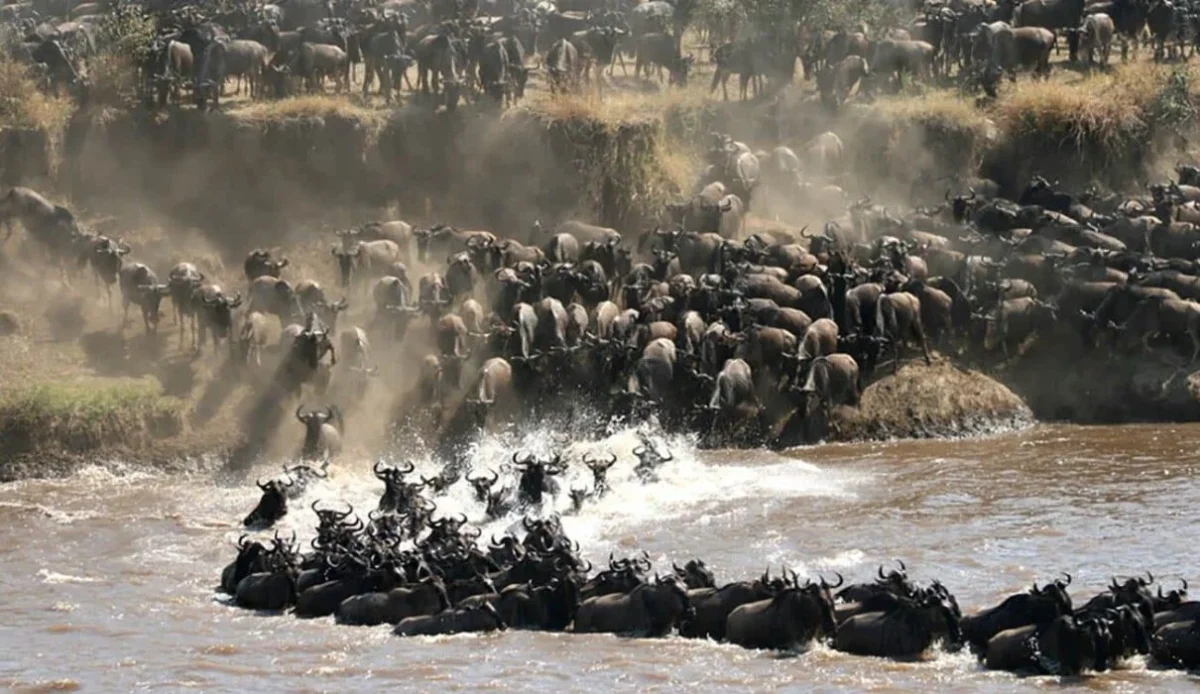
Great Migration Calendar: Month-by-Month Crossing Guide
The Great Wildebeest Migration follows a continuous circular route across the Serengeti–Maasai Mara ecosystem, driven by rainfall and fresh grazing rather than fixed dates. A Great Migration calendar guide helps travelers understand where the herds are likely to be each month, especially if they want to witness key moments such as calving season, Grumeti River crossings, and the dramatic Mara River crossings between Tanzania and Kenya.
Unlike static wildlife experiences, the migration changes location throughout the year. Each month brings a different safari highlight, and understanding this rhythm is essential for planning a successful 2026–2027 safari.
January: Peak Calving Begins in Southern Serengeti and Ndutu
In January, large herds gather in the southern Serengeti and Ndutu region as the calving season begins. The short grass plains provide nutrient-rich grazing that supports pregnant females and newborn calves.
A Great Migration calendar guide highlights this month as the start of one of the most intense wildlife periods in Africa. Predator activity increases significantly as lions, cheetahs, and hyenas follow the herds closely across open plains.
February: Peak Calving and Predator Action
February marks the peak of calving season, with thousands of calves born daily across Ndutu and surrounding plains. The concentration of newborns attracts high predator activity, creating constant hunting interactions.
A Great Migration calendar guide identifies February as one of the most dramatic months for photography due to dense herds and active predator-prey encounters across open landscapes.
March: Calving Season Winds Down
By March, calving slows, but large herds still occupy the southern Serengeti. As grass quality begins to change, the migration prepares for movement northward.
A Great Migration calendar guide shows that wildlife remains highly visible, although predator pressure gradually decreases as calves grow stronger.
April: Movement Into Central Serengeti Begins
In April, the herds begin moving north through the central Serengeti. Rainfall patterns influence their movement as they follow fresh grazing areas.
A Great Migration calendar guide highlights this as a transitional month, where wildlife spreads across wider areas and game viewing remains consistent in the Seronera region.
May: Western Serengeti and Grumeti River Phase Starts
May marks the arrival of herds in the western Serengeti, where they begin approaching the Grumeti River. This is the first major river challenge in the migration cycle.
A Great Migration calendar guide emphasizes this period for early river crossings, although timing remains unpredictable. Large crocodiles inhabit the river, creating high-stakes wildlife encounters when crossings occur.
June: Peak Movement Through Western Corridor
By June, the migration intensifies in the western Serengeti as herds continue toward the northern plains. Large groups concentrate along river corridors and open woodland areas.
A Great Migration calendar guide highlights June as a strong month for witnessing movement patterns and early stages of the northern migration push.
July: Northern Serengeti River Crossings Begin
In July, the migration reaches the northern Serengeti, where herds gather along the Mara River. This marks the beginning of the most famous phase of the entire migration cycle.
A Great Migration calendar guide identifies July as the start of river crossing season, although timing varies depending on herd pressure and water conditions.
August: Peak Mara River Crossings in Serengeti and Maasai Mara
August is one of the best months to witness dramatic Mara River crossings as thousands of wildebeest attempt to cross between Tanzania and Kenya.
A Great Migration calendar guide highlights this as a peak safari month, with intense predator activity and large herds concentrated near crossing points in both the northern Serengeti and Maasai Mara.
September: Continued River Crossings and Maasai Mara Grazing
In September, river crossings continue, but many herds remain in the Maasai Mara, feeding on fresh grazing lands.
A Great Migration calendar guide shows that predator activity remains strong, with lions and cheetahs following herds across open plains in Kenya’s Maasai Mara ecosystem.
October: Return Journey Begins South
By October, the herds begin their return journey from the Maasai Mara back into the Serengeti. This movement is gradual and depends on rainfall changes.
A Great Migration calendar guide highlights this phase as less predictable but still rewarding, with large herds moving through northern Serengeti.
November: Movement Through Central Serengeti
In November, the migration continues southward through the central Serengeti as short rains begin to fall in the southern plains.
A Great Migration calendar guide notes that wildlife becomes more dispersed, but game viewing remains strong in key corridors such as Seronera.
December: Arrival Back in Southern Serengeti
In December, the herds return to the southern Serengeti and Ndutu region, completing the annual migration cycle. Fresh grazing attracts large concentrations of animals, setting the stage for the next calving season.
A Great Migration calendar guide highlights December as the beginning of renewed calving preparations and one of the best months for early herd gatherings.
Conclusion
The Great Migration in 2026–2027 follows a predictable yet flexible monthly cycle shaped by rainfall and grazing conditions. From calving in the southern Serengeti at the start of the year to river crossings in the north between July and September, and the return to Ndutu by December, each month offers a different safari experience.
A Great Migration calendar guide shows that the best safari timing depends entirely on what you want to witness. Understanding this month-by-month movement allows travelers to position themselves in the right place at the right time for one of the greatest wildlife spectacles on Earth.