Walking
February 1, 2026
Zambia Migration
February 1, 2026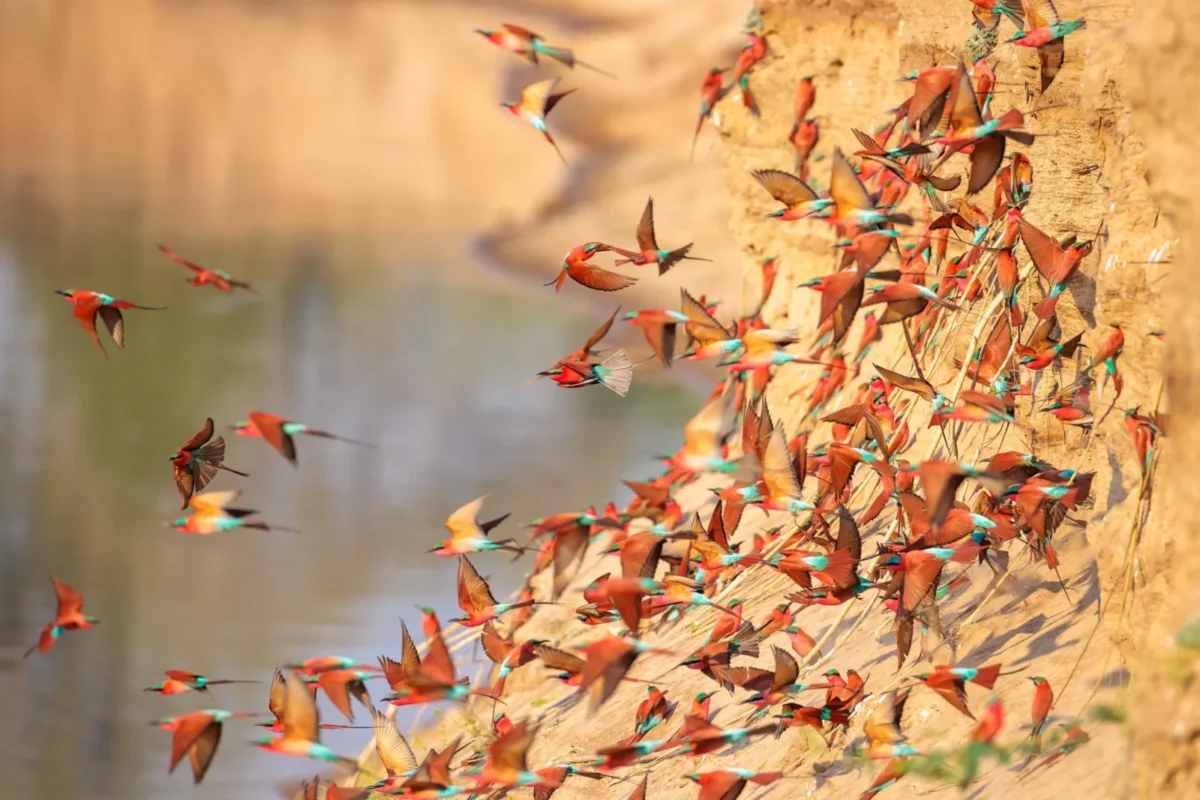
Home / Destinations / Zambia / Experiences in Zambia /
Zambia Birding Safaris
Zambia ranks among Africa’s finest birding destinations because of its enormous habitat diversity, low tourism density, and strong seasonal bird activity. The country supports more than 750 bird species across wetlands, floodplains, forests, rivers, woodlands, and open grassland ecosystems. Birdwatchers visiting Zambia experience both exceptional species diversity and quieter safari conditions than many better-known birding destinations in Africa.
Birding in Zambia extends far beyond casual wildlife observation. The country attracts dedicated birdwatchers, wildlife photographers, safari travellers, and conservation enthusiasts looking for immersive experiences across varied ecosystems. Seasonal migration patterns, large wetland systems, and protected wilderness areas create excellent birding opportunities throughout much of the year.
The country’s major birding regions each offer distinct bird habitats and species concentrations. Bangweulu Wetlands attracts rare wetland species including the shoebill, South Luangwa combines woodland and river birdlife, while Kafue National Park supports one of the most ecologically diverse birding environments in Southern Africa.
Birding safaris in Zambia also combine naturally with traditional wildlife viewing. Travellers often encounter elephants, antelope, predators, and hippos while searching for bird species across rivers, floodplains, and woodland landscapes.
Why Book This Destination
Explore More about Zambia Birding Safaris
Why Zambia is a Leading Birding Destination
Diverse Ecosystems and Seasonal Migration
Zambia’s bird diversity comes directly from the country’s varied habitats and strong seasonal ecological cycles. Rivers, forests, wetlands, swamps, floodplains, and savanna systems support different bird populations throughout the year.
Seasonal rains transform many landscapes into productive feeding and breeding grounds for resident and migratory birds. Migratory species arrive from Europe, Asia, and other parts of Africa during the rainy season, which increases overall bird diversity significantly.
The country’s relatively low tourism numbers also improve the birding experience. Birdwatchers often explore large wilderness areas without crowded safari traffic or heavy visitor pressure.
Zambia’s birding atmosphere feels quieter and more immersive than many mainstream safari destinations, which allows better opportunities for observation, photography, and sound identification.
The combination of habitat diversity, migration patterns, and wilderness quality makes Zambia especially rewarding for serious birders.
Bangweulu Wetlands
Home of the Rare Shoebill
Bangweulu Wetlands stands among Zambia’s most important birding regions and attracts birdwatchers from around the world because of its shoebill population.
The shoebill remains one of Africa’s most sought-after bird species due to its prehistoric appearance, elusive behavior, and limited range. Bangweulu offers some of the continent’s best opportunities to observe this remarkable bird within its natural wetland habitat.
The wetlands also support cranes, storks, geese, herons, egrets, pelicans, and numerous migratory waterbirds throughout the year.
Large floodplain systems create ideal feeding grounds for aquatic species, especially during wetter months when water levels expand across the region.
Birdwatching in Bangweulu often involves boat excursions and guided wetland exploration through shallow channels and grassland areas.
The region appeals strongly to specialist birders and wildlife photographers.
South Luangwa National Park
Riverine Birdlife and Woodland Species
South Luangwa combines exceptional wildlife viewing with rich bird diversity across river systems, lagoons, woodland habitats, and open plains.
The Luangwa River attracts fish eagles, kingfishers, herons, bee-eaters, storks, and numerous wetland species throughout the year.
Woodland areas support hornbills, rollers, barbets, woodpeckers, and a variety of raptors that patrol the valley ecosystem.
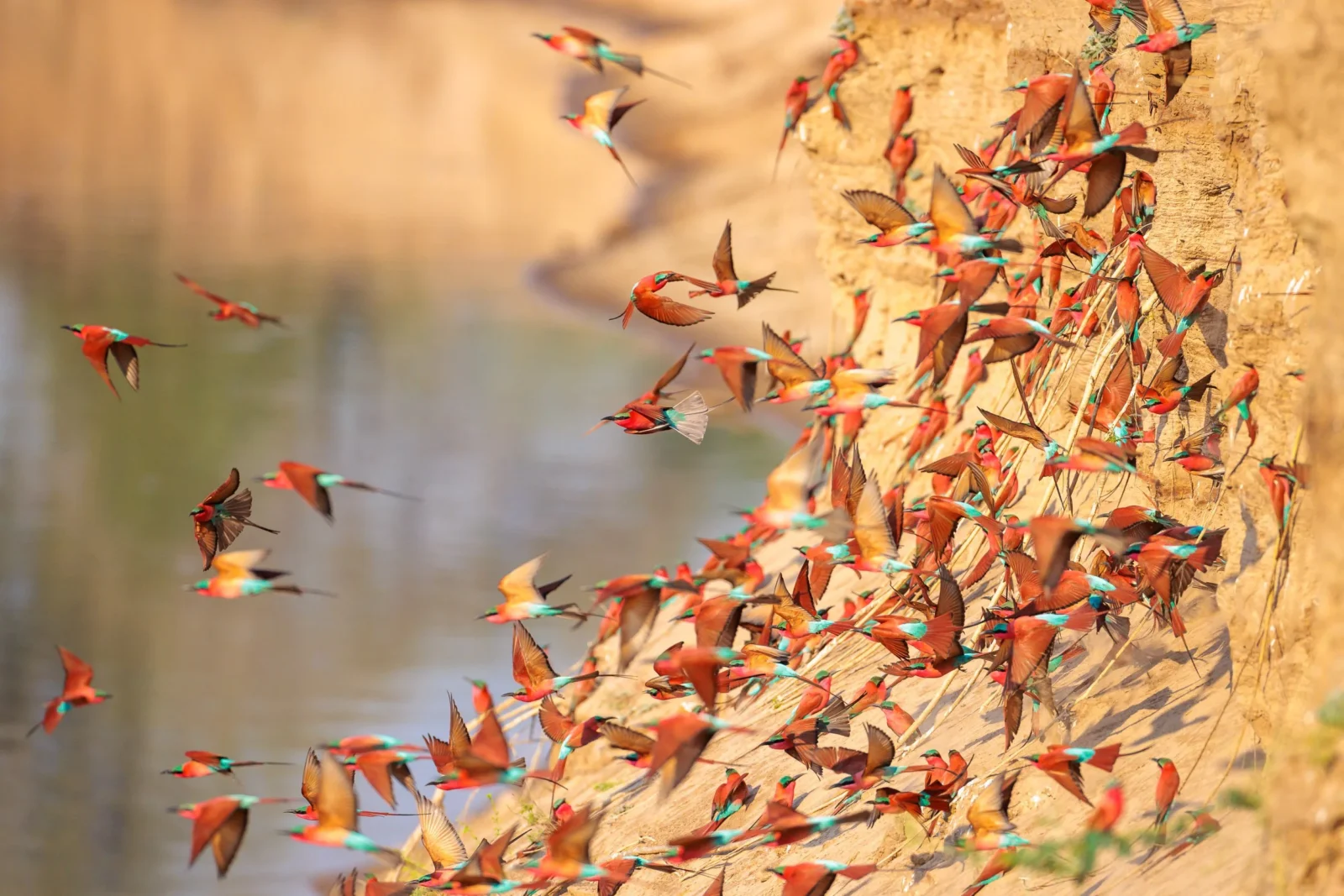
Carmine bee-eaters create one of the region’s most spectacular birding highlights when they nest along riverbanks during the dry season.
Walking safaris provide particularly rewarding birding experiences because guides move slowly through the bush while identifying bird calls, feeding behavior, and habitat patterns.
South Luangwa suits travelers who want to combine classic safari wildlife experiences with high-quality birdwatching opportunities.
Kafue National Park
One of Southern Africa’s Richest Birding Ecosystems
Kafue National Park supports extraordinary bird diversity because of its enormous size and varied habitats. Floodplains, rivers, miombo woodland, grasslands, and seasonal wetlands all contribute to the park’s ecological richness.
The Busanga Plains in northern Kafue attract large concentrations of waterbirds during seasonal flooding periods. Cranes, storks, geese, and egrets gather around shallow wetlands while raptors patrol the surrounding plains.
Woodland areas support species such as hornbills, kingfishers, bee-eaters, and owls.
The Kafue River system also creates excellent habitat for fish eagles and other river-dependent species.
Because tourism remains relatively low in Kafue, birdwatchers often experience uninterrupted observation conditions throughout large sections of the park.
Kafue appeals strongly to experienced birders looking for habitat diversity and remote wilderness atmosphere.
Lower Zambezi National Park
River-Based Birding Experiences
Lower Zambezi National Park offers excellent birdwatching opportunities along the Zambezi River and surrounding floodplain habitats.
Boat safaris and canoe excursions allow birders to explore shoreline ecosystems where kingfishers, fish eagles, bee-eaters, herons, and storks remain highly active.
The river environment also attracts migratory species during wetter months when floodplain systems expand.
Woodland habitats behind the riverbanks support hornbills, rollers, weavers, and various raptor species.
The quieter pace of river exploration creates ideal conditions for bird photography and detailed observation.
Lower Zambezi works particularly well for travelers who enjoy combining luxury safari accommodation with relaxed birdwatching experiences.
Liuwa Plain National Park
Open Plains and Seasonal Wetlands
Liuwa Plain National Park attracts birdwatchers because of its floodplain ecosystems and seasonal wetland bird activity.
The park supports cranes, lapwings, storks, geese, and numerous migratory species linked to the floodplain environment.
During wetter months, large sections of the plain transform into shallow wetland systems that attract significant bird concentrations.
Open landscapes also create excellent visibility for photography and long-distance observation.
Liuwa’s low visitor numbers provide a highly exclusive birding atmosphere where travelers can spend long periods exploring without encountering crowds.
The park especially suits birders interested in wetland ecology and remote wilderness settings.
Bird Migration Seasons in Zambia
Best Time for Birdwatching
Birdwatching in Zambia remains productive throughout the year, but seasonal conditions strongly influence species diversity and bird activity.
The rainy season between November and April usually delivers the highest bird diversity because migratory species arrive from other regions during this period. Breeding plumage, feeding behavior, and nesting activity also become more visible.
Wetlands and floodplains expand significantly after seasonal rains, which attracts waterbirds and migratory species into many national parks.
The dry season between May and October provides easier accessibility and clearer visibility because vegetation becomes less dense.
Different birding goals may influence the ideal travel season depending on target species and habitat preferences.
Bird Photography in Zambia
Scenic Landscapes and Low Visitor Density
Zambia offers excellent bird photography conditions because of its dramatic landscapes, varied habitats, and relatively low safari traffic.
River systems create opportunities for waterbird photography, while open floodplains allow long-distance observation of cranes, storks, and migratory flocks.
Early morning light across wetlands and rivers often produces exceptional photography conditions.
Boat safaris and walking safaris also allow quieter and more flexible positioning compared to standard vehicle-based tourism.
Bird photographers benefit greatly from Zambia’s uncrowded safari atmosphere and remote wilderness settings.
Birding Accommodation in Zambia
Safari Camps and Specialist Birding Lodges
Many safari camps and lodges in Zambia cater well to birdwatchers because of their locations near rivers, wetlands, or floodplains.
South Luangwa, Lower Zambezi, Kafue, and Bangweulu all contain lodges that provide guided birding activities alongside traditional safari experiences.
Birding accommodation often focuses on experienced guiding, slower exploration, and access to key habitats rather than large resort-style facilities.
Remote bush camps especially appeal to serious birders seeking uninterrupted observation and quieter wilderness conditions.
Why Choose Zambia for a Birding Safari
Zambia combines exceptional bird diversity with authentic wilderness atmosphere and low-density tourism. Travelers experience wetlands, rivers, forests, and floodplains filled with bird activity while avoiding many of the crowds found in larger safari destinations.
The country also allows birders to combine traditional safari wildlife viewing with highly rewarding birdwatching experiences across multiple ecosystems.
Rare species such as the shoebill, seasonal migration activity, and strong habitat diversity make Zambia one of Africa’s most underrated birding safari destinations.
In Africa’s national parks, every sunrise paints a masterpiece — where the wild’s call echoes across endless horizons. Visiting these parks is to witness nature in its purest form, a timeless dance that stirs the soul.
Steps to Book Your Southern Africa Tour
Choose Your Adventure
Confirm Your Booking
Begin Your Journey
Ready to plan your tailor-made safari?