Namibia Culture
February 1, 2026
Hot Air Balloon
February 1, 2026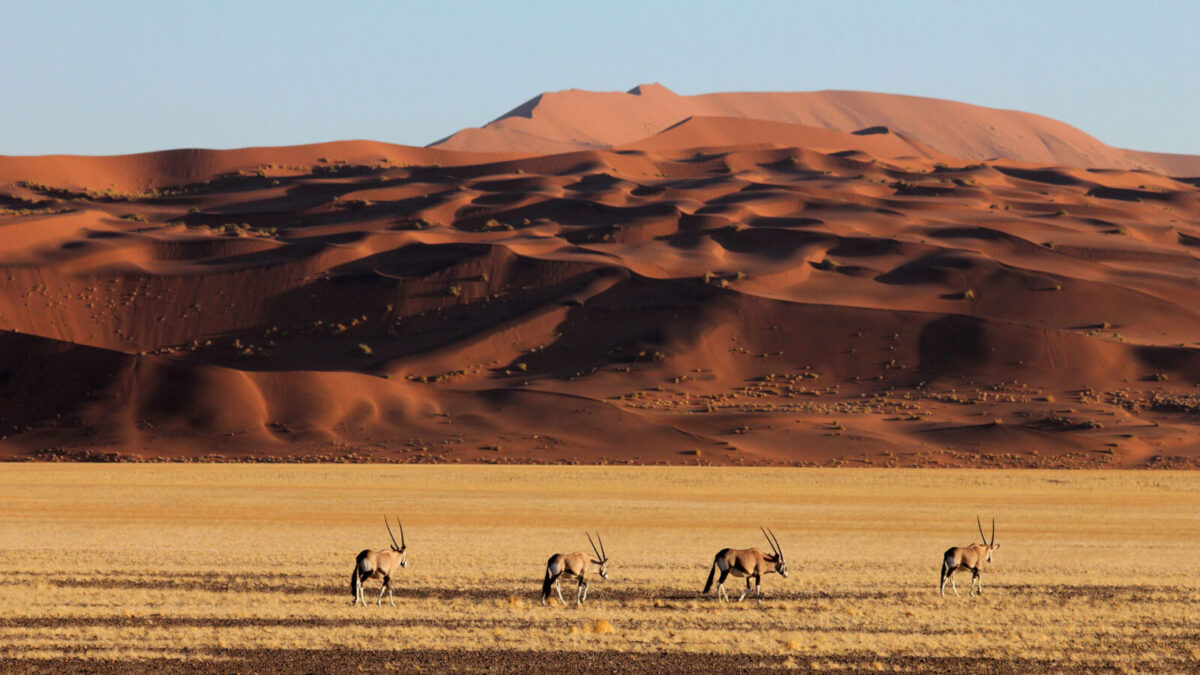
Namibia Desert
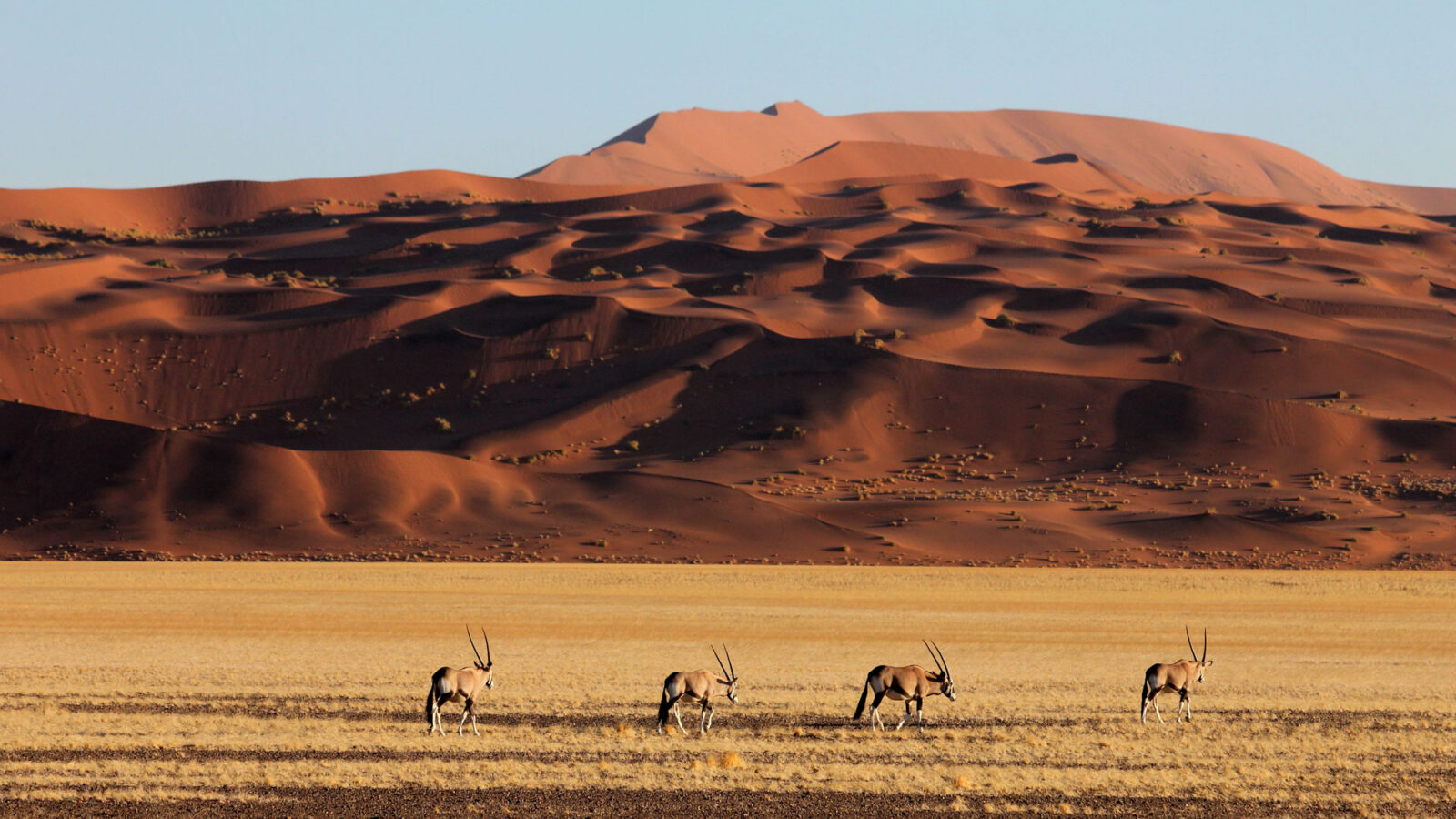
The Namibia Desert is one of the oldest deserts on Earth and one of the most visually striking landscapes in Africa. Stretching along Namibia’s Atlantic coastline for over 2,000 kilometers, it forms part of the larger Namib Desert system, which extends into Angola and South Africa. What makes the Namibia Desert extraordinary is not only its age—estimated at over 55 million years—but also its dramatic contrast of towering red dunes, gravel plains, rocky mountains, and fog-drenched coastal zones.
Unlike many deserts that feel empty or lifeless, the Namibia Desert supports a surprising variety of adapted wildlife, resilient plant life, and unique ecosystems shaped by extreme conditions. It is a landscape defined by silence, scale, and survival, where every living organism has evolved to withstand heat, dryness, and minimal rainfall.
For travelers, the Namibia Desert represents one of the most iconic safari and adventure destinations in Africa, offering experiences that blend photography, geology, wildlife, and pure wilderness immersion.
Why Book This Destination
Explore More about Namibia Desert
The Landscape of the Namibia Desert
The Namibia Desert is not a single uniform environment but a collection of distinct ecological zones. The most famous section lies in the central region around Sossusvlei, where massive sand dunes rise more than 300 meters into the sky.
These dunes, shaped by wind over millions of years, shift constantly, creating new formations and patterns. Their colors range from deep red to orange and gold, depending on the time of day and angle of sunlight. This dynamic visual landscape is one of the most photographed natural environments in the world.
Beyond the dunes, the desert transitions into gravel plains, ancient dry riverbeds, and rocky outcrops. Along the Atlantic coast, dense fog rolls inland from the cold Benguela Current, creating a unique fog desert ecosystem that supports specialized life forms.
Sossusvlei and Deadvlei: The Heart of the Namibia Desert
Sossusvlei and Deadvlei represent the most iconic destinations within the Namibia Desert. Sossusvlei is a salt and clay pan surrounded by towering dunes, while Deadvlei is a nearby white clay basin filled with ancient, dead camel thorn trees preserved by extreme aridity.
Climbing dunes such as Big Daddy or Dune 45 before sunrise offers one of the most unforgettable experiences in Africa. As the sun rises, the dunes glow in shifting shades of red, creating dramatic contrasts with long shadows across the sand.
Deadvlei presents a surreal visual scene where time appears frozen. The blackened trees, some over 900 years old, stand against a white cracked floor and orange dunes, forming a landscape that feels almost otherworldly.
Wildlife in the Namibia Desert
Despite its harsh conditions, the Namibia Desert supports a remarkable range of wildlife adapted to survive with minimal water. Oryx antelope are among the most iconic desert species, capable of regulating body temperature and surviving long periods without drinking water.
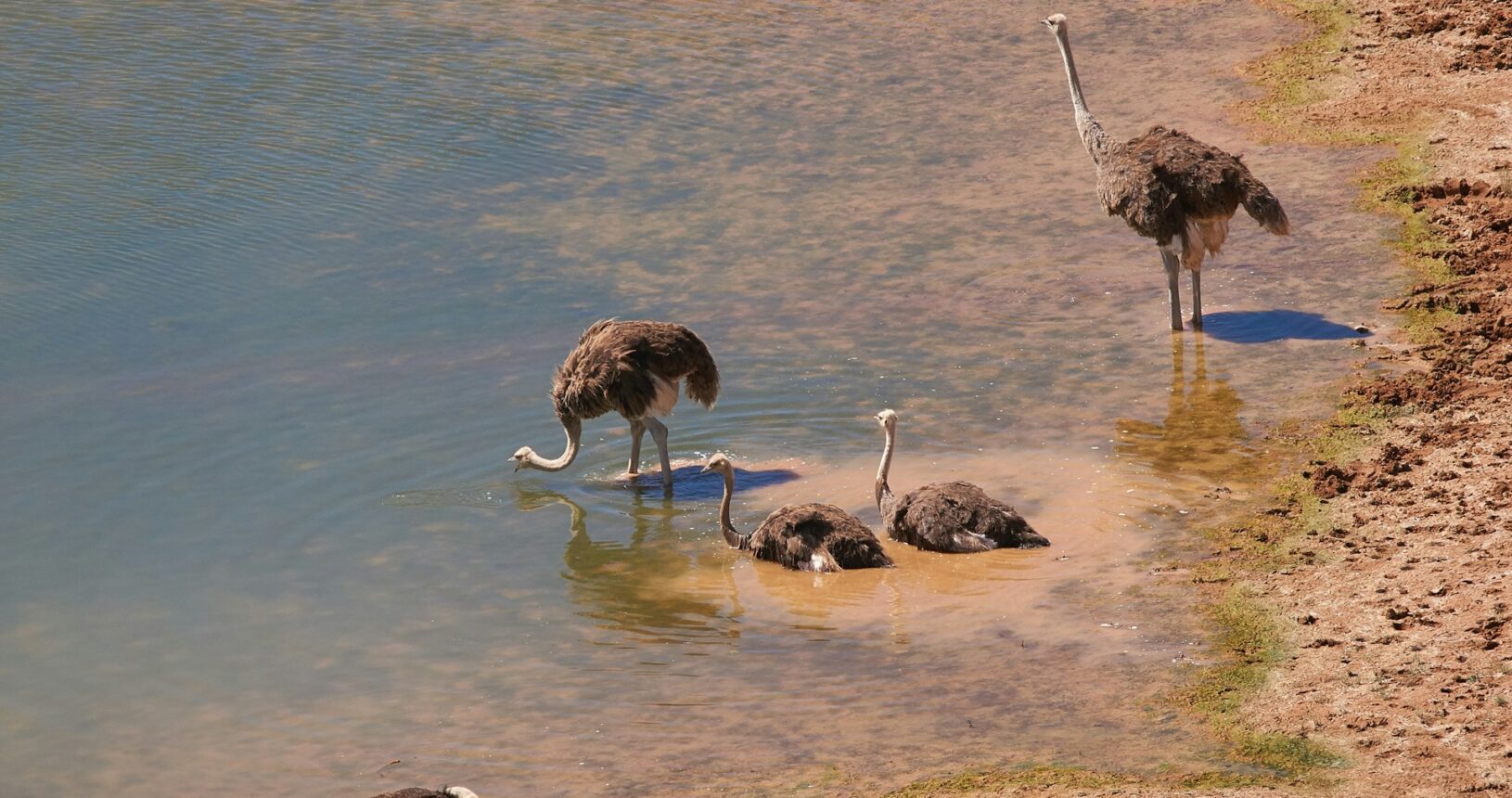
Springbok, ostriches, and jackals also move across the desert plains, often traveling long distances in search of food and moisture. Smaller mammals such as bat-eared foxes, aardwolves, and ground squirrels thrive in underground burrows to escape extreme heat.
Reptiles, including geckos and lizards, have evolved behaviors such as sand-burrowing and nocturnal activity to survive the desert environment. Insects like fog-basking beetles along the Skeleton Coast collect moisture from ocean fog, demonstrating extraordinary adaptation.
The Namibia Desert shows how life persists even in one of the harshest climates on Earth.
The Skeleton Coast Desert Ecosystem
The northern section of the Namibia Desert merges into the Skeleton Coast, one of the most remote and mysterious coastal environments in the world. Here, desert dunes meet the Atlantic Ocean, creating a landscape shaped by fog, wind, and ocean currents.
Shipwrecks scattered along the coastline tell stories of maritime history, while seal colonies at Cape Cross form one of the largest concentrations of Cape fur seals in the world.
Despite limited vegetation, desert-adapted elephants occasionally move through this region, alongside brown hyenas, jackals, and coastal bird species.
The Skeleton Coast highlights the extreme edge of survival within the Namibia Desert ecosystem.
The Climate of the Namibia Desert
The Namibia Desert experiences one of the driest climates in the world. Rainfall remains extremely low, often below 100 millimeters annually in many areas. However, coastal fog provides an essential moisture source that supports both plant and animal life.
Daytime temperatures can rise significantly, especially in summer, while nights often become cold due to rapid heat loss in the dry air. These extreme temperature variations shape both wildlife behavior and plant survival strategies.
Wind plays a major role in shaping dunes and transporting sand across vast distances, continuously reshaping the desert landscape.
Plant Life in the Namibia Desert
Vegetation in the Namibia Desert remains sparse but highly specialized. Welwitschia mirabilis, one of the world’s oldest living plants, grows in the desert and can survive for over 1,000 years.
This plant relies on fog moisture and deep root systems to survive extreme dryness. Other plants, such as hardy grasses and succulents, appear seasonally after rare rainfall events.
Vegetation plays a crucial role in stabilizing dunes and supporting desert wildlife, even in minimal quantities.
Experiencing the Namibia Desert
Travelers experience the Namibia Desert through a combination of guided tours, self-drive safaris, scenic flights, and luxury lodge stays.
Sossusvlei remains the most popular entry point, where visitors explore dunes, salt pans, and nearby canyons. Scenic flights over the desert offer aerial views of endless dune fields, dry river systems, and shifting landscapes.
Luxury desert lodges provide immersive stays with panoramic views, guided nature walks, and stargazing experiences under some of the clearest skies in the world.
Photography plays a major role in desert travel, with sunrise and sunset offering the best lighting conditions for capturing the desert’s dramatic colors and textures.
Why the Namibia Desert Is Unique
The Namibia Desert stands out because it combines extreme age, ecological adaptation, and visual beauty in a single environment. Few deserts in the world offer such a combination of towering dunes, fog-influenced ecosystems, and surviving wildlife.
Its silence and vastness create a sense of isolation that deeply impacts travelers. Instead of feeling empty, the desert feels alive with subtle movement, light, and survival strategies.
This unique combination makes the Namibia Desert one of Africa’s most iconic natural wonders.
In Africa’s national parks, every sunrise paints a masterpiece — where the wild’s call echoes across endless horizons. Visiting these parks is to witness nature in its purest form, a timeless dance that stirs the soul.
Steps to Book Your Southern Africa Tour
Choose Your Adventure
Confirm Your Booking
Begin Your Journey
Ready to plan your tailor-made safari?