
Singita Lodges Africa
July 27, 2026
San Bushmen
July 27, 2026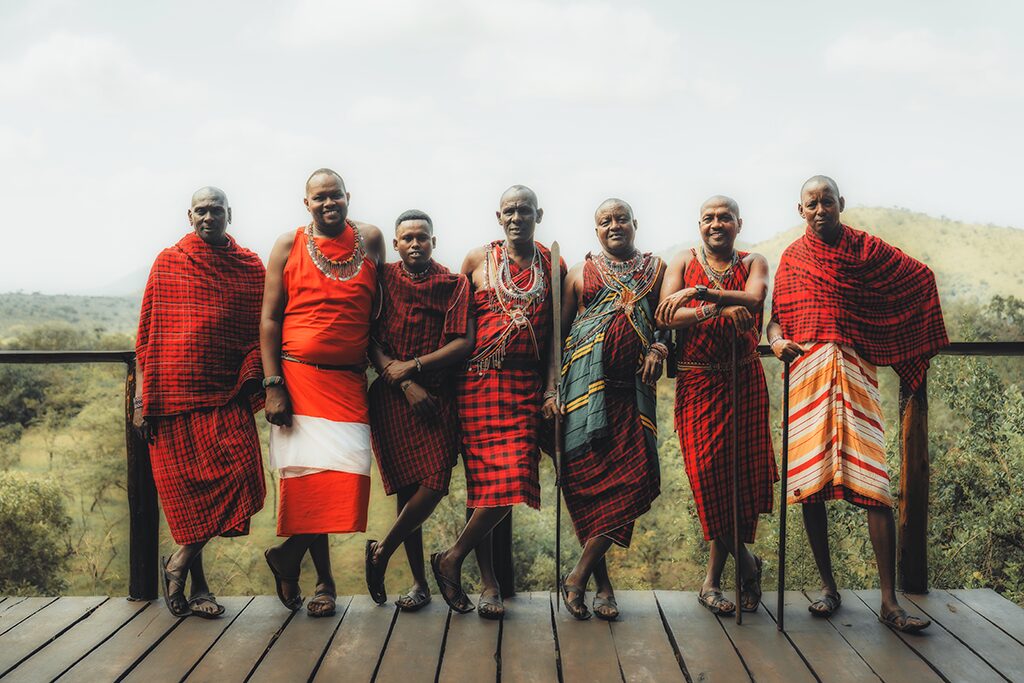
Maasai Culture Guide: Understanding the Warriors of East Africa
The Maasai are among East Africa’s most recognizable cultural communities. Their distinctive clothing, traditional dances, cattle-based lifestyle, and strong connection to the land have attracted travellers for generations.
The Maasai mainly live across southern Kenya and northern Tanzania. Their communities occupy areas close to famous wildlife destinations, including the Maasai Mara, Amboseli, Serengeti, and Ngorongoro.
However, Maasai culture goes far beyond the images often seen in tourism marketing. Their traditions include complex social structures, ceremonies, age groups, livestock practices, spiritual beliefs, and community responsibilities.
Understanding this background can make a cultural visit much more meaningful. It also helps travelers approach Maasai communities respectfully and avoid treating living traditions as performances created only for tourists.
Who Are the Maasai?
The Maasai are a Nilotic-speaking ethnic community traditionally associated with Kenya and Tanzania. Their language, Maa, remains an important part of cultural identity.
Maasai communities have historically followed a semi-nomadic pastoral lifestyle. Cattle, goats, and sheep have played important economic and social roles.
Their traditional territories extend across some of East Africa’s most famous wildlife landscapes. This has created a close relationship between Maasai communities, livestock, wildlife, and natural resources.
Today, Maasai lifestyles vary considerably. Some communities maintain strongly traditional practices, while others combine cultural traditions with modern education, employment, business, and tourism.
It is therefore important to avoid viewing all Maasai people as living in exactly the same way.
Why Are the Maasai Known as Warriors?
Maasai warriors are traditionally known as morans. The warrior stage forms part of a broader age-set system that organizes responsibilities and social roles within the community.
Historically, warriors played important roles in protecting livestock, communities, and territory. They also developed skills related to livestock management, movement across the landscape, and community security.
The image of the Maasai warrior has become strongly associated with courage and strength. However, the traditional warrior role involves much more than fighting.
Age sets traditionally move through different stages of life. Each stage carries specific responsibilities within Maasai society.
Today, the role of warriors has also changed. Modern education, government structures, changing livelihoods, and evolving community needs have influenced traditional roles.
The Maasai Age-Set System
The age-set system is one of the most important features of traditional Maasai social organization.
People born within particular periods may belong to the same age group. Members of an age set often move through life stages together and share particular responsibilities.
Young boys traditionally progress through stages before entering the warrior period. Later, warriors transition into elderhood.
Elders hold important responsibilities in decision-making and community affairs. Their experience and knowledge contribute to resolving disputes and guiding younger generations.
The system creates strong relationships between generations. It also provides a framework for understanding responsibility within the community.
Maasai Cattle and Pastoral Life
Cattle have traditionally played a central role in Maasai culture.
They provide milk, blood, meat, hides, and other resources. Cattle also hold significant social importance and can influence marriage arrangements, wealth, status, and relationships between families.
For many Maasai communities, livestock represent much more than an economic asset. They form an important part of cultural identity.
Traditional pastoralism also requires extensive knowledge of the environment. Communities need to understand grazing areas, seasonal water sources, weather patterns, and livestock health.
Climate change and land-use pressures have made pastoral life increasingly challenging in some areas. Droughts can affect both livestock and household livelihoods.
The Importance of Land
Land is deeply connected to Maasai culture and livelihoods.
Traditional pastoralism depends on access to grazing areas and water. Seasonal movement has historically allowed communities to manage livestock across changing environmental conditions.
Today, Maasai communities face complex land-use pressures. Conservation areas, agriculture, urban expansion, tourism, and government policies can affect access to traditional lands.
This relationship between conservation and communities is particularly important in areas surrounding major safari destinations.
Responsible tourism should therefore recognize local communities as important stakeholders in the landscapes visitors come to experience.
Maasai Villages and Traditional Homes
Traditional Maasai homes are often known as enkaji. Women traditionally play an important role in building and maintaining these structures.
Homes may be constructed using locally available materials such as branches, mud, grass, and cow dung.
A traditional settlement may form an enkang, or homestead, where families live together within a community structure.
The design reflects the practical needs of pastoral life and the local environment.
Visitors should remember that homes are private spaces. Entering a traditional dwelling should happen only when invited or when the community has specifically arranged the experience.
Maasai Clothing and Beadwork
Maasai clothing is one of the most recognizable elements of their cultural identity.
The shúkà, often a brightly colored cloth wrapped around the body, is commonly associated with Maasai dress. Red is particularly prominent in traditional Maasai imagery, although other colors also have cultural significance.
Beadwork is equally important. Maasai women have traditionally created intricate necklaces, bracelets, earrings, and other decorative pieces.
Beads can communicate information about age, social position, marital status, and identity.
Today, beadwork also provides an important source of income for some communities. Purchasing directly from community cooperatives can therefore support local livelihoods.
Maasai Music and Traditional Dance
Music and dance form important parts of Maasai cultural life.
The adumu, often called the Maasai jumping dance, is one of the most recognizable performances associated with the community.
During the dance, warriors may jump vertically while maintaining an upright posture. Singing and rhythmic vocalization accompany the performance.
The dance can form part of celebrations, ceremonies, and community gatherings.
Tourists may also encounter cultural performances during village visits. Travellers should remember that cultural demonstrations can involve both genuine traditions and activities adapted for tourism.
A respectful experience recognizes this distinction without assuming that every performance represents the full complexity of Maasai cultural life.
Maasai Marriage Traditions
Marriage has traditionally played an important role in strengthening relationships between families and communities.
Traditional marriage practices can involve negotiations between families, livestock, ceremonies, and other cultural customs.
Practices vary between communities and have changed over time.
Modern education, Christianity, Islam, government law, economic change, and broader social developments have all influenced marriage practices among Maasai communities.
Travellers should avoid assuming that practices described in older books or documentaries represent how every Maasai community lives today.
Maasai Spiritual Beliefs
Traditional Maasai spirituality is closely connected with Enkai, a central divine figure.
Maasai beliefs traditionally connect spiritual life with nature, livestock, rain, and community wellbeing.
Rain holds particular importance in pastoral societies because water supports both people and livestock.
Spiritual traditions can vary between communities and have also evolved through interactions with Christianity and other influences.
Visitors should approach these beliefs with the same respect they would show any living religious or cultural tradition.
Maasai Relationship With Wildlife
The Maasai have lived alongside wildlife for generations. This relationship is complex because livestock and wild animals sometimes compete for water and grazing.
At the same time, wildlife has become an important part of the tourism economy in many Maasai regions.
The Maasai Mara and surrounding conservancies provide a strong example of how communities can participate in wildlife conservation.
Community conservancies can generate income through tourism while helping protect important wildlife habitats.
This approach can create incentives for communities to maintain wildlife landscapes rather than converting all available land to other uses.
Maasai and Safari Tourism
Many travelers encounter Maasai communities while visiting Kenya or Tanzania.
Cultural experiences may include village visits, traditional dances, craft demonstrations, storytelling, guided walks, and discussions about pastoral life.
A good cultural experience should create genuine interaction rather than simply presenting people as attractions.
Travellers should have opportunities to ask questions, learn about contemporary life, and understand how tourism affects the community.
The best experiences also ensure that local people receive meaningful economic benefits.
How to Visit a Maasai Village Respectfully
Respect should begin before you arrive.
Ask permission before taking photographs of people, homes, ceremonies, or livestock. Do not assume that paying an entrance fee automatically gives you permission to photograph everyone.
Dress modestly and follow the guidance of your local guide. Some communities may have specific expectations regarding clothing or behavior.
Avoid touching cultural objects without permission. If someone invites you to participate in a dance or activity, follow their instructions rather than attempting to imitate traditions without understanding them.
Most importantly, treat the community as people rather than as a tourist attraction.
Buying Maasai Beadwork and Crafts
Buying locally produced crafts can provide direct economic benefits to communities.
Beadwork, jewelry, textiles, carvings, and other handmade products are often available during cultural visits.
Whenever possible, buy directly from artisans or established community cooperatives. This makes it easier to understand where your money goes.
Do not bargain aggressively over handmade products. A small difference in price may matter far more to the artisan than it does to an international traveller.
Supporting authentic community businesses can make cultural tourism more beneficial for local households.
Maasai Women and Community Life
Women play central roles within many Maasai communities.
Traditionally, women have been responsible for activities including building homes, collecting water and firewood, caring for children, processing food, and producing beadwork.
Women also increasingly participate in education, business, conservation initiatives, tourism enterprises, and community organizations.
Maasai women’s beadwork cooperatives have become an important avenue for income generation in some areas.
Travellers can support these initiatives by purchasing directly from women-led enterprises and learning about their work.
Maasai Conservation Initiatives
Maasai communities increasingly participate in conservation initiatives across Kenya and Tanzania.
Community conservancies can create opportunities for local people to benefit from wildlife tourism while maintaining important habitats.
In Kenya, community conservancies surrounding the Maasai Mara have become important components of the wider ecosystem.
These areas can provide wildlife habitat while supporting tourism revenue, employment, grazing arrangements, and community projects.
The success of conservation varies between locations. However, community involvement remains essential for creating long-term protection of wildlife landscapes.
Maasai Culture in Kenya
Kenya provides numerous opportunities to learn about Maasai culture.
The Maasai Mara region is perhaps the most famous. Visitors can combine a wildlife safari with a community experience outside the national reserve.
Amboseli National Park is another important destination. Maasai communities live around the park, and the landscape provides spectacular views of Mount Kilimanjaro.
Community conservancies around these destinations can offer more intimate cultural experiences than large tourist-oriented villages.
Travellers should choose operators that clearly explain how community tourism revenue is distributed.
Maasai Culture in Tanzania
Tanzania is also home to many Maasai communities.
The areas around Ngorongoro, the Serengeti, and northern Tanzania provide opportunities to learn about pastoral traditions.
A cultural visit can complement a traditional safari. Instead of spending every day searching for wildlife, travelers can spend time learning about local communities and landscapes.
The Ngorongoro region is particularly interesting because conservation, tourism, pastoralism, and land rights intersect in complex ways.
Responsible travellers should seek current information and support tourism models that respect local communities.
Best Places to Experience Maasai Culture
The Maasai Mara is one of the most popular destinations for cultural experiences in Kenya. It can easily be combined with a classic wildlife safari.
Amboseli provides another excellent option. The combination of Maasai culture, elephants, and Mount Kilimanjaro creates a remarkable travel experience.
Ngorongoro offers opportunities to understand the relationship between pastoral communities and one of Tanzania’s most important conservation landscapes.
Northern Tanzania also provides cultural experiences around the Serengeti and other safari destinations.
The quality of the experience depends heavily on the community and operator. Choose experiences that clearly explain community ownership, employment, and revenue sharing.
Are Maasai Cultural Visits Ethical?
They can be, but not every cultural experience follows responsible tourism principles.
An ethical visit should respect privacy, provide fair economic benefits, and avoid portraying Maasai people as frozen in the past.
Tourism should also create opportunities for genuine conversation rather than simply staging performances.
Ask your safari operator how the community benefits from the visit. Look for operators that work directly with communities or use established community-owned tourism initiatives.
A responsible cultural experience should leave visitors with greater understanding while creating tangible benefits for local people.
What Should You Avoid During a Maasai Visit?
Do not photograph people without permission. Avoid entering homes or sacred spaces without an invitation.
Do not make jokes about traditional clothing, ceremonies, livestock, or cultural beliefs.
Avoid treating warriors as entertainers or asking people to repeat performances simply for photographs.
Do not assume that every Maasai person follows the same traditions. Cultural practices differ between communities and continue to evolve.
Most importantly, avoid reducing Maasai culture to colorful clothing, jumping dances, and cattle. These are only parts of a much larger living culture.
Why Learn About Maasai Culture on Safari?
A safari is not only about wildlife.
The landscapes of Kenya and Tanzania have been shaped by generations of people who live, work, and conserve these environments.
Learning about Maasai culture can provide a deeper understanding of the places you visit. It can also help explain the relationship between pastoralism, wildlife conservation, tourism, and land.
A well-designed cultural experience can become one of the most memorable parts of an East African safari.
When approached respectfully, it allows travellers to meet local people, hear their stories, support community enterprises, and gain a more balanced understanding of modern Maasai life.
Plan Your Maasai Cultural Experience
Maasai culture remains an important part of East Africa’s identity. Their history, pastoral traditions, age-set system, beadwork, music, community structures, and relationship with wildlife offer travellers a fascinating cultural perspective.
However, the Maasai are not simply a historical community preserved for tourists. They are living communities adapting to education, technology, conservation, tourism, climate change, and changing economic conditions.
For travellers visiting Kenya or Tanzania, adding a responsible Maasai cultural experience can make a safari more meaningful. Choose community-based experiences that respect local traditions and provide clear benefits to the people you meet.
The best cultural encounters leave you with more than photographs. They give you a better understanding of the people, landscapes, and traditions that make East Africa so extraordinary.